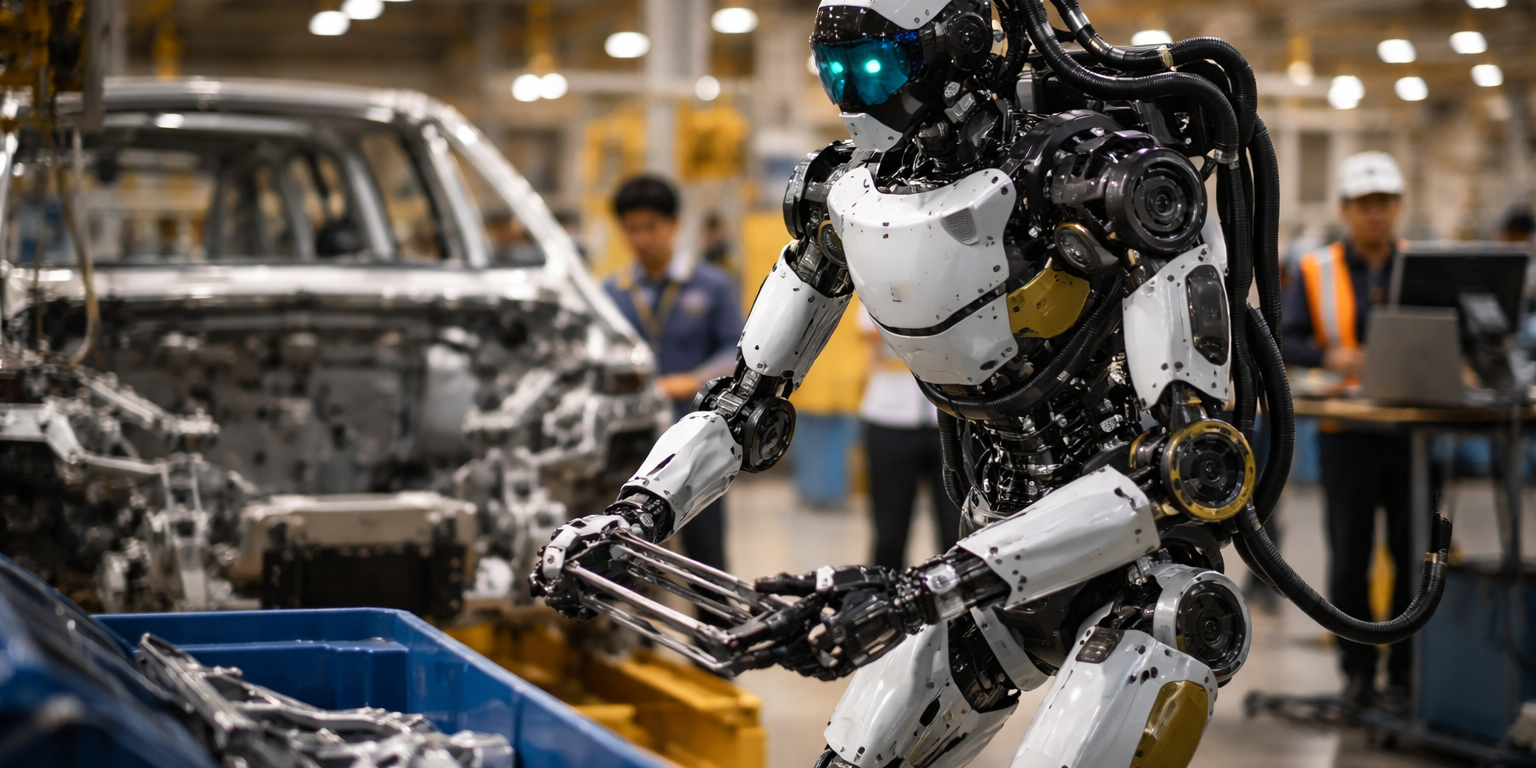

He Xiaopeng now runs two divisions at once. The founder who built XPeng into one of China's top-tier electric vehicle manufacturers has taken direct operational control of the company's humanoid robotics business, a structural change that elevates robotics from a research project to a CEO-level priority. The consolidation places physical AI development under the same leadership that scaled XPeng's vehicle production to over 140,000 units in 2023, and it suggests the company views humanoid robots as more than a technology demonstration. For an automotive executive to personally oversee a robotics division implies either strategic urgency or a belief that the two product lines share enough DNA in autonomy, perception, and manufacturing to justify unified leadership.
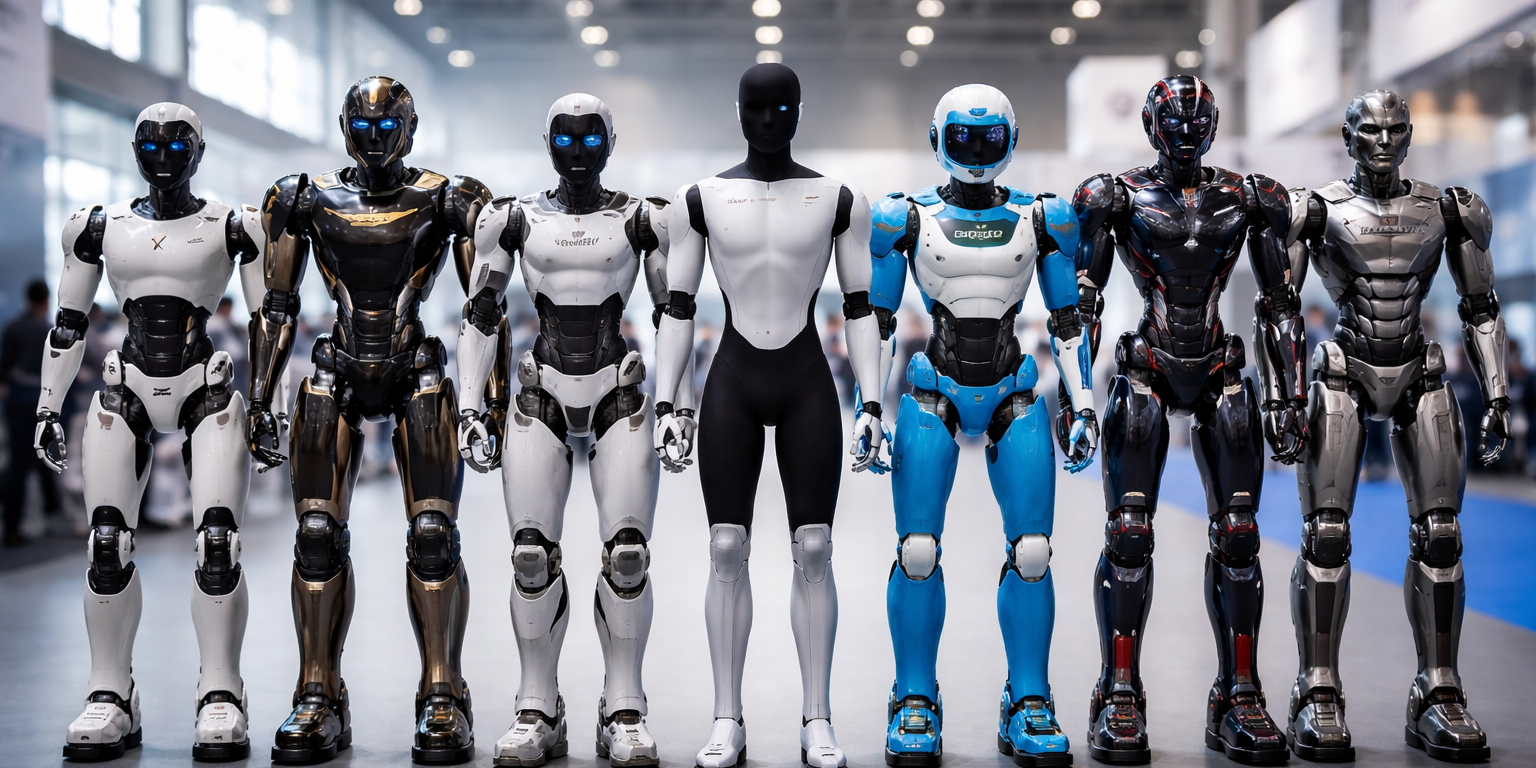
XPeng entered the humanoid space later than Tesla, Figure AI, or Unitree, but it brings automotive-scale capital and supply chain infrastructure. The company's robotics division has been developing a bipedal platform internally, though specifications and public demonstrations have been limited compared to competitors. What XPeng has shown is a willingness to integrate AI across physical products, from its XNGP driver assistance system to warehouse automation trials in its own manufacturing facilities. He Xiaopeng's background spans both hardware and software, having founded UCWeb before launching XPeng in 2014, and his track record includes multiple rounds of hypergrowth funding and a New York Stock Exchange listing in 2020. That financial engineering experience matters when capital intensity is high and unit economics remain unproven. Humanoid robotics demands iteration speed, and placing a CEO in charge shortens the chain between technical feedback and resource allocation.
Mass production is the stated goal, but the timeline and scale are undefined. XPeng has not disclosed whether it plans to manufacture humanoids in-house at its Zhaoqing or Wuhan plants, or whether it will partner with contract manufacturers like Foxconn, which has publicly committed to humanoid assembly capacity. The company has also not revealed pricing, target markets, or annual production volumes. What is clear is that XPeng is not treating this as a research program. The CEO's direct involvement typically precedes major capital deployment, and automotive companies do not announce mass production plans unless tooling and supply chain discussions are already underway. The question is whether XPeng will pursue a vertical integration strategy, building most subsystems internally as Tesla is attempting, or a modular approach sourcing actuators, sensors, and compute from third parties. That decision will determine gross margins and time to market.
The timing aligns with China's accelerating focus on embodied AI. The Ministry of Industry and Information Technology released guidelines in late 2023 targeting humanoid robot industrialization by 2025, and provincial governments in Guangdong and Shanghai have allocated funds specifically for robotics manufacturing infrastructure. XPeng's home province of Guangdong is positioning itself as a hub for both electric vehicles and robotics, and companies like Fourier Intelligence and UBTech are already producing bipedal systems at scale. XPeng's advantage is not in robotics pedigree but in adjacent capabilities: battery management, electric drivetrains, real-time perception stacks, and high-volume assembly. Automotive companies have built humanoids before, from Honda's ASIMO to Hyundai's acquisition of Boston Dynamics, but none have yet demonstrated a viable business model. XPeng's bet is that mass production will create one, and that the first company to hit five-figure unit volumes will set the reference price point for the industry. He Xiaopeng's operational involvement suggests the company is preparing to move faster than its global competitors expect.
What to Watch: XPeng's next earnings call, typically held within 90 days of quarter-end, should clarify whether the company is allocating separate capital expenditures to robotics manufacturing or sharing capacity with its vehicle lines. Watch for partnerships with actuator suppliers like Zhaowei Machinery or compute providers like Horizon Robotics, which would indicate modular architecture. Any announcement regarding XPeng's Wuhan facility, which has excess capacity following slower-than-expected sedan demand, could signal a pivot toward dual-use production lines. Finally, track whether He Xiaopeng attends robotics industry conferences in Q2 2025, a departure from his usual automotive circuit that would confirm the strategic elevation of the division.