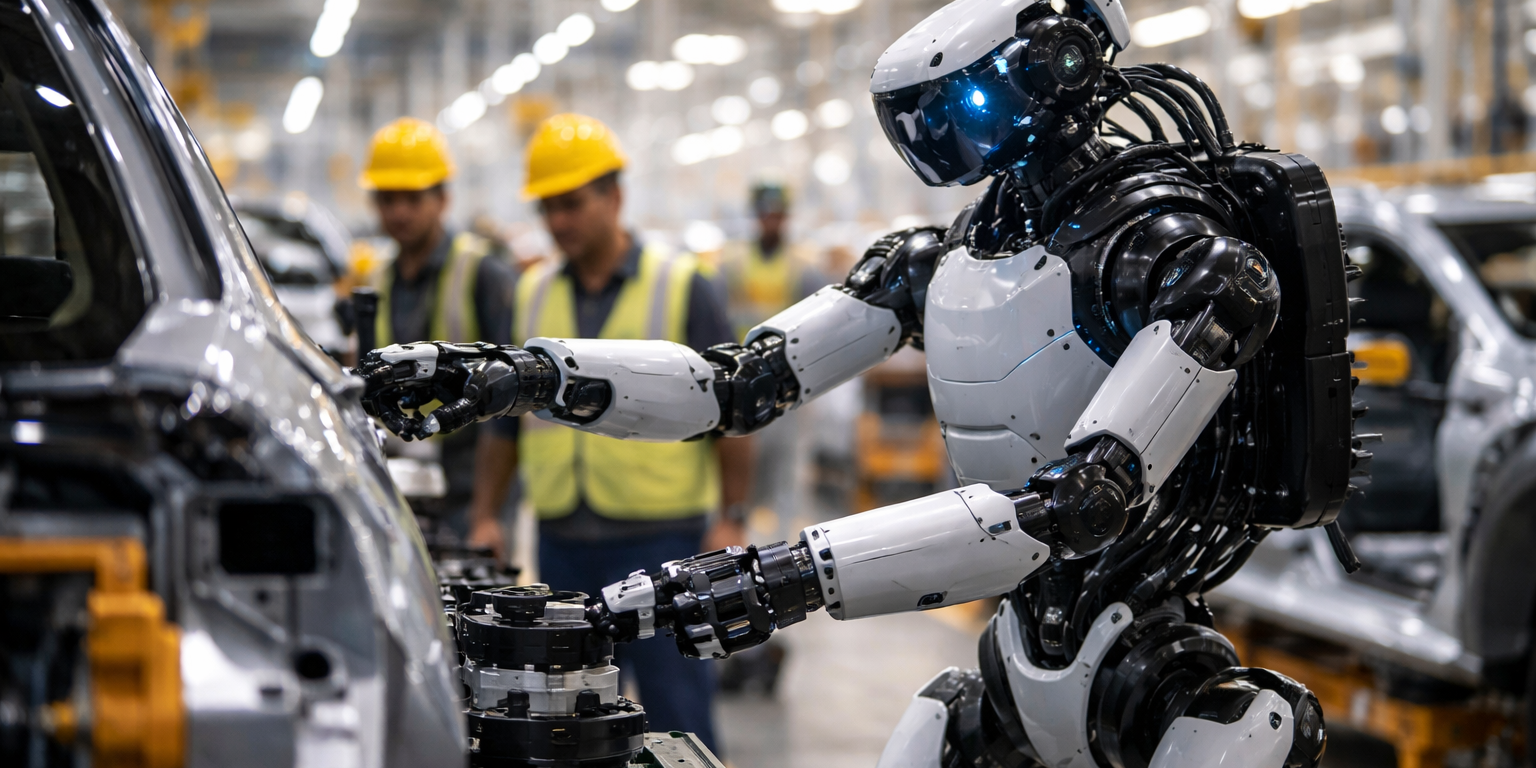

AI Robotics has raised more than $890 million in venture funding and is now preparing documents for an initial public offering on the Hong Kong Stock Exchange, making it one of the most aggressive capital raises in the humanoid robotics sector to date. The Shenzhen-based company has not disclosed its current valuation, deal timeline, or underwriting banks, but the funding total puts it in the top tier of humanoid-focused startups worldwide. For context, Figure AI raised $675 million in a Series B round earlier this year at a $3.2 billion post-money valuation, while Agility Robotics has raised approximately $350 million to date. AI Robotics appears to be betting that Hong Kong's exchange, which has actively courted mainland Chinese tech companies since 2018, will offer more favorable listing conditions than U.S. markets amid ongoing technology export restrictions.
The company's rapid capital accumulation reflects the surge in investor appetite for industrial automation platforms driven by large language models and reinforcement learning. AI Robotics develops bipedal humanoid robots designed for logistics, manufacturing, and warehouse environments, competing directly with Figure, Apptronik, Agility, and a growing roster of Chinese rivals including Agibot and Unitree. The humanoid form factor has gained traction among investors and corporate buyers because it allows robots to operate in spaces designed for human workers without facility redesigns. Tesla CEO Elon Musk has publicly estimated the addressable market for humanoid robots at 10 billion units, assuming one robot per human in industrialized economies. Whether that projection proves realistic or not, institutional capital has poured into the category at an unprecedented rate. More than $2 billion in venture funding flowed to humanoid robotics companies in 2025 alone, according to PitchBook data, up from approximately $400 million in 2024.
AI Robotics has not released detailed specifications for its flagship platform, but job postings and patent filings suggest the company is focused on dexterous manipulation tasks and dynamic navigation in semi-structured environments. The company employs approximately 800 people, with research teams in Shenzhen, Beijing, and Shanghai, according to its LinkedIn profile. It has raised capital from a mix of Chinese state-backed funds, private equity firms, and strategic corporate investors, though the full cap table has not been made public. The decision to list in Hong Kong rather than Shanghai or Shenzhen may indicate foreign institutional participation in the investor base, as Hong Kong's exchange allows dual-class share structures and more flexible disclosure rules than mainland venues. The Hong Kong bourse approved 74 IPOs in 2025, raising a combined $12.3 billion, down from $16.8 billion the prior year, as Chinese tech companies faced headwinds from slowing domestic growth and export controls on advanced semiconductors.
The humanoid robotics sector has bifurcated into two camps: Western companies targeting general-purpose platforms with broad task flexibility, and Chinese firms prioritizing specific industrial workflows with faster deployment timelines. AI Robotics appears to fall into the latter category, based on statements from company executives in Chinese media. The strategic question for investors is whether humanoid form factors will prove economically viable at scale or whether purpose-built robots with simpler morphologies will continue to dominate warehouses and factories. Amazon, for example, deployed more than 750,000 mobile robots in its fulfillment network by the end of 2025, none of which are humanoid. The company has stated it sees no near-term case for bipedal robots given the cost and complexity. Still, partnerships between humanoid developers and major manufacturers are multiplying. BMW announced a pilot program with Figure AI in early 2025, while Mercedes-Benz tested Apptronik's Apollo platform in South Carolina assembly plants. Whether AI Robotics has secured comparable partnerships remains unclear, and that information could prove critical to the IPO's reception.
What to Watch: The identity of AI Robotics' underwriters and cornerstone investors will signal whether Western institutions are willing to back Chinese robotics companies amid ongoing tech tensions. Publication of the company's IPO prospectus, expected within 60 to 90 days, should reveal revenue figures, customer contracts, and unit production capacity. Watch for announcements of pilot deployments with multinational corporations, as humanoid companies without named customers have struggled to sustain investor confidence. Finally, track whether the Hong Kong listing successfully prices above its last private round, as several Chinese tech IPOs in late 2025 and early 2026 priced below their final venture valuations.