
The decision that separates a bladder tumor patient who keeps the organ from one who loses it often comes down to a few millimeters of tissue. Pathologists need to see whether a tumor has invaded the detrusor, the bladder's muscular wall, and the standard tool for getting that answer has long been the resectoscope, which shaves tumors away in fragments under electrical current. The fragments arrive at the lab burned, scattered and difficult to read. The FDA has now cleared a different approach: the Virtuoso Endoscopy System, a robotic platform whose needle-sized arms are designed to lift tumors out intact, leaving the muscle layer available for assessment.
The clinical logic is easy to state and hard to execute. Transurethral resection of bladder tumor, known as TURBT, is among the most common procedures in urology, and it is both the diagnostic step and the first treatment. When a tumor comes out in pieces, the pathologist may be unable to say whether detrusor muscle was even sampled, let alone invaded. That ambiguity forces repeat resections, delays treatment decisions and, in the worst cases, leads to under-staging. Intact removal, often called en bloc resection, has been championed by a segment of urologists for years, but doing it by hand through a rigid scope with limited instrument triangulation demands exceptional skill. The tools simply were not built for it.
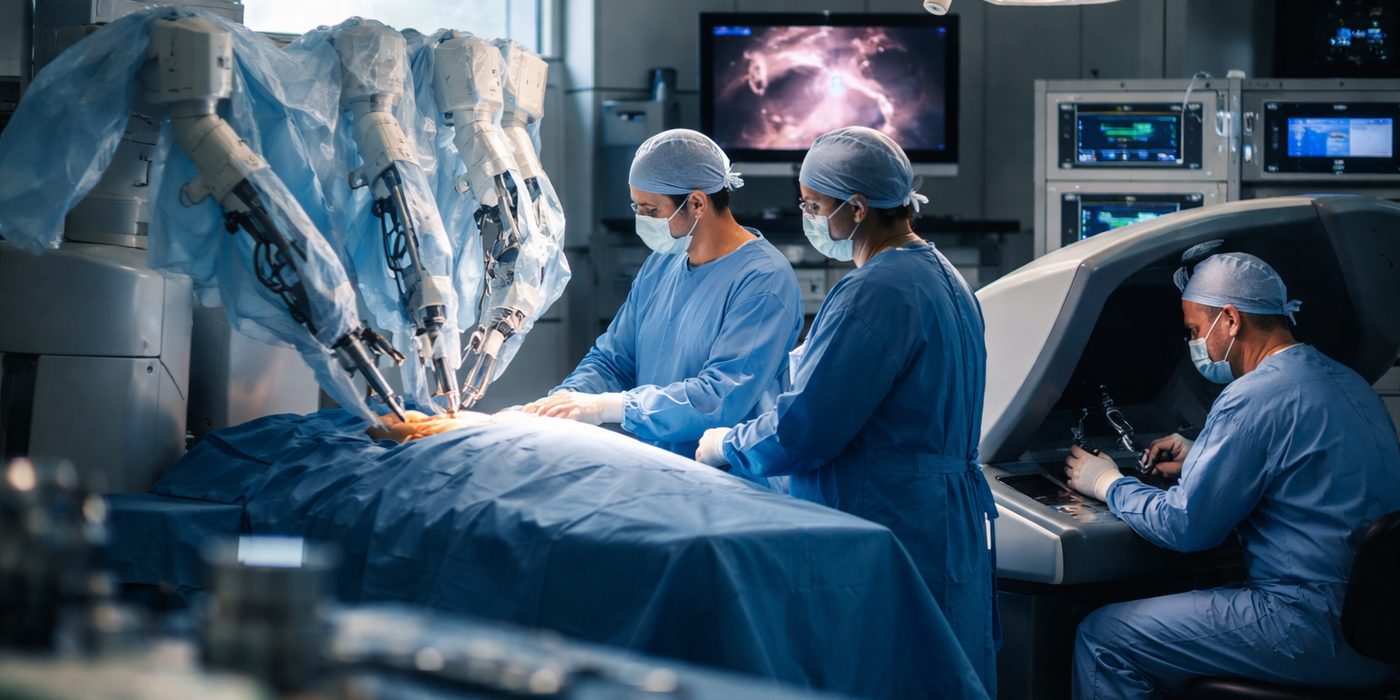
Virtuoso's answer is mechanical rather than procedural. Instead of forcing surgeons to approximate en bloc technique with straight, single-axis instruments, the system places miniature articulated arms at the tip of a standard endoscope, giving the operator the kind of triangulation and dexterity that open and laparoscopic surgeons take for granted. Needle-scale arms are the engineering headline. Shrinking joints, cables and actuators to fit through the working channel of an endoscope, without losing the force and precision needed to grasp and dissect tissue, is a harder problem than scaling down a laparoscopic robot, and it explains why so few companies have shipped anything in this size class.
For the broader surgical robotics industry, the clearance is a data point about where the next growth sits. The large platforms from Intuitive Surgical and its challengers compete over soft-tissue procedures performed through ports in the abdomen. Natural-orifice and endoluminal surgery, where instruments travel through the body's existing channels rather than incisions, has been a recurring promise that repeatedly stalled on the physics of making tiny instruments strong and controllable. A cleared product that works through a conventional endoscope suggests the technical barrier is yielding, and it hands investors something concrete to price: a regulated device in a high-volume procedure, with a clear clinical endpoint in the quality of the pathology specimen.
The commercial questions are as important as the engineering ones. Bladder cancer carries one of the highest lifetime treatment costs of any malignancy because of intensive surveillance and frequent recurrence, which gives health systems a financial incentive to get staging right the first time. If better specimens reduce repeat procedures, the economics of a capital-equipment purchase become easier to defend. Adoption, though, depends on training curves, per-procedure consumable costs and whether surgeons will trade a familiar resectoscope for a new robotic interface. Clearance opens the door to those conversations; it does not answer them. Reimbursement for a technique that changes specimen quality rather than a billable procedure code will be its own negotiation.
What to Watch The first signal will be where Virtuoso places its initial systems: academic urology centers with high TURBT volume are the likeliest early adopters, and named hospital announcements through early 2027 will show how fast the company moves beyond launch sites. Watch for published specimen-quality data, particularly the rate of detrusor muscle present in resected samples and repeat-resection rates compared with conventional TURBT, since that evidence will drive payer and guideline interest. Track whether Intuitive Surgical or other endoluminal robotics developers respond with their own miniaturized urology programs, and monitor any new FDA 510(k) or De Novo filings for competing needle-scale instrument platforms. Finally, keep an eye on urology society meetings in the first half of 2027, where early clinical series and surgeon feedback on the learning curve are most likely to surface.