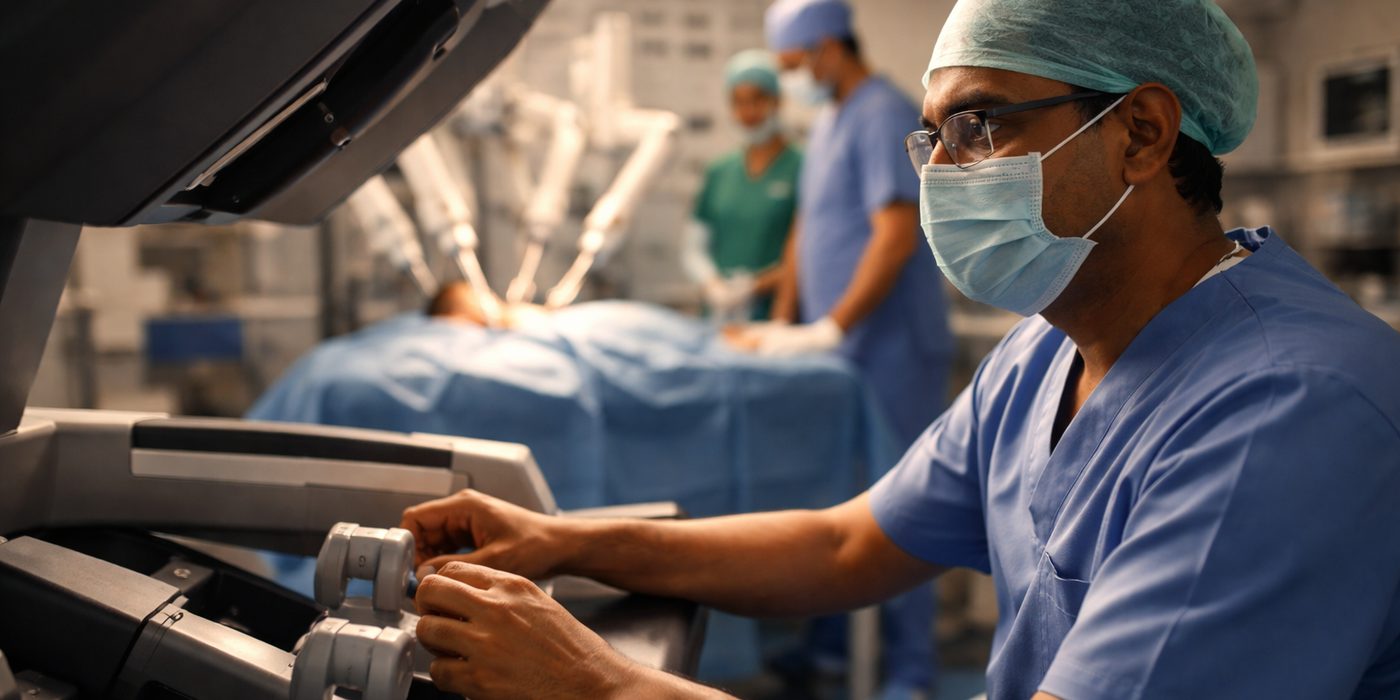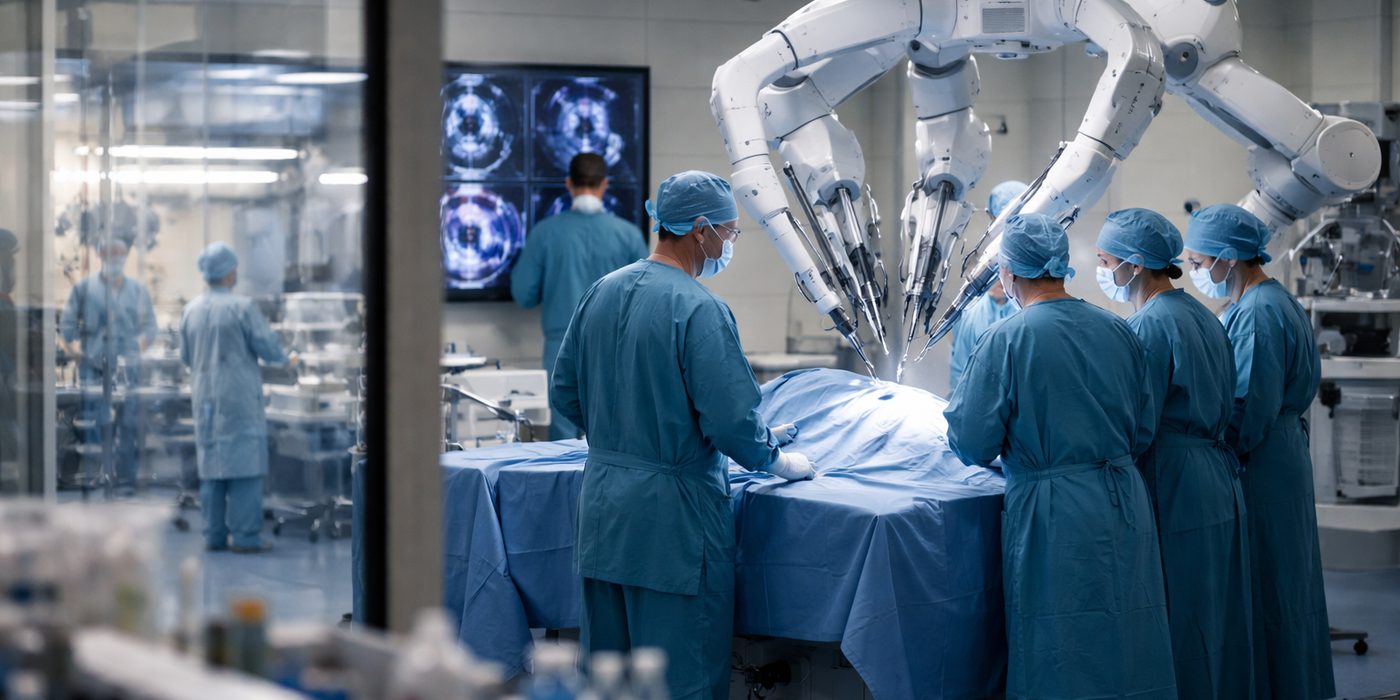
The company that assembles a large share of the world's iPhones now wants a place in the operating room. Foxconn, formally Hon Hai Precision Industry, is pushing its AI work beyond the clinical software where it first gained traction and into medical robotics, hospital workflow automation and the manufacturing of healthcare equipment itself, according to reporting from Digitimes. The ambition is not to build one product. It is to stitch together a network of hospitals, device makers and technology partners into an integrated ecosystem, with Foxconn supplying the AI backbone, the production capacity and a good deal of the integration labor.
That structure will look familiar to anyone who tracked Foxconn's electric vehicle push. Chairman Young Liu has repeatedly described the company's growth model as platform-plus-partners rather than proprietary end products, and healthcare is being slotted into the same template. Foxconn's own medical footprint is not new: the group has spent years building relationships with Taiwanese hospital systems and developing clinical AI tools, including imaging analysis and decision-support software. What is new is the physical turn. Software can be piloted in a hospital's IT closet. Robots need floor space, clinical sign-off, sterilization protocols and a service organization that can reach a ward at three in the morning.
The partnership model is also a hedge against the hardest problem in the sector, which is regulatory and clinical credibility. Foxconn can build almost anything at scale, but it has no installed reputation among surgeons, nurses or hospital procurement committees. Hospitals supply clinical data, workflow knowledge and the validation environment that regulators demand. Equipment makers supply the domain-specific engineering and, critically, the existing regulatory clearances. In exchange, Foxconn offers a manufacturing and AI stack that most medical device companies could not assemble alone. The trade is straightforward: credibility from partners, cost structure and compute from Foxconn. Whether the economics hold depends on how much of the value stays with the party that owns the clinical relationship.
For the broader robotics industry, the move matters because of where Foxconn sits in the supply chain. Contract manufacturers have historically stayed invisible, building other companies' designs. Foxconn's partnership with NVIDIA on AI factories and digital-twin tooling gives it a credible simulation and training pipeline, and healthcare robotics is a natural place to apply it: synthetic data can compensate for the scarcity of annotated surgical and nursing-task footage. Hospital logistics, patient transfer and rehabilitation assistance are all under-automated and short of labor in Taiwan, Japan and much of Europe. A manufacturer able to cut the unit cost of a hospital-grade mobile manipulator could shift the adoption curve for the entire category, and that prospect should concern incumbents in surgical and service robotics as much as it interests investors.
The obstacles are real, and engineers will recognize them. Medical robots live under a different regime than consumer hardware: design controls, post-market surveillance, cybersecurity requirements and liability exposure that can dwarf the hardware margin. Production discipline learned in consumer electronics does not automatically transfer to a world where a field failure is a patient-safety event. Foxconn's advantage is volume and supply-chain leverage; its gap is clinical trust earned over decades by firms like Intuitive Surgical. Hospitals will want evidence, not roadmaps, and they will likely start with low-risk, high-frequency tasks such as supply delivery and workflow coordination before anything touches a patient. That sequencing suggests the first commercially meaningful revenue will come from logistics and manufacturing contracts, not from the surgical suite.
What to Watch Track Foxconn's fourth-quarter 2026 earnings commentary for any disclosed healthcare revenue or named hospital deployments, since the group has so far spoken in ecosystem terms rather than dollar figures. Watch for new partner announcements around Taiwanese hospital systems and for any regulatory filings, such as Taiwan FDA or U.S. FDA submissions, that would show a Foxconn-built device moving from concept to clearance. Monitor NVIDIA's healthcare robotics releases, including Isaac-based simulation tools, because Foxconn's pace is closely tied to that stack. Finally, look to the major year-end and early-2027 medical technology showcases for the first public hardware demonstrations that move this strategy from slideware to the hospital floor.