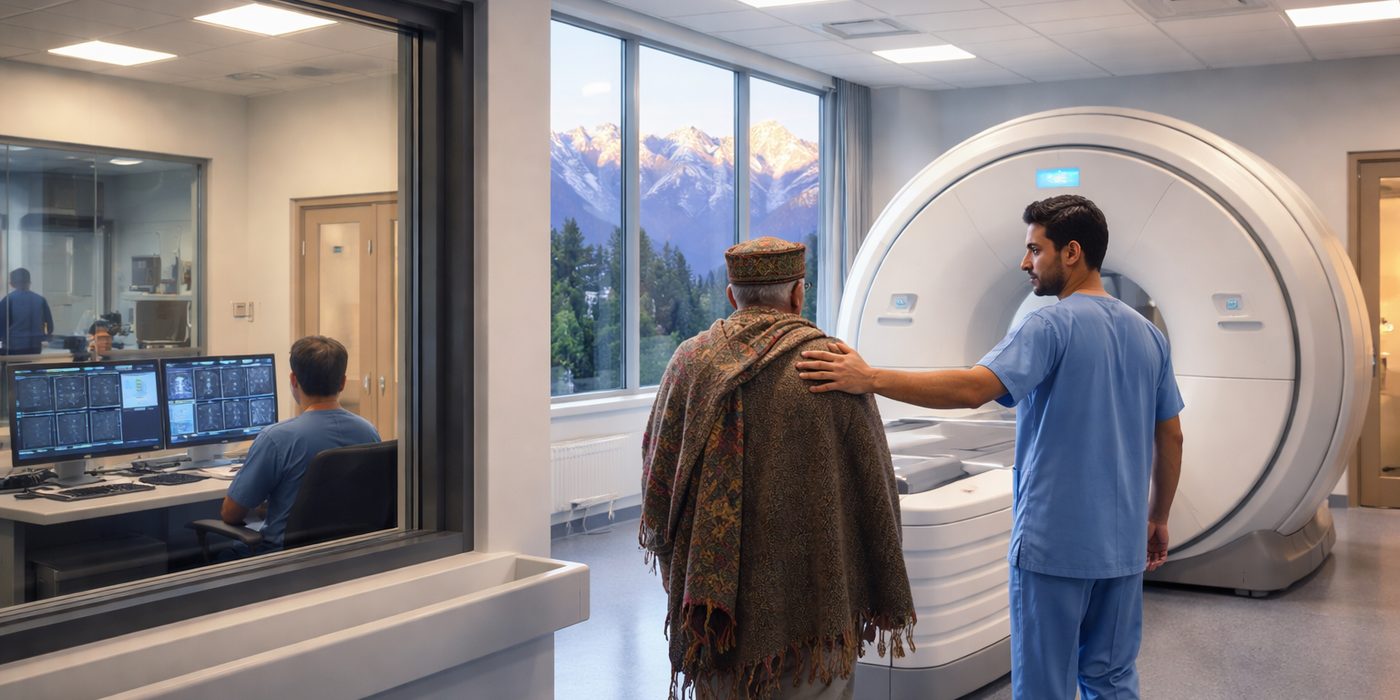
A Rs 23.5 crore magnet now hums inside a government hospital in Kangra district, and the more consequential announcement came attached to it. Chief Minister Sukhvinder Singh Sukhu inaugurated the 3-Tesla MRI facility at Dr Rajendra Prasad Government Medical College in Tanda, then told the audience that robotic surgery arms and a 256-slice CT scanner would follow. Himachal Pradesh is a mountainous state of roughly seven million people, not a metropolitan hub with deep private-hospital capital. Yet the government is now committing public money to the same class of equipment that, until recently, clustered in Delhi, Mumbai, and Bengaluru corporate chains.
The MRI itself matters for patients who previously traveled long distances, often to Chandigarh or Delhi, for high-field scans. A 3-Tesla system delivers a stronger magnetic field than the 1.5-Tesla machines common in district hospitals, which translates into sharper neurological, musculoskeletal, and oncological imaging and, in many protocols, shorter scan times. Sukhu also pledged faster turnaround on scan services, an unglamorous promise that often determines whether expensive equipment improves outcomes or simply creates a new queue. Medical colleges live and die by throughput. A scanner that sits idle for lack of technicians, helium, or reporting radiologists is a monument, not a diagnostic tool.
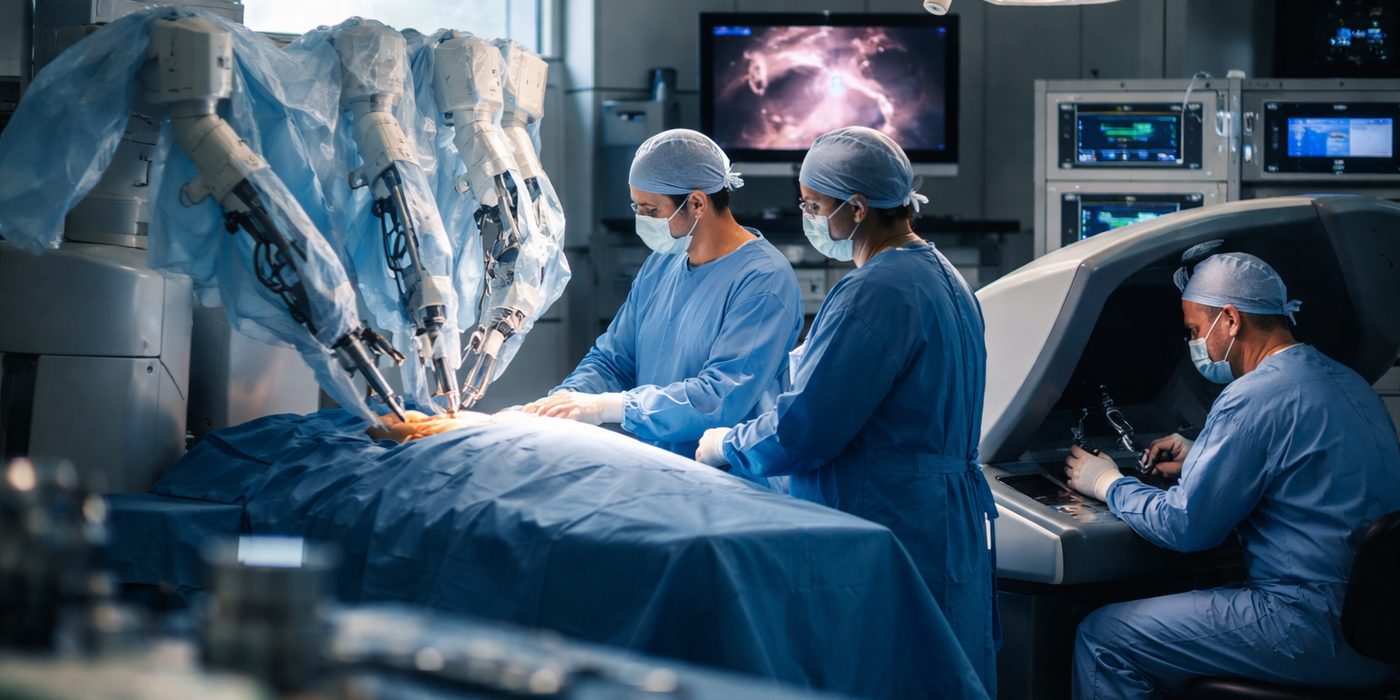
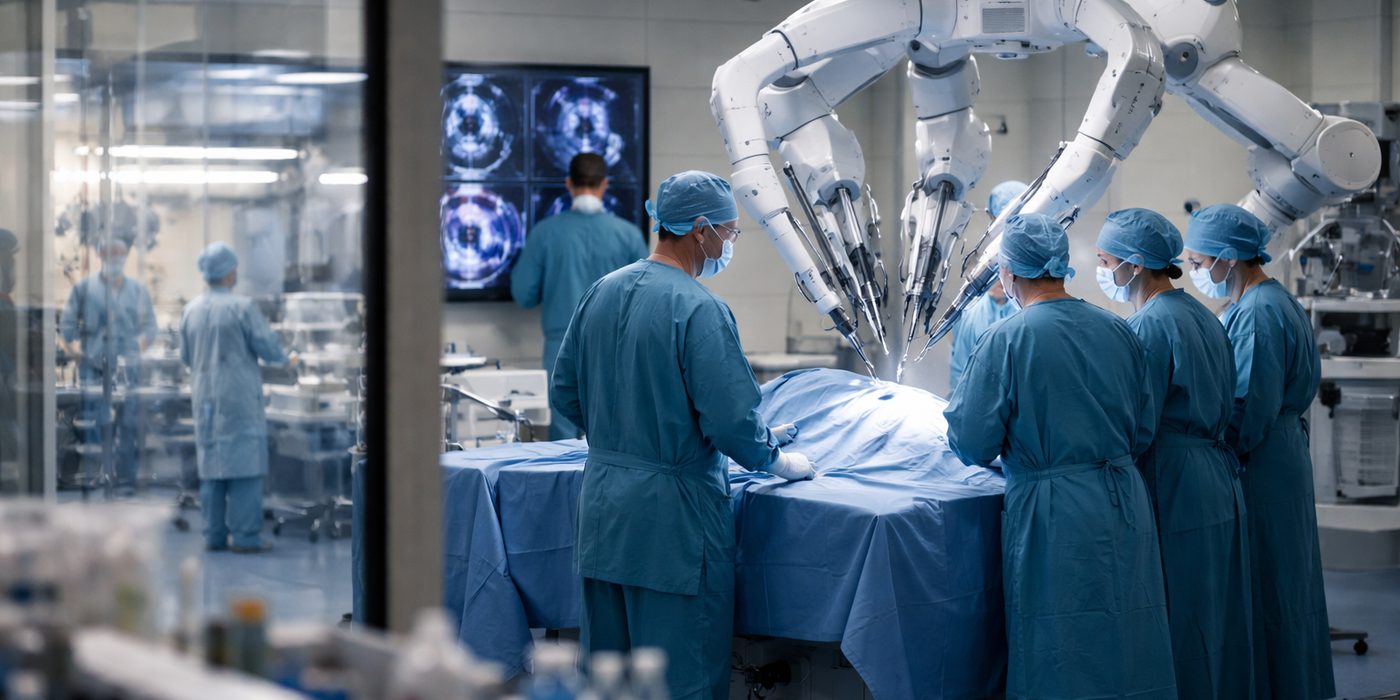
The robotic surgery announcement is where the story turns toward this publication's readers, though the details remain thin. The source reporting refers to robotic surgical arms without naming a platform, a vendor, a procedure mix, or a delivery date. That absence is itself informative. India's installed base of soft-tissue surgical robots has been dominated by Intuitive's da Vinci line in private hospitals, while domestic entrants, most visibly SS Innovations with its SSi Mantra system, have pitched aggressively on price. A state government buying for a medical college changes the economics. Public tenders favor lower acquisition cost, bundled training, and service contracts that function reliably far from a vendor's regional headquarters. Whoever wins this tender will be tested on uptime in a hill state, not on demo-floor polish.
There is a broader pattern worth reading here. Imaging and robotics are converging in the operating pathway: high-field MRI and fast multi-slice CT feed the preoperative planning that robotic systems depend on, and a 256-slice scanner can capture cardiac and vascular detail in a fraction of the time older equipment requires. A hospital that buys all three is building a diagnostic-to-surgical chain rather than collecting isolated devices. The harder problem is human. Robotic programs need trained surgeons, scrub teams, biomedical engineers, and a case volume sufficient to keep skills current. Medical colleges are better positioned than isolated district hospitals because they can fold robotics into residency training, which creates a durable pipeline of operators and makes the capital outlay easier to justify to finance departments.
For manufacturers, the lesson is about channel, not just geography. India's tier-two and tier-three public hospitals represent a procurement market that rewards modular pricing, local service networks, and financing structures that spread cost over years. Vendors that arrive with only a flagship system and a premium price will struggle in tenders where a Rs 23.5 crore MRI is considered a major capital event. Those offering leasing, per-procedure pricing, or domestically assembled hardware will find a more receptive audience. The Tanda announcement does not settle which model wins, but it confirms that state governments are now willing to ask the question.
What to Watch Watch for the tender notice for the robotic surgery system, which should reveal the platform shortlist, the specified procedure categories, and whether the buyer weights domestic manufacturing in its scoring. Track whether the 256-slice CT installation at Tanda is scheduled for early 2027 and what technician and radiologist hiring accompanies it. Follow SS Innovations and Intuitive for any Himachal Pradesh or northern India placements disclosed in their next quarterly updates. Finally, monitor whether neighboring states such as Punjab, Haryana, and Uttarakhand announce comparable medical-college robotics packages over the coming months, which would confirm a regional procurement trend rather than a one-off.