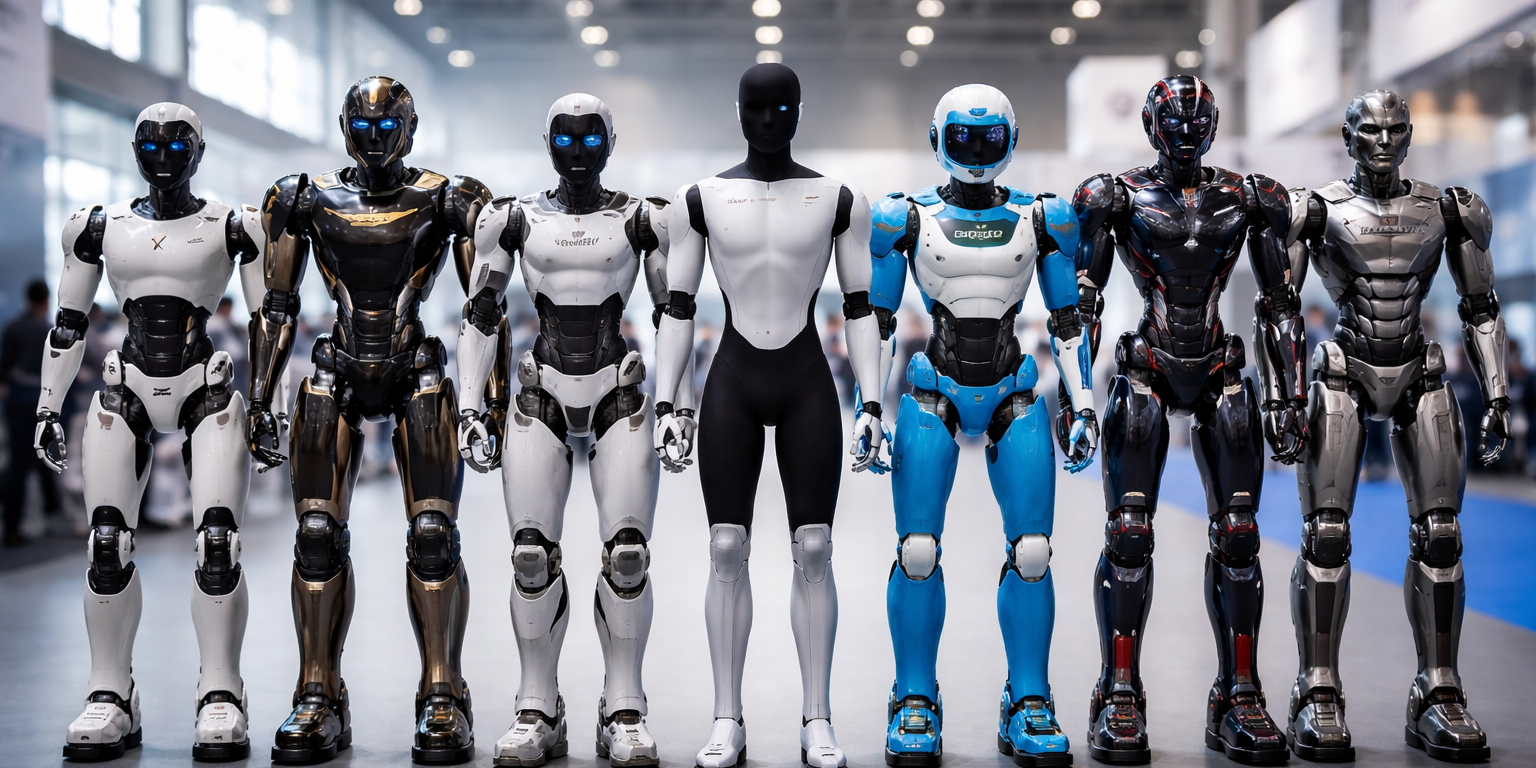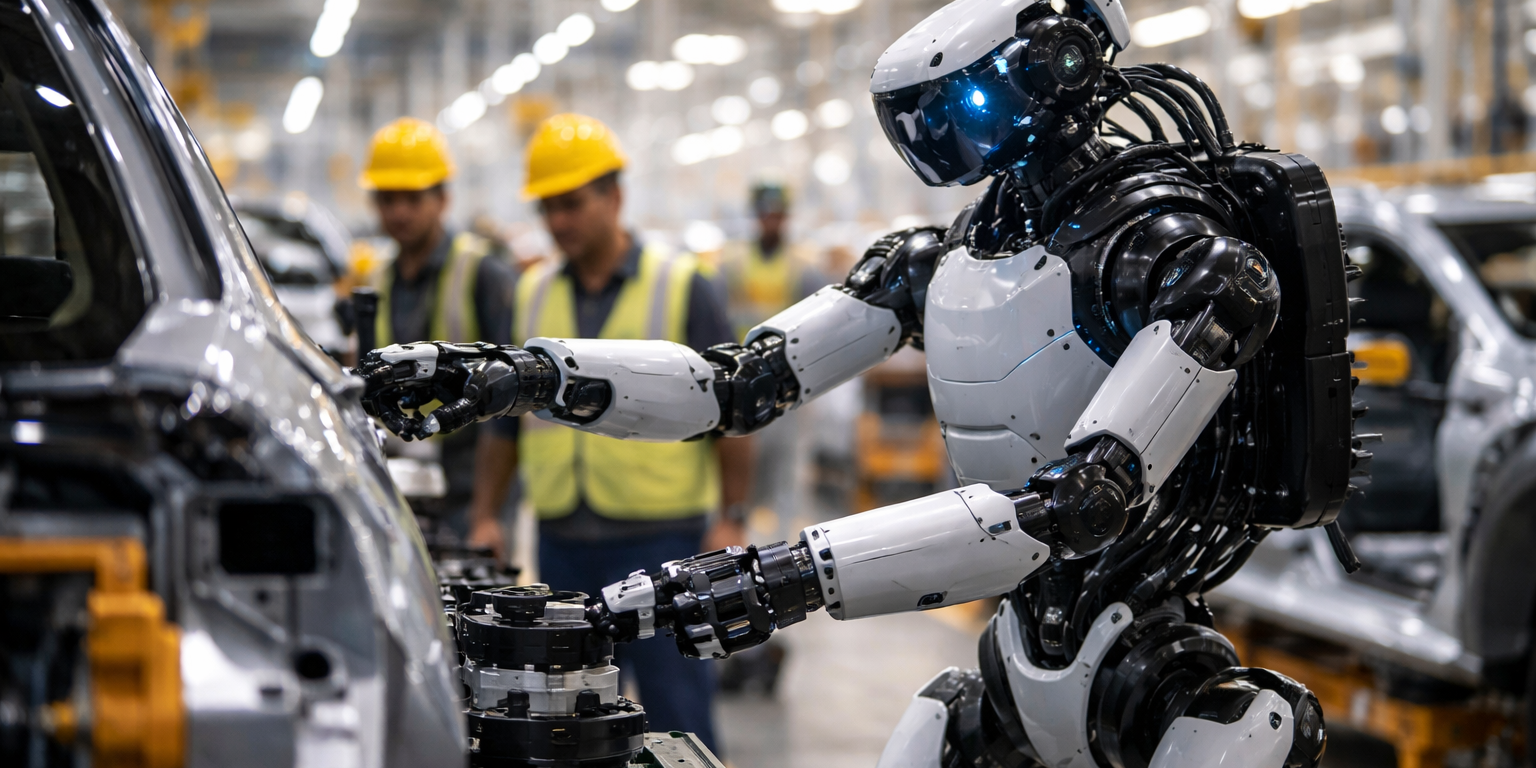

Unitree Robotics has crossed into profitability, a milestone the Hangzhou-based manufacturer attributes to relentless cost engineering that brought its G1 humanoid platform to market at $16,000 per unit. The achievement stands in sharp contrast to the capital-intensive burn rates of venture-backed competitors like Figure AI and Agility Robotics, which continue raising nine-figure funding rounds while deferring revenue targets. Unitree's path reflects a deliberate strategy of vertical integration and supply chain optimization that allowed the company to scale production without dilutive equity financing. The financial position gives Unitree runway to invest in capabilities beyond hardware, though recent product demonstrations suggest the company faces a critical decision about how quickly to close the widening gap in artificial intelligence capabilities between its current systems and the foundation model-powered platforms now entering field trials across North America and Europe.
The cost advantage runs deep into Unitree's manufacturing architecture. While Boston Dynamics historically relied on precision-machined components and aerospace-grade actuators, Unitree engineers designed the G1 around commercially available servo motors, injection-molded plastic housings, and a simplified kinematic chain that reduced part count by approximately forty percent compared to earlier humanoid designs. The company manufactures its own motor controllers and power distribution boards at a facility in Zhejiang province, eliminating markup from specialized suppliers. Battery packs use standard lithium cells rather than custom configurations. This approach prioritizes manufacturability and repair economics over absolute performance specifications, a trade-off that resonates with commercial buyers evaluating total cost of ownership rather than laboratory benchmarks. Unitree shipped an estimated twelve hundred G1 units in 2024, primarily to universities and research institutions in Asia and the Middle East, establishing the platform as the default choice for academic work constrained by procurement budgets. The installed base creates momentum, but also locks customers into an ecosystem that may struggle to incorporate advances in learning-based control and multimodal perception.
The AI challenge centers on architectural decisions made when Unitree began development of its humanoid line in 2022, before large language models and vision transformers had demonstrated practical utility for robotic manipulation. Unitree's control stack relies on model-based methods, inverse kinematics solvers, and hand-tuned behavior trees, an approach that works reliably for scripted tasks but lacks the generalization capability that foundation models enable. Demonstrations at technology conferences show G1 units performing predetermined sequences, walking across flat surfaces, and manipulating objects in constrained pick-and-place scenarios. Competitors like Figure have shown their platforms interpreting natural language commands, adapting to novel objects without reprogramming, and recovering from unexpected perturbations using learned policies trained on millions of simulated interactions. Unitree has published little research on learned control policies or integration with large-scale pretrained models, raising questions about internal capabilities in machine learning infrastructure, dataset curation, and simulation environments. The company's software team remains substantially smaller than the AI divisions at well-funded competitors, with LinkedIn profiles suggesting headcount below fifty engineers focused on perception and autonomy. Closing this gap requires either massive internal investment in AI talent and compute infrastructure, or partnerships with organizations possessing foundation model expertise, neither of which aligns cleanly with Unitree's lean operational model.
The competitive dynamics will intensify through 2025 as multiple platforms reach commercial deployment in warehouse and logistics applications. Agility Robotics has begun piloting Digit robots at Amazon fulfillment centers, demonstrating the integration of learned manipulation policies with facility management systems. Figure recently disclosed partnerships with BMW and OpenAI, combining manufacturing expertise with frontier AI capabilities. Apptronik has signed agreements with NASA and Mercedes-Benz, positioning Apollo as a platform for both terrestrial and space applications. These deployments will generate proprietary datasets capturing edge cases, failure modes, and successful task completions that feed back into training pipelines, creating a self-reinforcing advantage for companies with deployed fleets and AI infrastructure. Unitree's cost advantage matters less if customers prioritize capability and adaptability over initial purchase price, particularly in applications where labor savings justify premium hardware. The academic market that sustained Unitree's early growth represents a limited addressable opportunity compared to industrial automation, healthcare, and consumer applications that demand robust intelligence. Strategic options include licensing AI stacks from third parties, acquiring machine learning teams, or maintaining focus on the cost-sensitive segment while competitors pursue high-capability applications. Each path carries execution risk and capital requirements that test whether profitability at current scale provides sufficient resources to compete against billion-dollar development programs.
What to Watch: Monitor whether Unitree announces partnerships with AI labs or cloud providers in Q1 2025, signaling recognition that proprietary development cannot match the pace of foundation model progress. Track pricing adjustments from Western competitors as manufacturing scales, potentially eroding Unitree's cost advantage within eighteen months. Watch for deployment announcements beyond academic settings, particularly in logistics or manufacturing, as evidence that customers value Unitree's economics despite capability gaps. Follow patent filings and research publications from Unitree's engineering team for indicators of investment in learning-based control or multimodal perception systems.