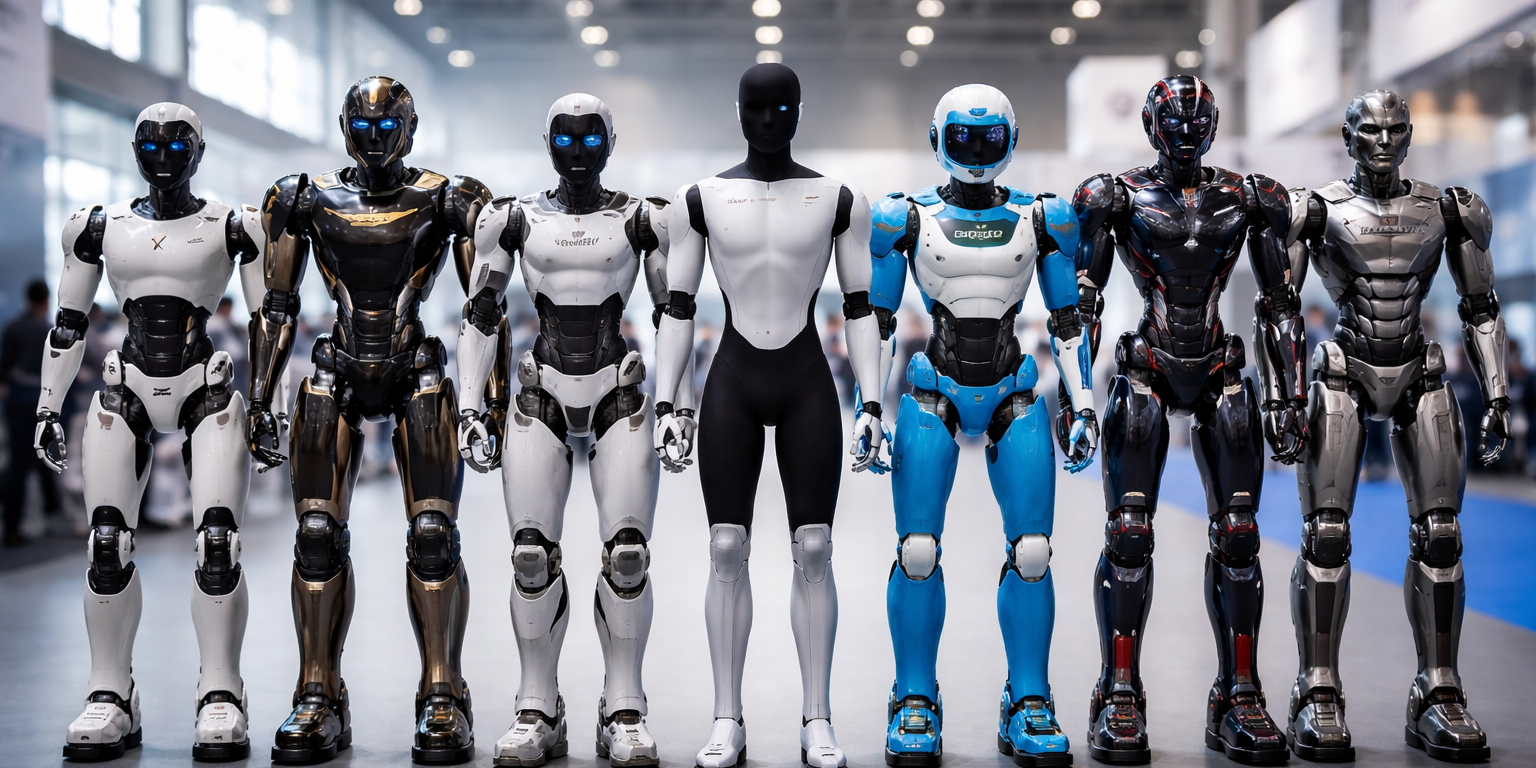
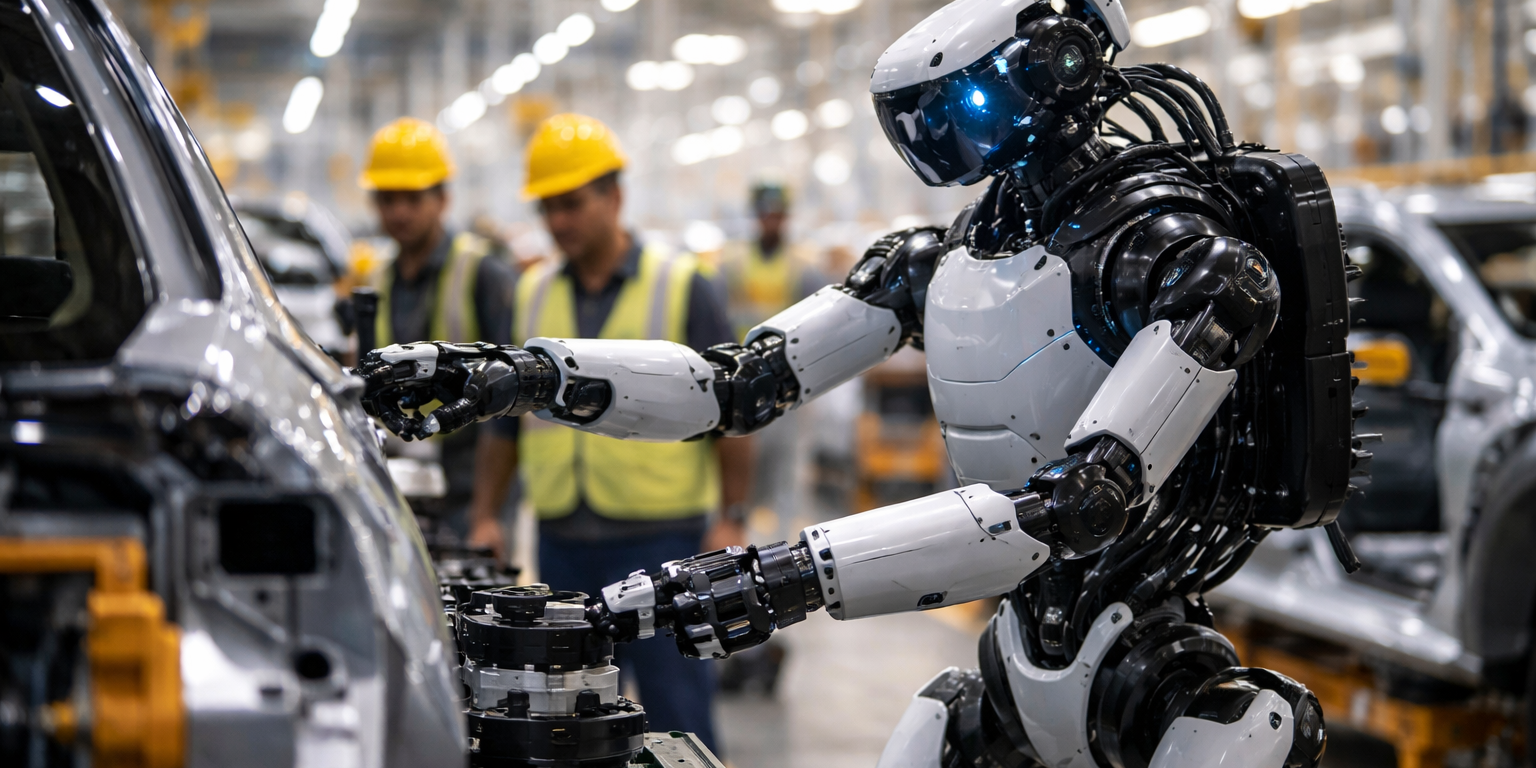
Unitree Robotics has filed preliminary documents for a public listing on the Shanghai Stock Exchange, positioning itself as the first humanoid-focused robotics company to pursue a major equity raise with a pitch built entirely on manufacturing cost advantage rather than technological differentiation. The Hangzhou-based firm, which began shipping its G1 humanoid in summer 2024 at a $16,000 price point, now faces the market test of whether low-cost hardware alone can justify venture-scale valuations in a sector where American competitors routinely raise hundreds of millions on the promise of artificial general intelligence integration.
The timing reflects broader Chinese industrial policy. Beijing has identified humanoid robotics as a strategic priority under its 14th Five-Year Plan, directing state capital toward domestic suppliers and setting a target of mass production by 2025. Unitree fits the template: founded in 2016 by Wang Xingxing, a former DJI engineer, the company built its reputation on quadruped robots that sold for a fraction of Boston Dynamics' Spot. The G1 extends that playbook vertically. At 1.32 meters tall and weighing 35 kilograms, it sacrifices the hydraulic power and sensor density of Western designs in favor of a bill of materials that Unitree claims can scale to under $10,000 at volume. The company has not disclosed revenue figures in its preliminary filings, but third-party estimates place 2024 unit shipments in the low thousands, primarily to research institutions and pilot programs in logistics and light manufacturing.
What Unitree offers is not advanced autonomy. The G1 ships with basic teleoperation software and skeletal APIs for motion planning. Customers are expected to build their own task-specific applications, a model that appeals to Chinese integrators but leaves Western enterprise buyers cold. That divergence matters. Figure AI, which raised $675 million in February 2024 at a $2.6 billion valuation, sells a vision of embodied AI where OpenAI's multimodal models drive humanoid labor. Tesla's Optimus program follows similar logic, betting that neural networks trained on video data will generalize to physical tasks. Unitree's pitch inverts the stack: sell the hardware now, let software catch up later, and rely on China's manufacturing ecosystem to iterate faster than vertically integrated competitors. The risk is commoditization. If humanoid hardware becomes a low-margin business, Unitree's head start evaporates the moment Foxconn or BYD enter the category.
The IPO also signals a maturation point for the humanoid sector, which has operated largely on private capital and government contracts. Unitree's public filing will force disclosure of unit economics that the industry has kept opaque. Investors will scrutinize gross margins, warranty reserves, and customer concentration. They will also weigh geopolitical exposure. Unitree sources motors, actuators, and control boards almost entirely from domestic Chinese suppliers, insulating it from export restrictions but limiting addressable markets. The U.S. and EU have both floated tariffs on Chinese robotics imports, and Unitree's filing acknowledges regulatory risk without quantifying it. For American robotics executives, the listing offers a benchmark. If Unitree's valuation holds, it validates the low-cost path and pressures Western companies to justify their premium pricing. If it stumbles, it suggests the market still demands integrated AI capabilities that only well-capitalized, software-first players can deliver.
What to Watch: Unitree's final prospectus, expected within 60 days, will include the first detailed financials from a humanoid-focused manufacturer. Separately, track whether Chinese integrators like Siasun or Estun announce partnerships or competing models, signaling a domestic supply chain coalescing around humanoid platforms. In the U.S., watch for pricing adjustments from Agility Robotics and Apptronik, both of which have hinted at sub-$50,000 models by late 2025. Finally, monitor Tesla's Optimus production ramp; Elon Musk has stated the company will manufacture humanoids at automotive scale by 2026, which would reset cost expectations industry-wide.