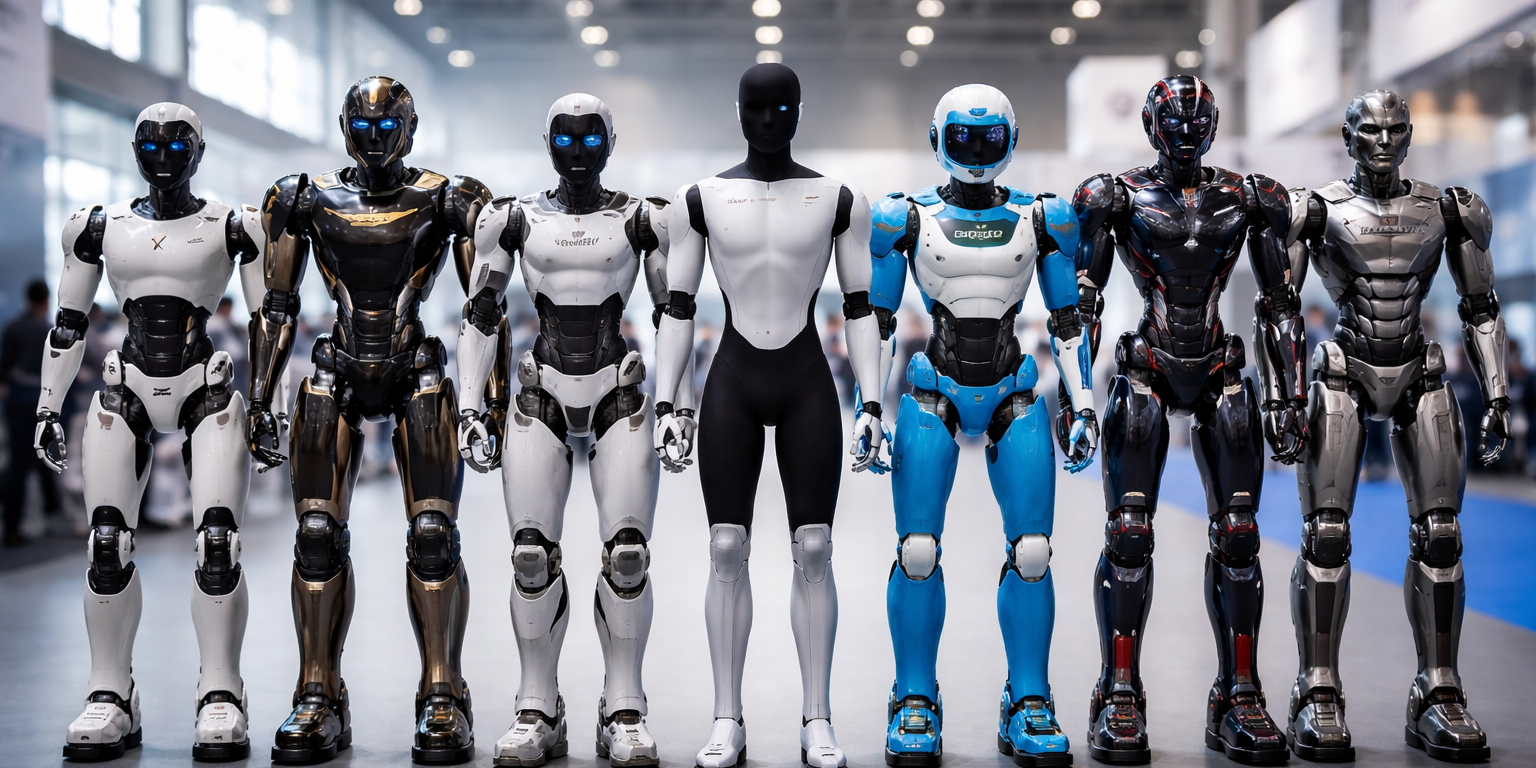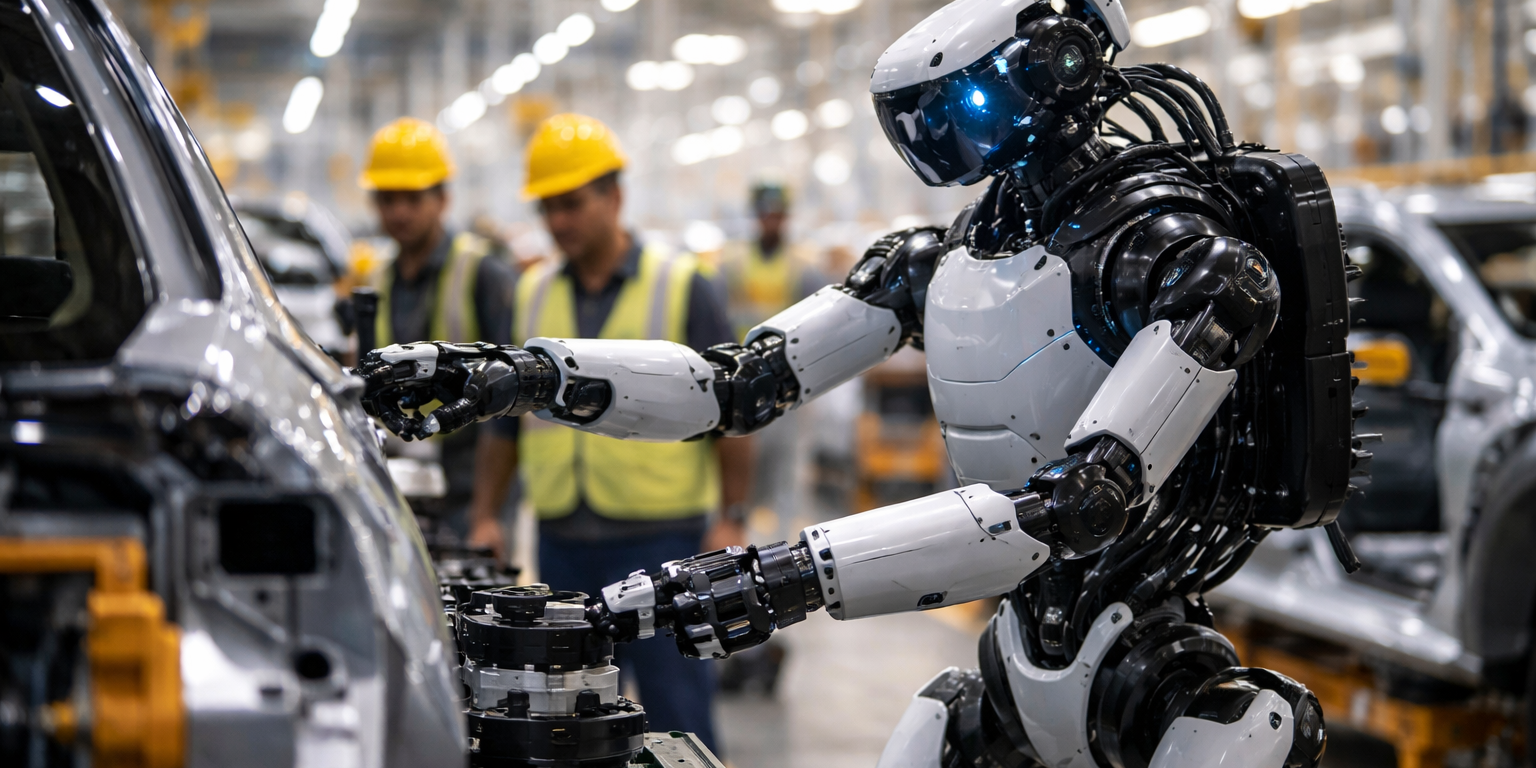
The retail price of a general-purpose humanoid robot has dropped below 30,000 yuan—roughly $4,150 at current exchange rates—forcing the Chinese suppliers who make the precision gearboxes inside them to abandon their traditional market boundaries. Unitree's R1 humanoid crossed that threshold in recent months, a move aggressive enough that Morgan Stanley analysts revised their 2026 production estimate for the Hangzhou-based company upward to 50,000 units. That volume, if it materializes, represents more than triple what the firm projected for calendar 2025 and signals that sub-$5,000 humanoids have moved from concept to credible commodity.
The immediate consequence has surfaced not in robot assembly plants but one tier deeper in the supply chain. Leaderdrive, a Suzhou-based manufacturer that historically concentrated on harmonic reducers for collaborative robot arms, has begun shipping units specifically designed for legged locomotion—a segment long dominated by Shuanghuan Drivetrain. Shuanghuan, in turn, has expanded its catalog to include reducers optimized for upper-limb manipulation tasks, encroaching on Leaderdrive's traditional stronghold. Neither company has issued public statements framing the moves as competitive responses, but procurement managers at three separate Chinese robotics firms confirmed the overlapping product launches occurred within a six-week window during the second quarter of this year. The motivation is transparent: when Unitree and similarly aggressive manufacturers squeeze unit prices, component suppliers face a choice between protecting margin by diversifying revenue or ceding share to rivals willing to operate on thinner spreads.
Zhaowei Machinery, which has built a reputation supplying micro-gearboxes for consumer electronics and automotive applications, has made the most capital-intensive bet on the humanoid buildout. The Shenzhen company broke ground in late May on a manufacturing facility dedicated exclusively to actuation components for dexterous robotic hands. The plant, located in the Bao'an District industrial zone, will house clean-room assembly lines for the miniature harmonic drives, planetary gearboxes, and brushless motor assemblies that enable finger-level articulation. Zhaowei executives declined to disclose the facility's construction budget but confirmed that initial production capacity is being sized for 200,000 hand actuation units annually—a figure that assumes each five-fingered hand requires approximately 15 discrete drive components. That capacity planning implicitly targets a market of 13,000 to 15,000 humanoid robots per year once the lines reach full utilization, a forecast consistent with Morgan Stanley's broader volume expectations for the Chinese market through 2027.
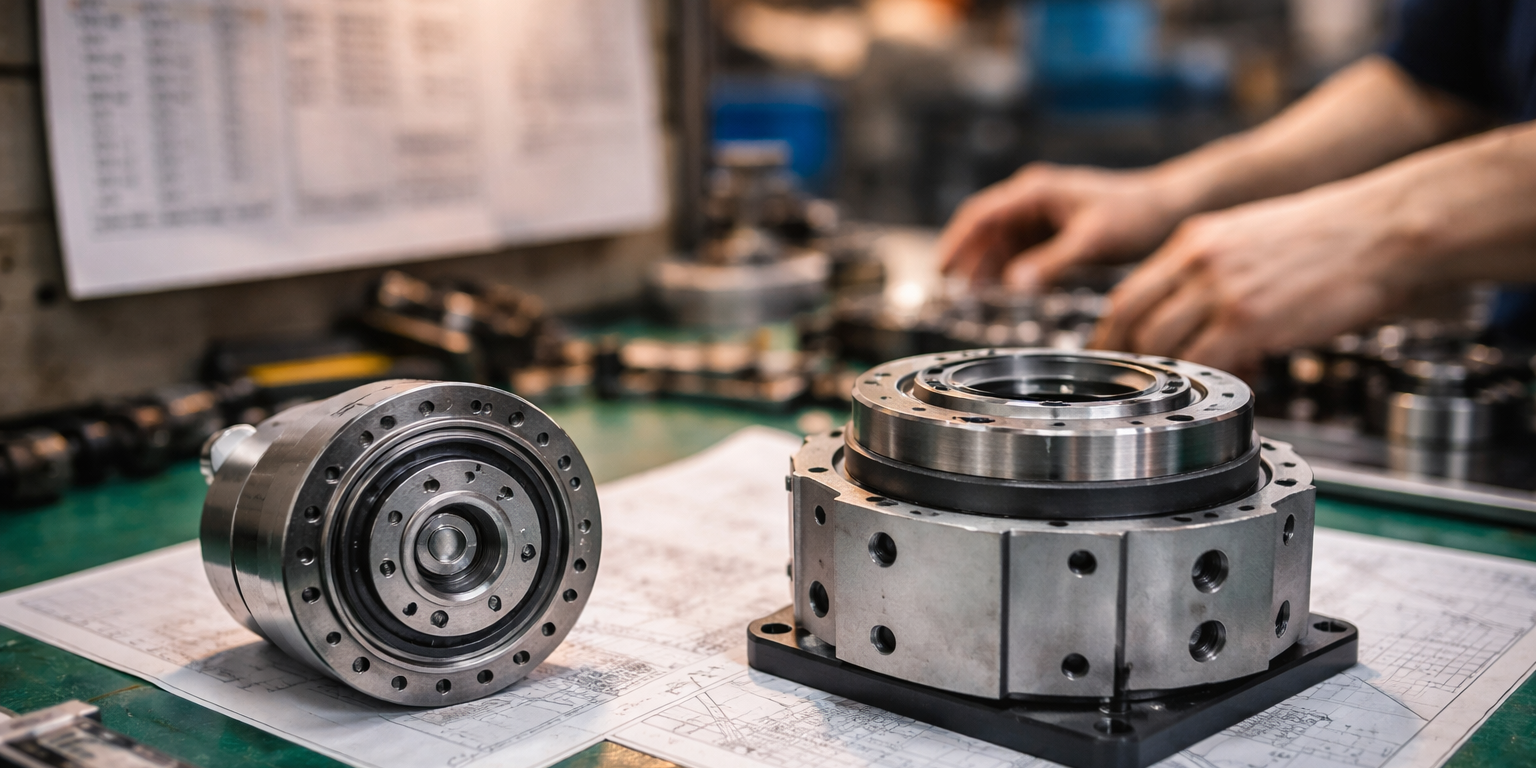
The financial pressure underlying these strategic pivots is structural, not cyclical. Harmonic drive reducers—the precision gearboxes that convert high-speed motor rotation into the slow, high-torque movement required for robot joints—have historically commanded gross margins in the 35 to 45 percent range when sold to industrial automation customers. Those economics relied on low-volume, high-mix production runs and customers who prioritized performance over price. Unitree's approach inverts that model. The company has publicly stated its intent to drive component costs down through volume commitments and vertical integration, and it has shown willingness to accept razor-thin margins on hardware in the near term. Suppliers who refuse to play along risk losing access to what could become the largest single customer segment in Chinese robotics. Suppliers who do play along face eroding returns on existing product lines, which explains the rush to diversify into adjacent categories where pricing has not yet collapsed. Leaderdrive's locomotive reducers and Shuanghuan's manipulation-focused units represent attempts to capture revenue in segments where Unitree's volume leverage has not yet forced a reset. Zhaowei's dexterous hand facility is a longer-term hedge, betting that hand actuation will remain a specialized, higher-margin niche even as overall humanoid prices continue falling.
What to Watch: Leaderdrive and Shuanghuan are both expected to report second-quarter financials in late August 2026; compare their average selling prices year-over-year to quantify the margin compression. Zhaowei's Bao'an facility is scheduled to begin trial production in October 2026, with initial output destined for unnamed Chinese humanoid manufacturers—customer announcements should follow by year-end. Morgan Stanley's 50,000-unit forecast for Unitree hinges on the company securing contracts beyond its direct-to-consumer channel; any enterprise or research institution orders announced in the third quarter will validate or undermine that volume assumption. Finally, watch for Unitree's own supplier disclosures: if the company begins listing multiple harmonic drive vendors for the same joint types, it confirms the competitive dynamic among Leaderdrive, Shuanghuan, and others has successfully driven costs lower.