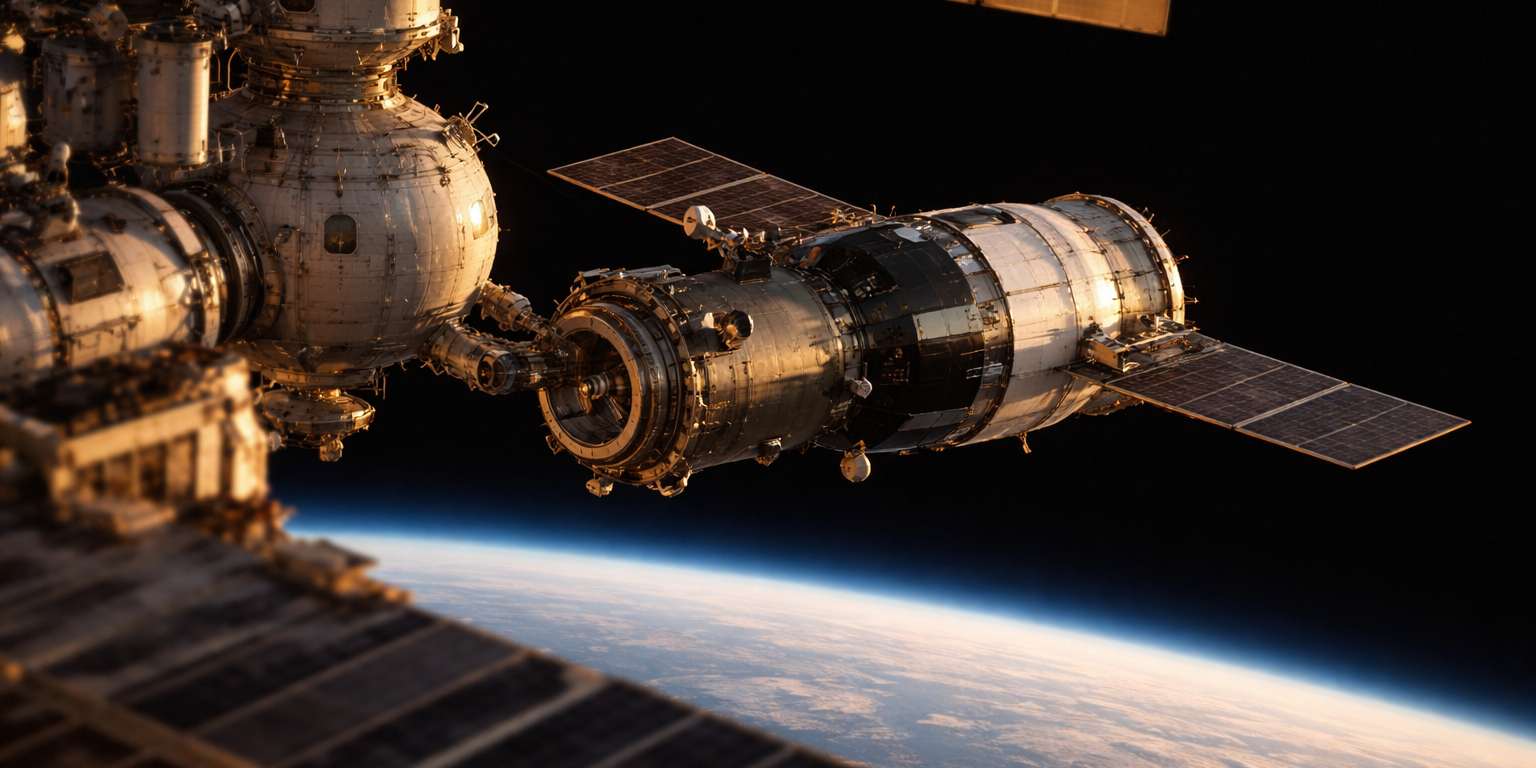
The Progress MS-35 cargo spacecraft completed its docking sequence with the International Space Station on September 19, 2026, carrying among its payload a control system for Teledroid, Russia's in-development space humanoid robot. Roscosmos confirmed the arrival but provided limited technical specifications for the control hardware, which will enable ground-based operators to remotely pilot the robot during external station tasks. The delivery follows years of incremental development on anthropomorphic teleoperation platforms, part of a broader Roscosmos strategy to reduce crew time spent on hazardous maintenance work outside the pressurized modules.
Teledroid itself remains Earthbound for now. The control system aboard Progress MS-35 represents infrastructure preparation rather than robot deployment, a pattern consistent with how space agencies stage complex hardware introductions. Russian engineers have been refining Teledroid since the early 2020s, iterating on lessons from SAR-401, an earlier humanoid testbed that flew to the ISS in 2019 aboard Soyuz MS-14. That mission exposed limitations in real-time teleoperation over satellite links, particularly latency issues that made fine motor tasks nearly impossible when commanding anthropomorphic manipulators from ground stations. The control system now in orbit likely incorporates higher-bandwidth communication architecture and possibly edge computing to buffer operator commands, though Roscosmos has not disclosed whether the system includes onboard AI to smooth out lag-induced jitter.
The robot's intended role centers on extravehicular activity, the industry term for spacewalks, which remain among the most resource-intensive and risk-laden operations in crewed spaceflight. NASA data shows the average EVA requires roughly 50 hours of crew preparation time for every hour spent outside, a ratio that becomes unsustainable as station complexity grows and crew sizes remain static. Anthropomorphic robots piloted from inside the station or from Earth theoretically collapse that preparation overhead, though no space agency has yet demonstrated reliable teleoperated EVA at scale. Teledroid's design includes articulated arms and hands capable of manipulating standard ISS tools, a deliberate choice that avoids redesigning the station's existing infrastructure around specialized end effectors. If the control system performs as intended, Roscosmos could conduct supervised trials where cosmonauts remotely operate the humanoid during low-stakes maintenance tasks, building operational confidence before attempting critical repairs.
This delivery occurs as multiple nations accelerate humanoid robotics programs for orbital and lunar applications. China's space agency has published research on teleoperated systems for its Tiangong station, while NASA continues funding partnerships with terrestrial humanoid developers, evaluating whether robots designed for Earthside logistics can adapt to microgravity with software updates rather than clean-sheet designs. The commercial space sector shows even more activity: Axiom Space and Blue Origin have both indicated interest in robotic systems for their planned stations, recognizing that private facilities operating on tighter budgets than government programs cannot afford the crew-hour inefficiencies inherent in traditional EVA. Teledroid's progression from ground testing to on-orbit control infrastructure suggests Roscosmos sees near-term viability in teleoperation, a more conservative technical approach than the supervised autonomy models some U.S. developers favor but one that sidesteps the regulatory and safety complications of letting algorithms make real-time decisions during tasks where mistakes could puncture pressurized modules or damage critical systems.
The timing aligns with Russia's broader push to maintain ISS relevance as international partnerships show signs of strain and alternative platforms emerge. Roscosmos has committed to ISS participation through at least 2028, though domestic political pressures and budget constraints continue generating speculation about earlier withdrawal. Deploying a functional space humanoid before that deadline would give Russian engineers operational data unavailable to competitors and potentially create leverage in negotiations around future station collaboration. It would also demonstrate capabilities relevant to Russia's stated goal of building its own orbital platform in the 2030s, where teleoperated robotics could reduce the crew size required for sustained operations. Whether Teledroid itself ever reaches orbit or remains a ground-based testbed for a successor system, the control infrastructure now aboard the ISS represents hardware commitment beyond paper studies, a threshold that matters in an industry where announced timelines frequently slip by years.
What to Watch: Monitor Roscosmos announcements through early 2027 for any confirmation of Teledroid hardware manifested on subsequent Progress or Soyuz missions, which would indicate the control system has passed initial checkout. Track whether NASA or ESA cosmonauts participate in Teledroid operations, signaling international buy-in despite geopolitical friction. Watch for technical publications from Russian research institutes detailing latency compensation methods or AI-assisted teleoperation, which would clarify whether this system incorporates machine learning components or relies purely on direct human control.