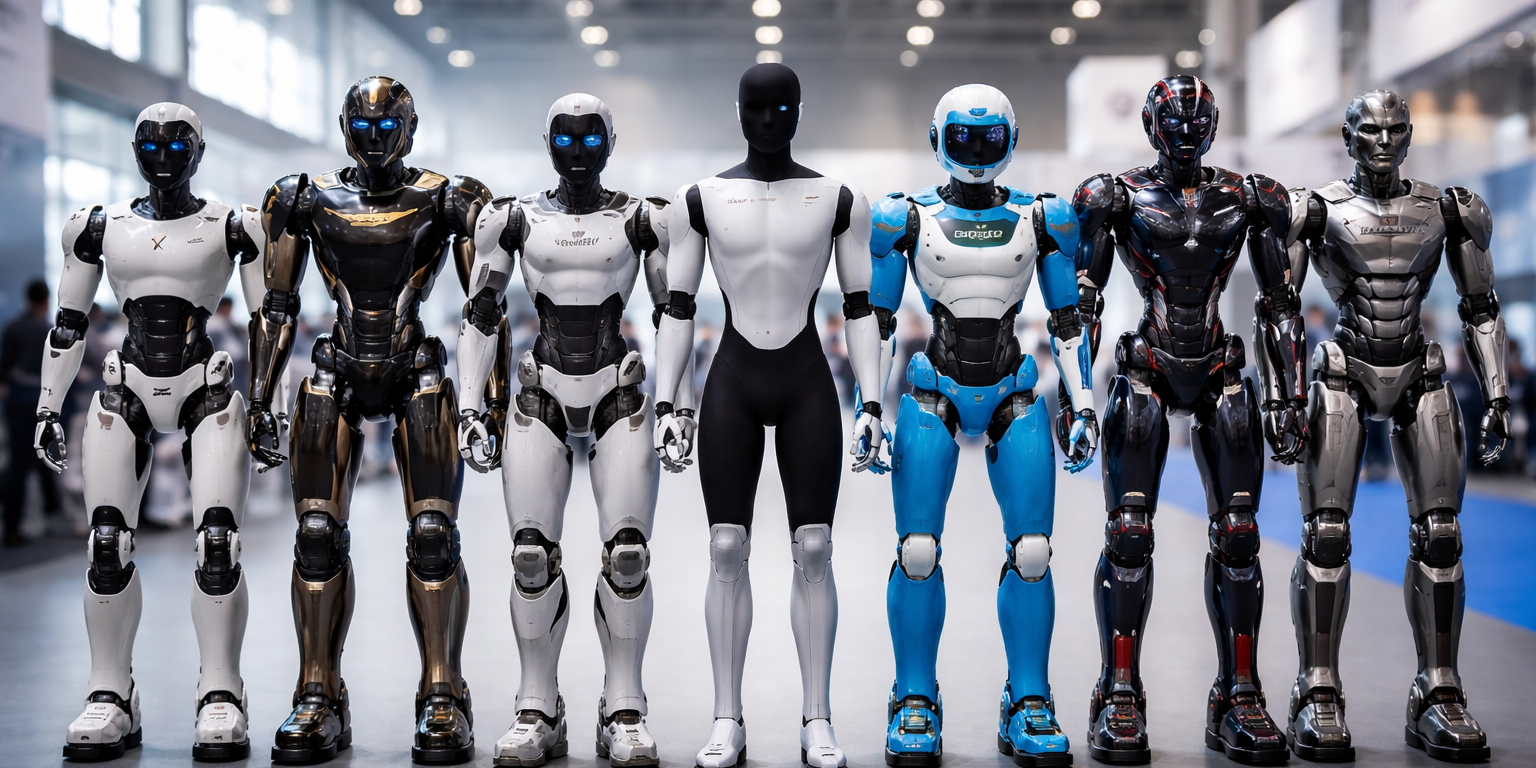
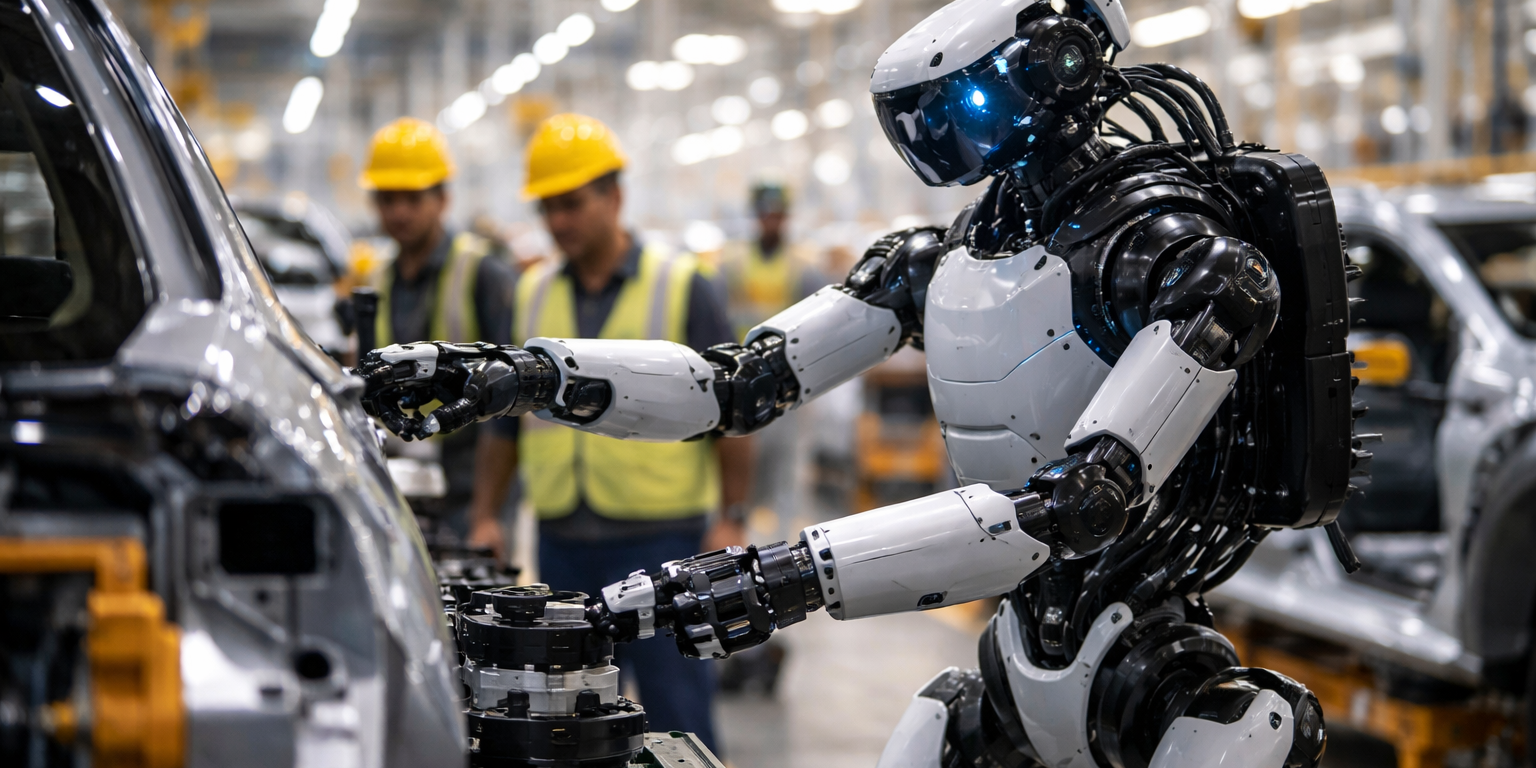
A fully integrated humanoid research platform now costs less than a mid-tier industrial robot arm. Unitree Robotics priced its H2 Plus at $25,000, bundling the company's existing H2 humanoid chassis with NVIDIA's Jetson Thor compute module and the Isaac GR00T generalized robotics foundation model. The package ships with Sharpa five-fingered hands, offering academic labs a complete system for manipulation research without the typical months-long integration cycle. First orders ship in Q2 2025, with Unitree targeting university robotics programs that lack the engineering resources to assemble multi-vendor stacks from scratch. The move puts hardware that was effectively unavailable to most researchers a year ago into hundreds of labs by summer.
Unitree built the H2 Plus as an official reference platform for NVIDIA's GR00T framework, which debuted at GTC 2024 as a generalized robotics model trained on thousands of hours of demonstration data. GR00T aims to provide robots with foundation-level reasoning about manipulation tasks, similar to how large language models provide baseline reasoning for text. The Jetson Thor module delivers 2 petaflops of AI performance, roughly equivalent to four Jetson Orin modules, enabling real-time inference for vision-language-action models directly on the robot. Unitree integrated Thor into the H2's torso alongside the existing control systems, which manage 27 degrees of freedom across the legs, arms, and torso. The Sharpa hands add another 12 degrees of freedom per hand, bringing the total to 51 actuated joints across the platform. Each hand uses series elastic actuators for force control, a design choice that mirrors approaches from Shadow Robot and Reflex Robotics but at roughly one-tenth the typical cost.
The H2 chassis itself debuted in late 2023 as Unitree's second-generation humanoid, following the company's G1 model. Standing 175 centimeters tall and weighing 47 kilograms without the hands, the H2 uses Unitree's proprietary joint modules with peak torque output of 360 newton-meters at the hip. The robot walks at 1.5 meters per second on flat ground and handles slopes up to 15 degrees, specifications that place it between research prototypes like NASA's Valkyrie and commercial platforms like Agility's Digit. Unitree claims the H2 Plus maintains 2.5 hours of continuous operation under typical lab conditions, using a 1,500-watt-hour lithium battery pack in the torso. The company ships each unit with two battery packs, a charging dock, and a development workstation pre-configured with Isaac Sim and the GR00T training pipeline. Researchers can begin running simulation experiments immediately and transfer learned behaviors to hardware within the same software environment, eliminating the simulation-to-reality gap that typically consumes weeks of tuning.
NVIDIA positioned GR00T as a direct response to the fragmentation problem in robotics AI. Unlike industrial settings where tasks repeat predictably, humanoid manipulation in unstructured environments requires reasoning across vision, language, and physical interaction simultaneously. Foundation models trained on internet-scale data handle language well but lack grounding in physical cause and effect. GR00T trains on demonstration data collected from teleoperation, motion capture, and simulation, building intuition about object properties, grasp stability, and task sequencing. The model runs inference at 30 hertz on Jetson Thor, fast enough for closed-loop control during manipulation. Unitree integrated Thor with the H2's existing real-time control loop, which runs at 1 kilohertz to manage joint-level dynamics. The two-tier architecture mirrors approaches from Boston Dynamics and ANYbotics, where high-level planning runs at lower frequencies while reflexive responses handle disturbances in real time. Academic researchers gain access to the full software stack, including pre-trained GR00T weights, simulation assets for common objects, and APIs for custom task definitions.
The $25,000 price point undercuts academic quotes from Boston Dynamics and Agility by a factor of four or more, though those platforms offer different capabilities. Atlas remains unavailable for general purchase, and Digit ships primarily to commercial partners at undisclosed prices reportedly above $100,000. Figure's humanoid platforms target manufacturing applications and have not been marketed to academic labs. That leaves Unitree competing primarily against in-house builds, which typically cost $40,000 to $80,000 in parts alone and require graduate students to spend six months on integration. Carnegie Mellon, Stanford, and UC Berkeley have each built custom humanoids in the past two years, but smaller labs lack the funding and expertise to follow that path. Unitree's bet centers on the idea that pre-integrated systems will accelerate research velocity enough to justify sacrificing the customization that comes with in-house builds. The company already ships its quadruped Go2 to more than 200 universities globally, establishing distribution channels and support infrastructure that competitors lack.
What to Watch: First H2 Plus units arrive at universities in May and June 2025, with Unitree targeting 50 installations by year-end. NVIDIA's GR00T model weight releases will determine how quickly researchers can fine-tune the system for novel tasks. Watch for academic papers from labs that receive early units, particularly around bi-manual manipulation and dynamic locomotion, both areas where GR00T's multimodal reasoning should show advantages over traditional methods. Pricing on competing academic humanoids from emerging manufacturers like Fourier Intelligence and LimX Dynamics will indicate whether Unitree's $25,000 mark becomes an industry standard or a temporary promotional strategy.