The most telling part of Wang Xingxing's latest public comments is not what he said about security robots. It is what he declined to claim about humanoids. The Unitree founder acknowledged that humanoid robots are not yet in large-scale use, then pointed to security applications as the next place demand could build, with overseas customers leading the way. Coming from the executive whose company has done more than almost anyone to make humanoid hardware cheap and visible, the admission carries weight. It reads less like a retreat than a recalibration: the humanoid story is still being written, and the revenue may arrive first through a more modest door.
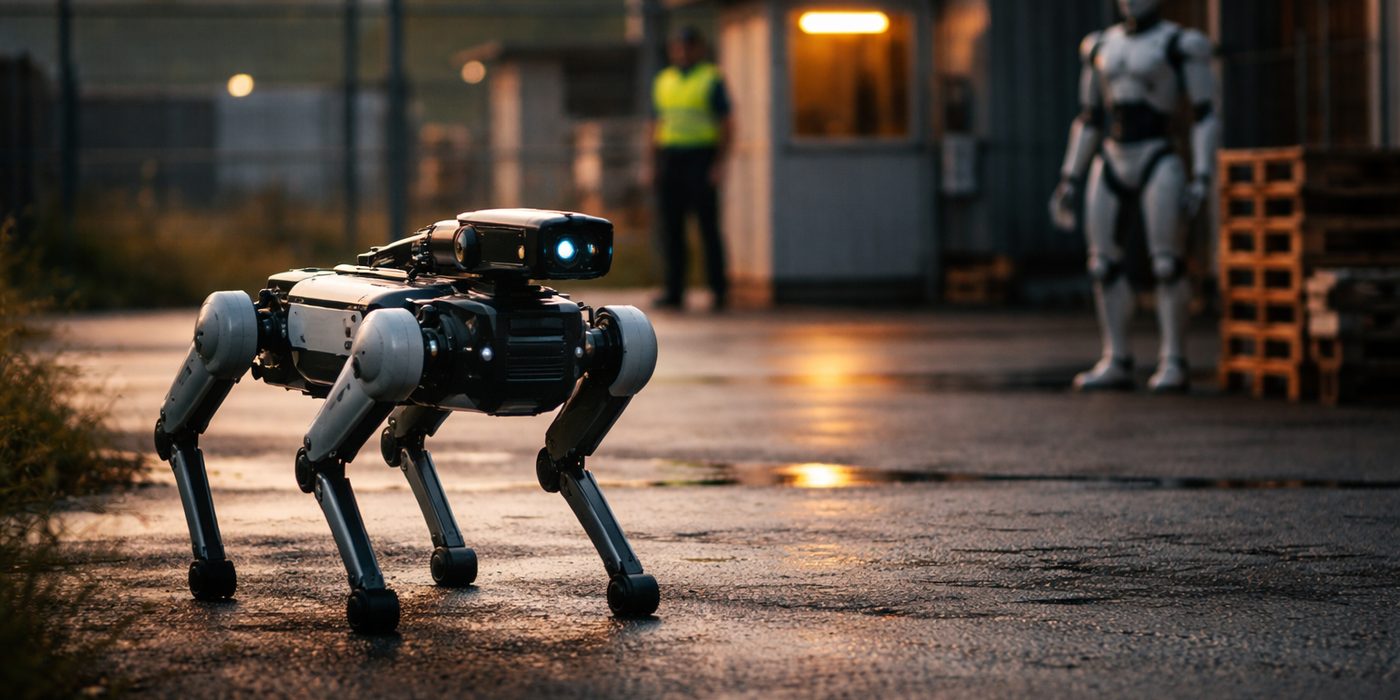
That door is one Unitree has been opening for years. Long before its humanoids drew crowds at demonstrations and stage performances, the company built its reputation on quadrupeds, the four-legged machines that research labs, universities and hobbyists bought in volume because they cost a fraction of Western alternatives. Patrol and inspection are natural extensions of that hardware. A legged robot that can climb stairs, cross uneven ground and carry cameras or sensors fits the basic job description of a security platform, and it does not require the dexterous manipulation or long-horizon autonomy that general-purpose humanoid work still demands. Wang's emphasis on overseas demand also fits a pattern in which Unitree's customer base has skewed international.
The commercial logic is easy to follow, and it should interest anyone tracking how robotics companies actually get paid. Security work is a bounded problem. The environment is often semi-structured, the task is repetitive, and the buyer cares about coverage and uptime more than about human-like versatility. Those traits suit current-generation robots, which remain strong at locomotion and perception but unreliable at open-ended manipulation. Unitree can sell into that gap with hardware it already manufactures at scale, using a supply chain that gives it a pricing edge. The harder question is margin and support: security customers expect service contracts, software updates and integration with existing monitoring systems, areas where a hardware-first company has historically had less experience than the incumbents it hopes to undercut.
For the wider industry, Wang's framing is a useful reality check at a moment when humanoid valuations and timelines have run well ahead of deployments. If the founder of one of the best-known humanoid makers says large-scale use has not arrived, rivals promising factory floors full of bipedal workers in the near term face a sharper credibility test. It also hands a template to competitors: find the narrow, paying application first, and let the general-purpose vision mature in parallel. Western security-robot specialists and quadruped makers now have a lower-cost Chinese entrant eyeing their customers, while governments weighing procurement rules for Chinese-made robotics hardware will shape how far overseas demand can actually translate into sales.
What to Watch Track whether Unitree announces named security or inspection customers outside China, since specific contracts would test Wang's overseas-demand claim far better than general commentary. Watch for new quadruped or humanoid variants marketed explicitly for patrol work, along with any software or fleet-management tools aimed at security integrators. Keep an eye on Unitree's progress toward a public listing and what disclosures it provides about revenue mix between research, consumer and commercial segments. Finally, monitor procurement and import policy debates in the United States and Europe over Chinese robotics hardware, which could determine how much of this demand Unitree is allowed to serve in the coming quarters.