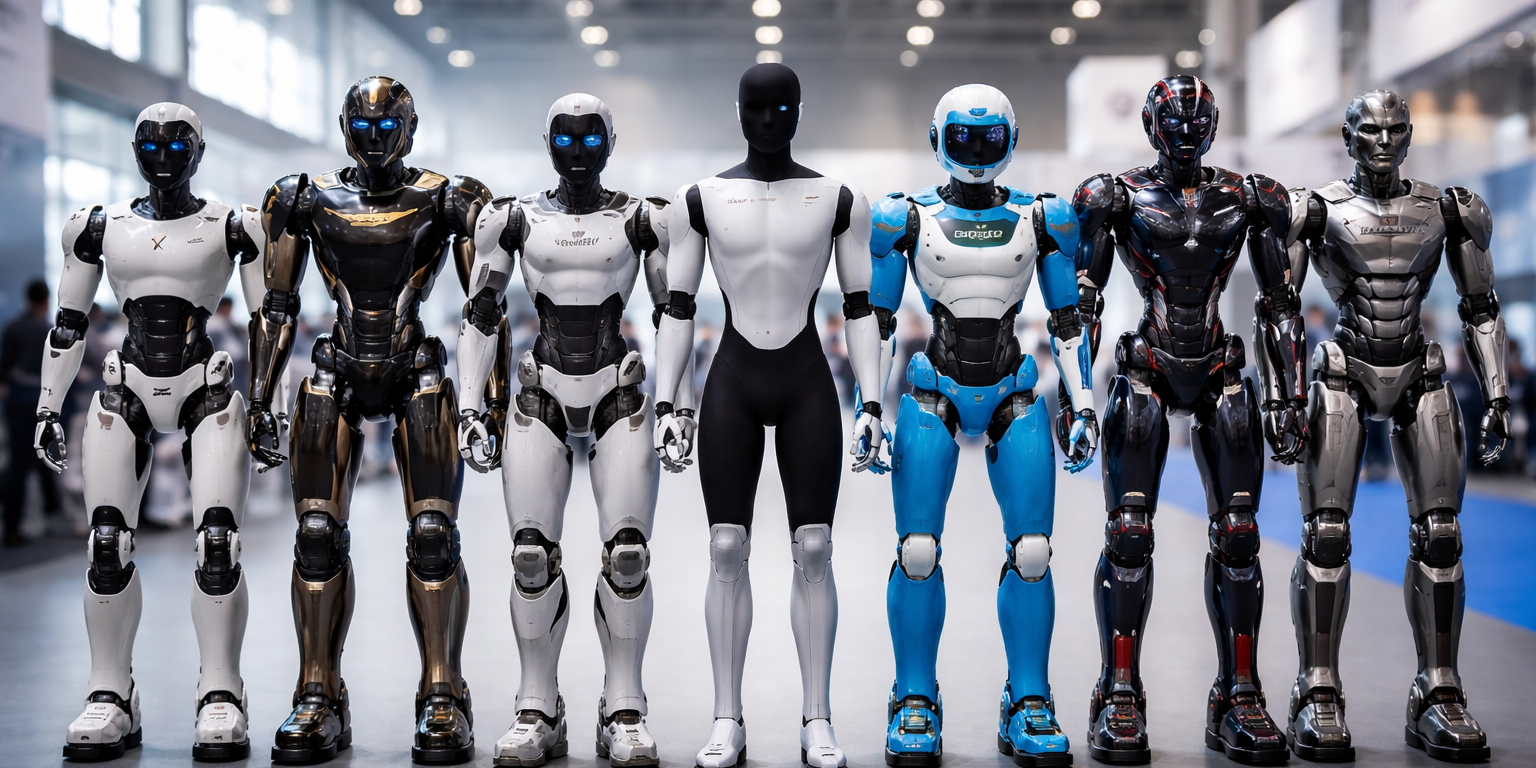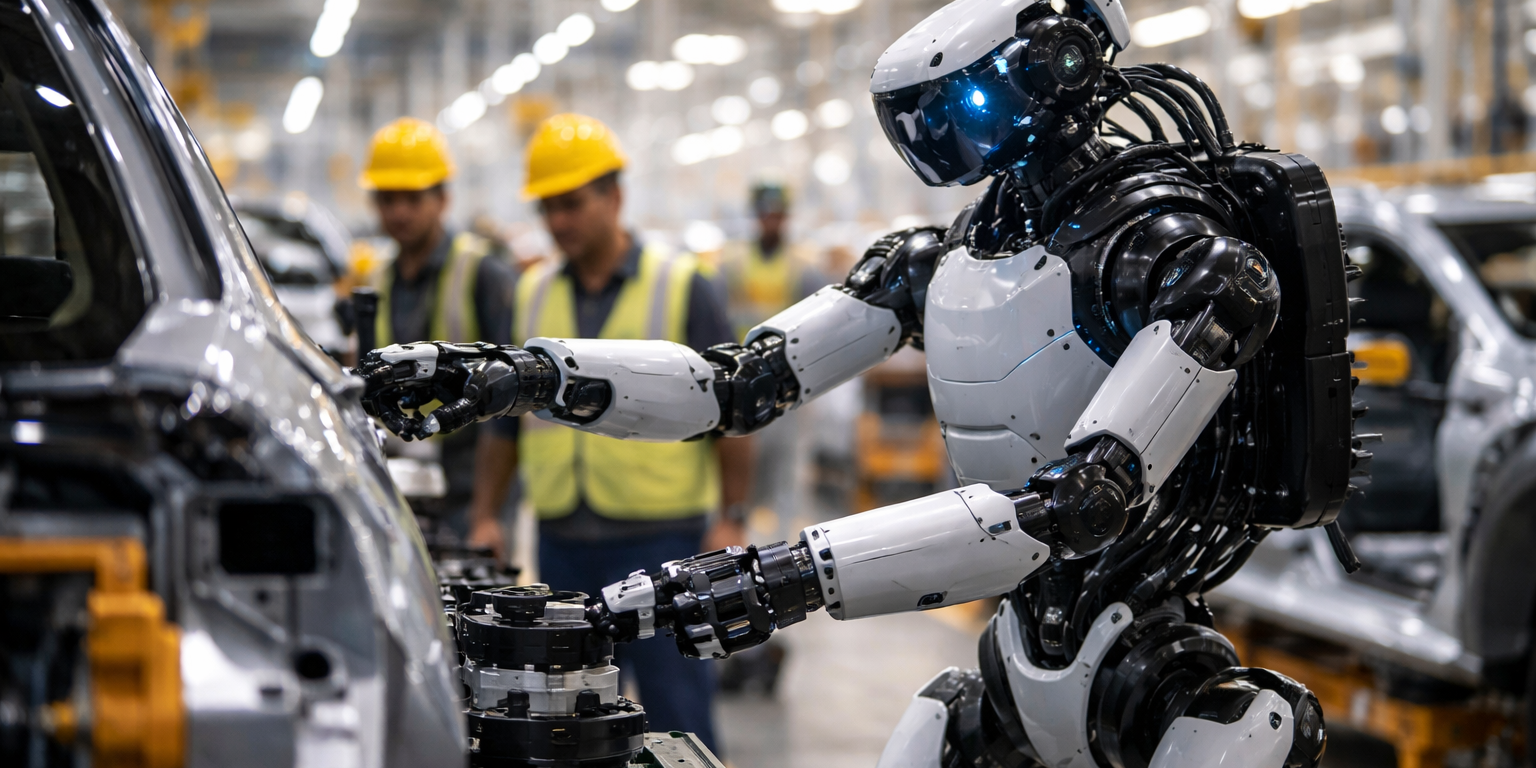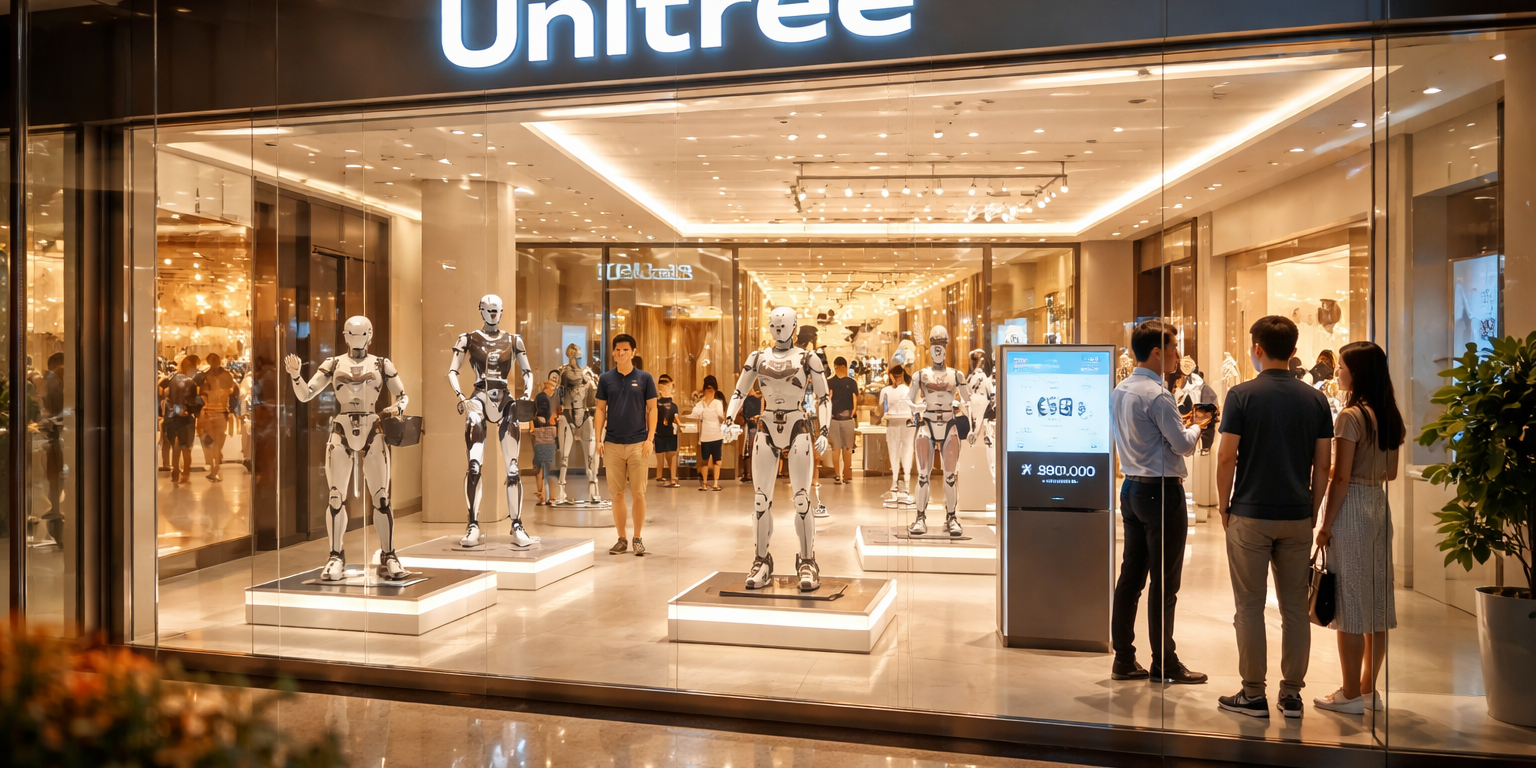
Unitree Robotics opened a 400-square-meter flagship store in Hangzhou's Lakeside Shopping District last month, while AgiBot launched a similar retail presence in Shanghai's Jing'an District. Both locations occupy ground-floor spaces in premium shopping centers, positioned between Apple Stores and luxury fashion retailers. The stores stock multiple humanoid models with price tags ranging from ¥90,000 to ¥180,000 ($12,400 to $24,800), display units performing tasks on raised platforms, and maintain dedicated technical consultation areas where customers can discuss custom programming and integration requirements. Each location employs between eight and twelve staff members, including robotics engineers available for same-day service appointments. The retail format marks a departure from the enterprise sales model that has dominated the humanoid robotics sector, where manufacturers typically sell through system integrators or direct B2B channels to warehouse operators and manufacturing facilities.
The consumer pivot reflects production capacity that now exceeds enterprise demand in the Chinese market. Unitree shipped approximately 1,200 G1 humanoid units in the first half of this year, according to industry estimates, while AgiBot's production facility in Suzhou has capacity to manufacture 10,000 units annually. Both companies ramped manufacturing infrastructure throughout 2025, anticipating enterprise orders that materialized more slowly than projected. Factory utilization rates at dedicated humanoid production lines reportedly hover between 40 and 55 percent across major Chinese manufacturers. Rather than scale back production, Unitree and AgiBot are testing whether direct consumer sales can absorb excess capacity. The retail stores function as controlled experiments: Can humanoid robots achieve product-market fit in the consumer segment? Will affluent early adopters pay premium prices for home automation and assistance tasks that existing products handle more cheaply? The shopping mall locations provide foot traffic and visibility that online sales channels cannot match, particularly for products requiring demonstration and hands-on evaluation before purchase.
Unitree's Hangzhou store features the G1 model prominently, a 1.32-meter humanoid that weighs 35 kilograms and retails for ¥99,000. The G1 performs scripted demonstrations every 20 minutes, including object manipulation, autonomous navigation through crowded spaces, and voice-activated task execution. Store associates offer 30-minute private demonstration sessions in a separate consultation room, where potential buyers can interact with the robot under supervision. The store also stocks Unitree's quadruped robots, which have achieved stronger commercial traction in security and inspection applications. AgiBot's Shanghai location follows a similar format but emphasizes modular customization. Customers can select from three base models, then choose gripper configurations, sensor packages, and software capabilities based on intended use cases. The company positions its humanoids as platforms rather than finished products, targeting hobbyists and small business owners who want programmable automation without enterprise-scale budgets. Both stores maintain parts inventory and service bays where technicians diagnose issues and perform repairs, addressing a persistent concern among potential buyers about long-term maintenance and support.
The retail strategy faces significant headwinds. Consumer awareness of humanoid robotics remains limited outside technology circles, and the products lack clear use cases that justify their cost relative to existing alternatives. A ¥99,000 humanoid performs household tasks that a ¥2,000 robotic vacuum and a ¥5,000 robotic arm can handle separately. The value proposition hinges on versatility and future capability rather than immediate utility, a difficult sell in retail environments optimized for instant gratification. Early sales data from the first 60 days remains closely held, but sources familiar with the operations indicate single-digit daily transaction volumes at both locations. The stores generate secondary value as brand-building exercises and data collection opportunities. Each customer interaction provides insight into objections, desired features, and price sensitivity that online surveys cannot capture. The physical presence also attracts media coverage and social media attention that amplifies brand awareness beyond the immediate market. Whether the retail experiment scales beyond flagship locations depends on conversion rates in the coming months. Both companies have additional store leases under negotiation in Beijing, Shenzhen, and Chengdu, contingent on performance metrics from the initial locations.
What to Watch: Monitor whether Unitree and AgiBot sign additional retail leases before Q4 2026, which would signal viable unit economics from the flagship stores. Track pricing adjustments on base models, particularly any moves below ¥90,000 that would indicate pressure to stimulate demand. Watch for similar retail initiatives from competitors including Fourier Intelligence and UBTECH Robotics, both of which operate primarily through enterprise channels but have consumer-facing product lines. Pay attention to after-sales service metrics, specifically repair turnaround times and parts availability, which will determine whether these companies can sustain retail operations beyond initial novelty purchases.