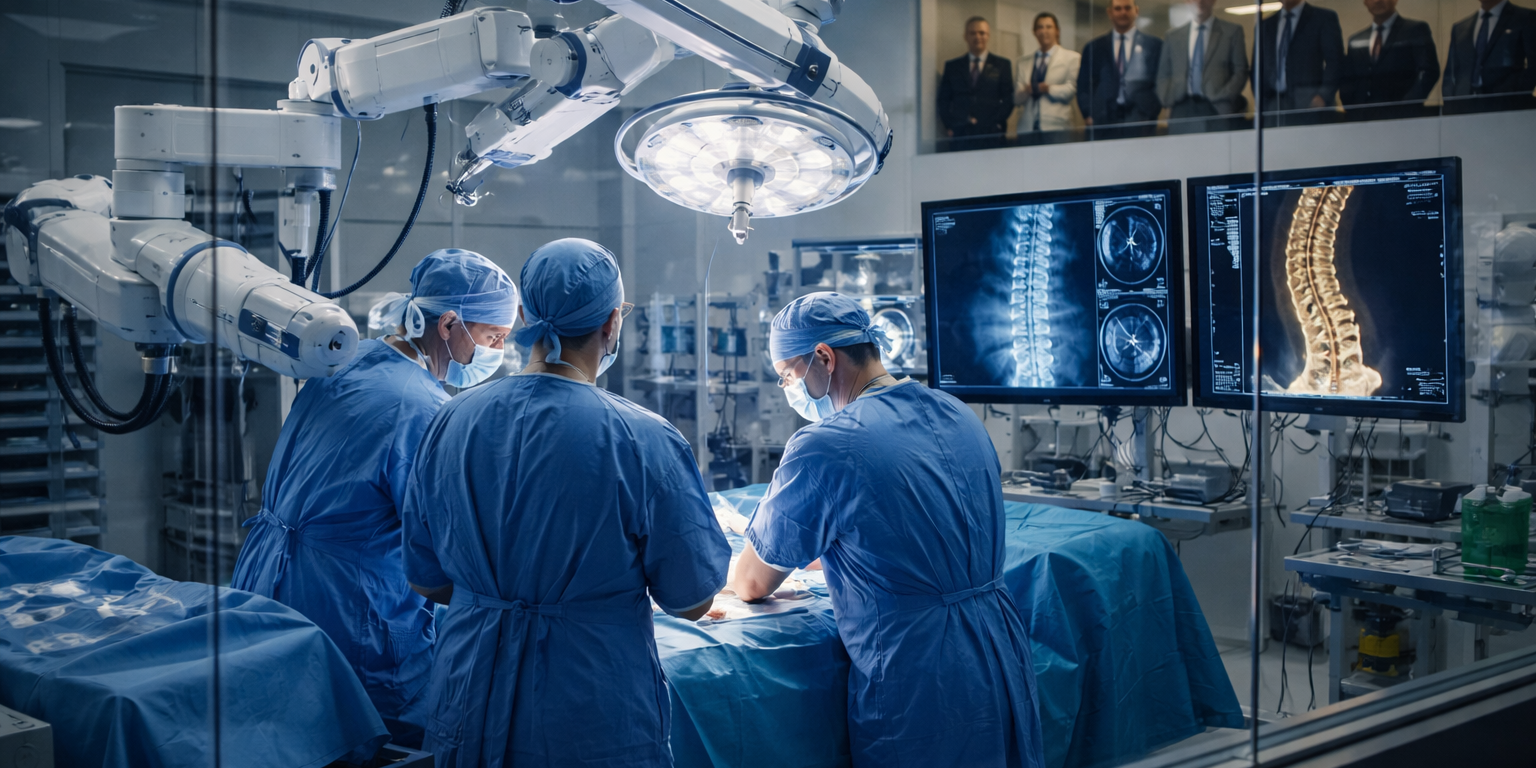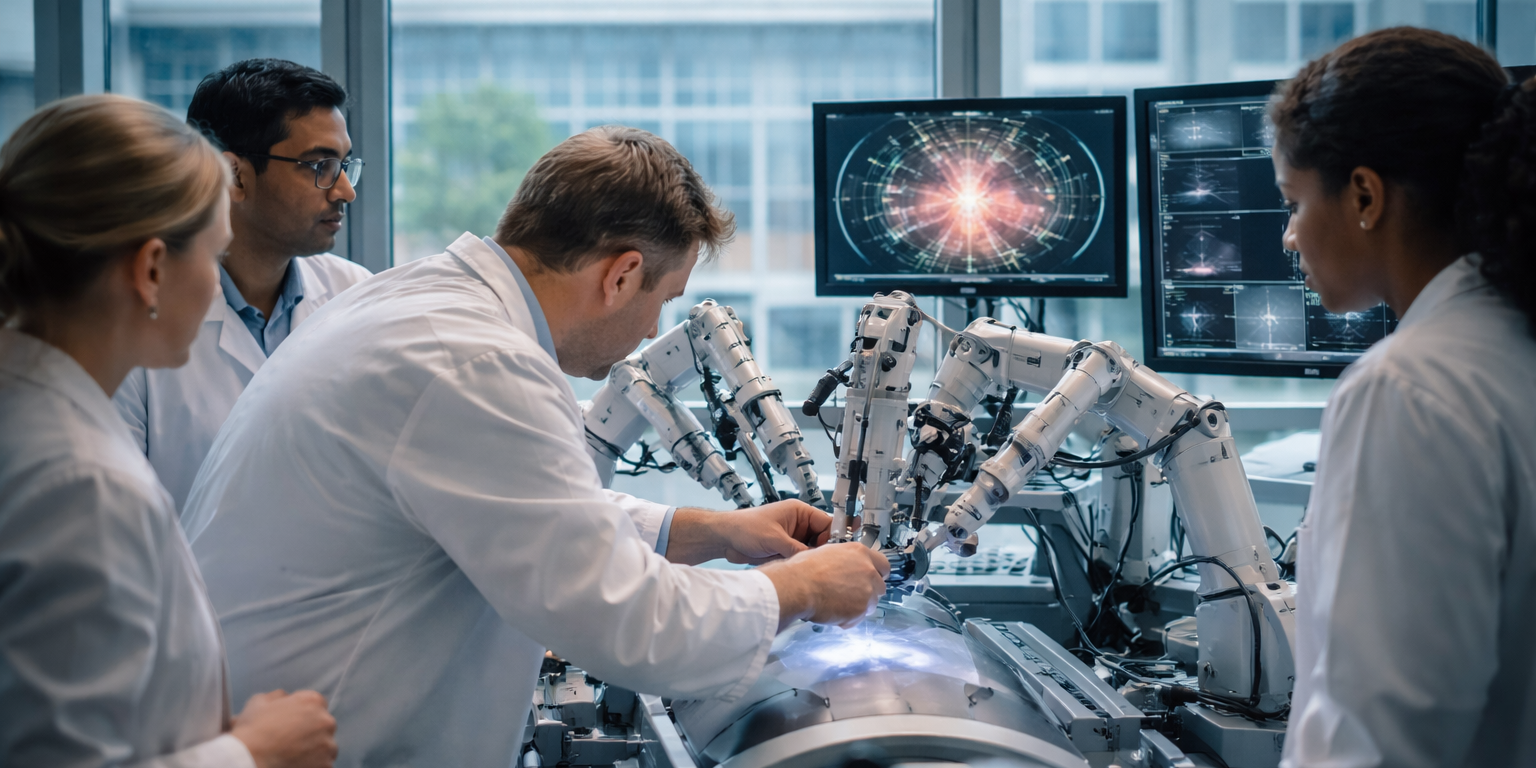

Teleoperated humanoid robots completed their first surgical procedures during a preclinical trial at the University of California San Diego, according to research released this month. Unlike the da Vinci Surgical System and similar platforms designed exclusively for operating room use, the humanoid robots employed in the UC San Diego study represent general-purpose platforms adapted for surgical tasks through teleoperation rather than purpose-built medical hardware.
The distinction matters because it challenges two decades of surgical robotics orthodoxy. Since Intuitive Surgical received FDA clearance for the da Vinci system in 2000, the industry has converged on a model: custom-designed robotic arms mounted on cart systems, proprietary instruments, and multimillion-dollar price tags that restrict adoption to large hospital networks. Intuitive has installed more than 8,500 da Vinci systems globally and reported $7.1 billion in revenue for 2025. That installed base creates formidable barriers to entry. Competitors including Medtronic, Johnson & Johnson, and CMR Surgical have collectively invested billions developing alternative platforms, yet all follow the same architectural template of specialized surgical machinery.
Humanoid platforms introduce a fundamentally different value proposition. A general-purpose robot capable of surgical procedures could theoretically perform diagnostic imaging, patient transport, pharmaceutical dispensing, and facility maintenance between operations. Capital costs distribute across multiple revenue-generating functions rather than concentrating in a single-use surgical system. More significantly for healthcare economics, a mobile humanoid requires no permanent installation, no dedicated operating suite, and no multi-week training program for each new hospital site. The UC San Diego trial tested whether humanoid morphology—two arms, stereoscopic vision, human-scale manipulation—could match the precision demands of surgery when controlled remotely by trained surgeons. Specific procedures performed, surgical specialties involved, and outcome metrics remain unpublished pending peer review, but the research team confirmed procedures were completed without conversion to manual technique or equipment failure.
Teleoperation proved critical to the success. Remote control by human surgeons eliminates the autonomy problem that has stalled FDA clearance for AI-driven surgical systems. The regulatory pathway for teleoperated devices is well established: the da Vinci itself operates through surgeon-controlled master consoles, and the FDA cleared the first transatlantic robotic surgery in 2001. Telepresence also addresses the geographic maldistribution of surgical specialists. Rural hospitals struggle to maintain full-time surgical staff across all specialties. A humanoid platform stationed in a community hospital could provide access to neurosurgeons, cardiovascular specialists, or oncologic surgeons practicing hundreds of miles away. The robot becomes infrastructure rather than a surgical tool, available to any credentialed surgeon with network access. Several startups have pursued variations on this model. Moon Surgical, which raised $55 million in Series B funding in 2024, developed a scope-holding robot designed to assist in conventional laparoscopic procedures. Vicarious Surgical raised $168 million for a miniaturized surgical robot that inserts through a single abdominal incision. Neither employs humanoid morphology, but both address cost and accessibility constraints within the surgical robotics market.
What to Watch: UC San Diego's publication of full trial results, including specific procedures performed, complication rates, and comparison benchmarks against conventional robotic surgery, should arrive in peer-reviewed literature before the end of third quarter 2026. Any commercialization partner announcement from the UC San Diego research team would signal near-term product development timelines. Sanctuary AI, Figure AI, and Tesla have each demonstrated teleoperation capabilities in their humanoid platforms; monitor whether any announce healthcare-focused development programs or FDA engagement in the coming months. Finally, track Intuitive Surgical's R&D disclosures in quarterly earnings calls for any strategic response to humanoid competition in surgical markets.