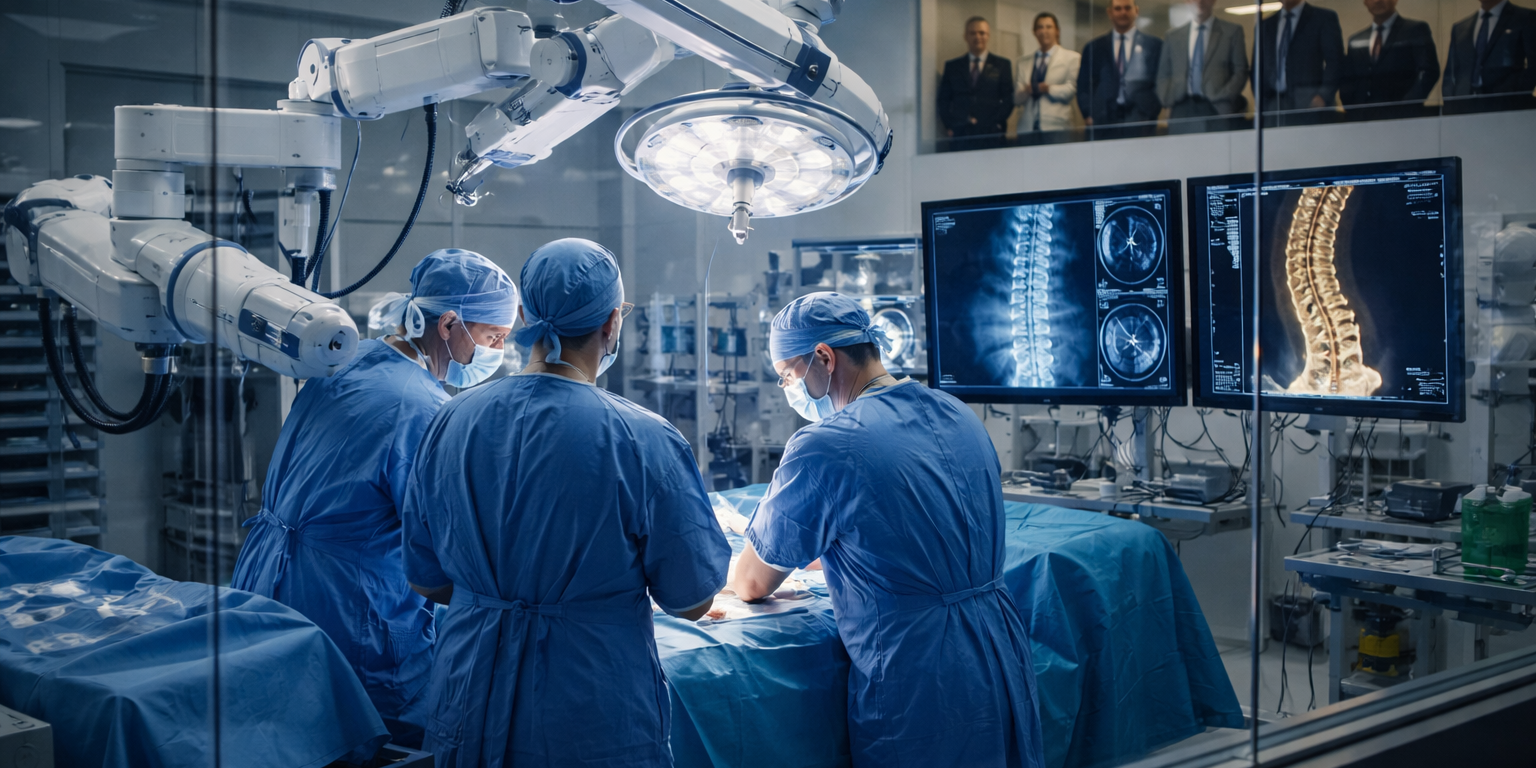

Intuitive Surgical operates more than 9,500 da Vinci surgical systems across hospitals and surgical centers globally, processing roughly 2.3 million procedures annually through its robotic platforms. The Sunnyvale-based company has sustained double-digit procedure growth for seven consecutive quarters, with da Vinci utilization rates averaging 14.2 procedures per system per quarter in North American facilities. Investment analysts tracking the medical robotics sector now calculate the company could achieve a market capitalization exceeding $500 billion within five years if procedure volume compounds at current rates and the company maintains its gross margins above 68%.
The volume expansion stems from two factors working in tandem. First, hospitals that purchased da Vinci systems between 2019 and 2023 are now running those platforms at full capacity, creating demand for additional units at institutions where robotic surgery has demonstrated reduced length-of-stay metrics. Massachusetts General Hospital, for instance, added its seventh da Vinci system in March 2026 specifically for thoracic procedures after data showed robotic lobectomy patients discharged 1.8 days earlier than conventional surgery cohorts. Second, reimbursement policies from CMS and major commercial payers have expanded to cover robotic approaches for hernia repair, colorectal resection, and bariatric procedures. Those three categories alone represent approximately 1.4 million annual procedures in the United States, compared to the 400,000 prostatectomies and 600,000 hysterectomies that drove da Vinci adoption through its first two decades.
Intuitive Surgical reported $7.12 billion in revenue for fiscal 2025, with instruments and accessories accounting for $3.8 billion of that total. The recurring revenue model mirrors the razor-and-blade economics that made Gillette and HP profitable for decades. Each da Vinci procedure consumes roughly $2,000 in single-use instruments plus $180 per hour in system usage fees billed through service contracts. A hospital running 15 procedures weekly on a single system generates approximately $780,000 annually in consumable revenue for Intuitive, independent of the $1.5 million to $2.5 million upfront system cost. The company's installed base crossed 9,000 systems in late 2024, meaning the consumables business alone now produces annualized revenue exceeding $7 billion before accounting for growth. The financial structure explains why Intuitive trades at 58 times forward earnings despite being a 28-year-old company: investors are pricing in decades of predictable high-margin consumable sales from systems already deployed.
Competition remains sparse but is beginning to materialize in specific surgical categories. Medtronic's Hugo robotic system has secured placements in 85 hospitals since its commercial launch, focused primarily on urological procedures where reimbursement pathways are well-established. CMR Surgical, based in Cambridge, ships its Versius system to European and Middle Eastern hospitals that prioritize modularity over Intuitive's integrated tower architecture. Johnson & Johnson shut down its Ottava surgical robot program in January 2026 after three years of development, citing technical challenges with the overhead-mounted arm design. Asensus Surgical filed for bankruptcy in March 2026 and sold its assets to Karl Storz for $23 million, ending its Senhance platform after failing to achieve market traction. The competitive failures underscore the engineering complexity and regulatory burden required to challenge Intuitive's two-decade head start in surgeon training, instrument ecosystem development, and hospital IT integration.
The $500 billion valuation target implies Intuitive would need to roughly double its current $240 billion market capitalization by 2031. That outcome requires sustained procedure growth above 15% annually plus expansion into adjacent categories including robotic-assisted endoscopy, where the company initiated clinical trials for its da Vinci Single Port system adapted for flexible endoluminal navigation. The company has invested $4.2 billion in R&D since 2020, with programs underway for AI-assisted surgical planning, augmented reality overlay systems that project CT imaging directly onto the surgeon's console view, and force-feedback haptics that transmit tissue resistance to the operator's hand controls. None of those technologies have reached commercial release, but internal presentations shown to investors in April 2026 indicated the haptics module could ship as a console upgrade by Q3 2027.
What to Watch: Track Intuitive's Q3 2026 earnings in October for updated figures on da Vinci system placements and procedure volumes by specialty, particularly colorectal and hernia categories where reimbursement expanded in early 2026. Monitor FDA clearance timelines for the flexible endoscopy module, currently in pivotal trials at 12 sites. Watch for competitive movement from Medtronic's Hugo platform, especially any partnerships with major hospital networks that could accelerate adoption beyond its current 85-unit footprint. Finally, observe CMS proposed rule changes expected in November 2026 regarding bundled payment models for robotic procedures, which could either accelerate or constrain hospital capital spending on new surgical systems.