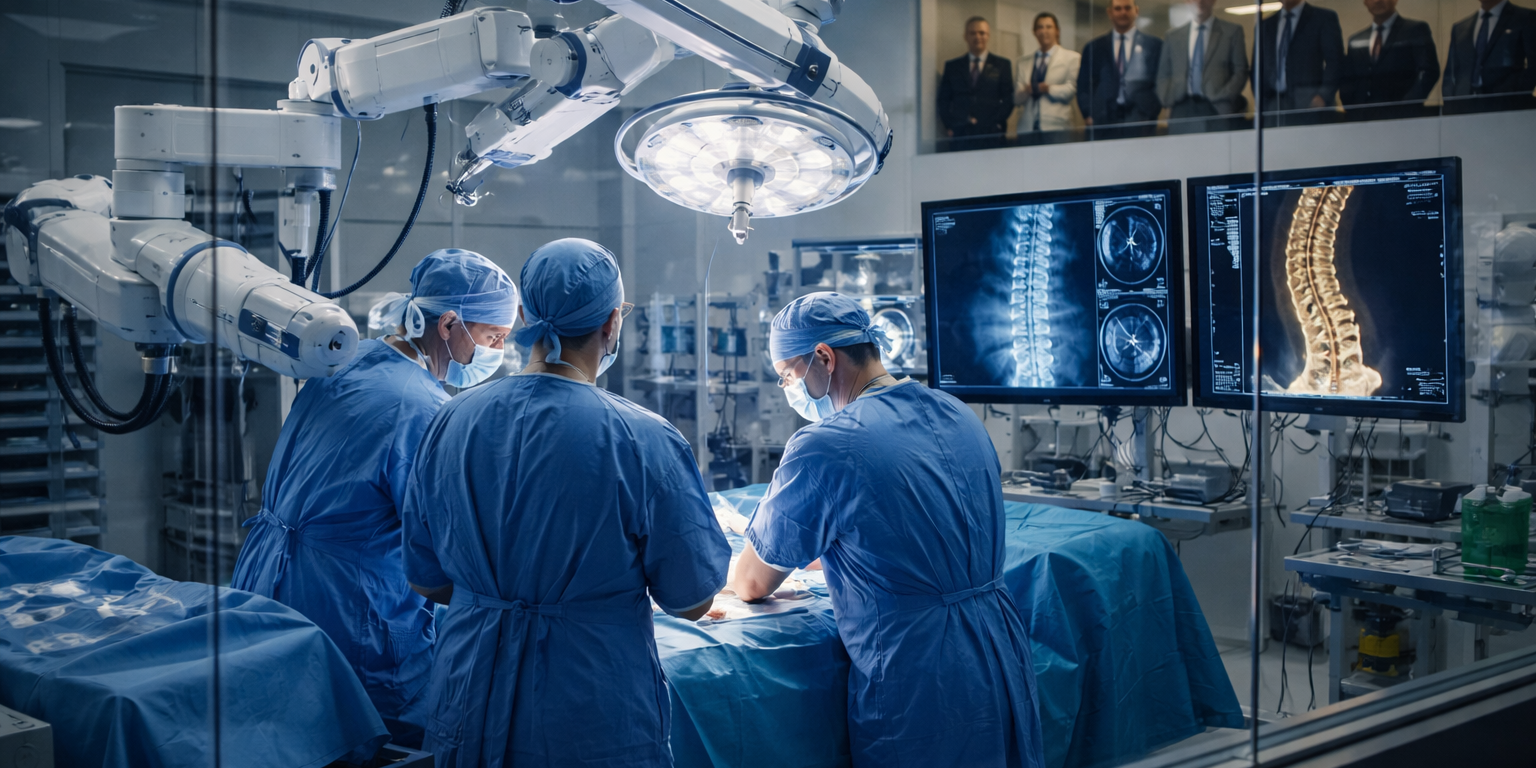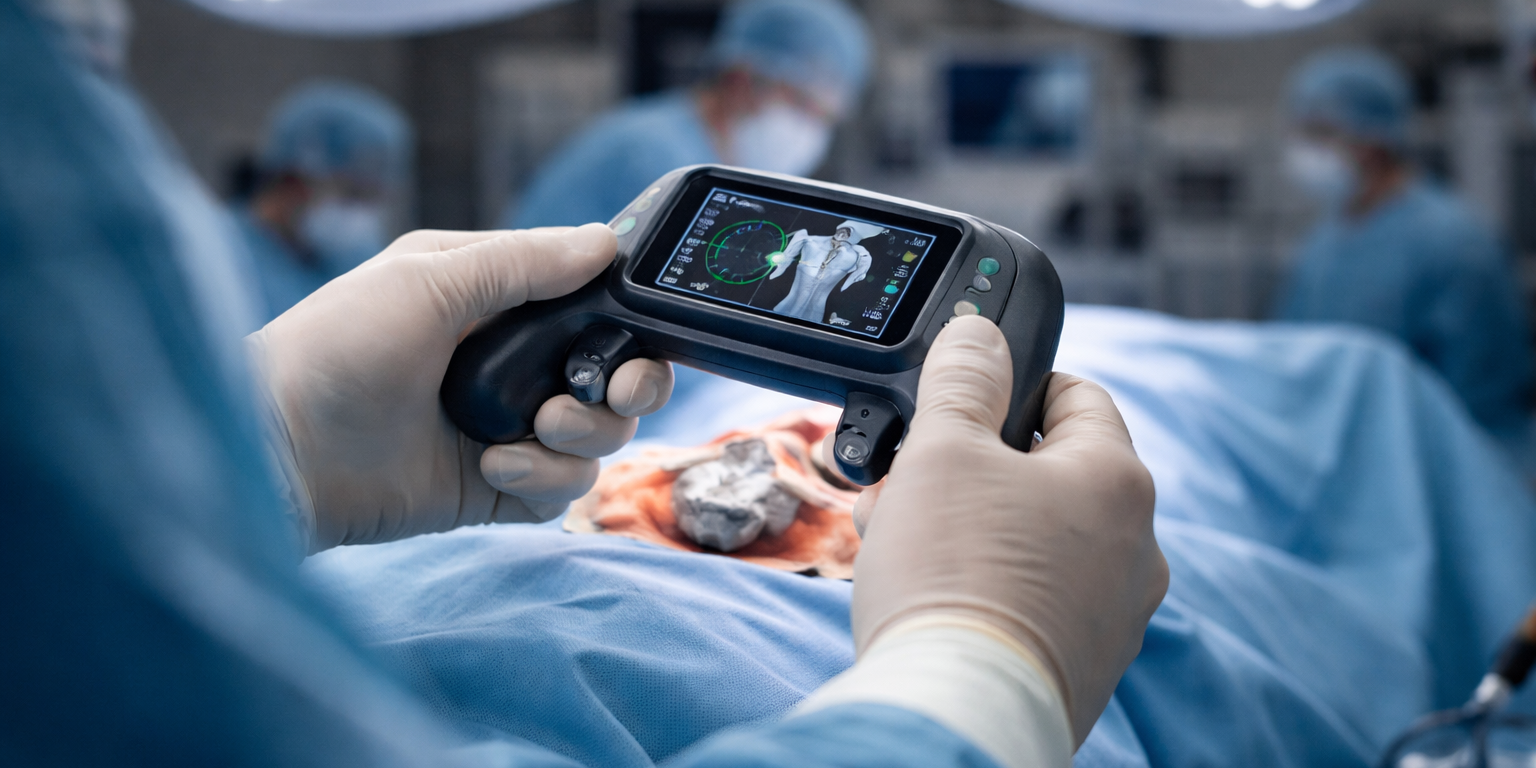
A handheld surgical guidance system completed its first patient cases in California this week, entering a market where capital expenditure has historically determined which facilities can offer robotically-assisted joint replacements. OrthAlign announced July 1 that surgeons performed the initial procedures using its Lantern ASC system at an undisclosed location in Irvine. The company frames the milestone as economic disruption rather than technical innovation, betting that ambulatory surgery centers will adopt precision guidance tools if the price point drops below traditional robotic platforms.
OrthAlign built its business on navigation technology that surgeons hold rather than wheel into operating rooms. The Lantern ASC system extends that approach into the ambulatory market, where facility administrators face different purchasing calculus than hospital systems. Cart-based surgical robots from Stryker, Zimmer Biomet, and Smith+Nephew typically require capital outlays between $500,000 and $1.5 million, plus annual service contracts and per-case instrument fees. Those economics work for high-volume hospitals performing hundreds of joint replacements annually. They break down quickly in ASCs running thirty or forty cases per month. OrthAlign positions its handheld architecture as the solution, though the company has not disclosed Lantern's pricing structure or revenue model. Industry analysts estimate handheld systems could enter the market at one-tenth the capital cost of cart-based platforms, fundamentally altering adoption curves in outpatient settings.
The ambulatory surgery center market represents the fastest-growing segment in orthopedic procedures. Total knee and hip replacements migrated steadily from inpatient hospitals to ASCs over the past decade, driven by payer pressure and improved surgical protocols. Medicare expanded ASC reimbursement coverage for total knee arthroplasty in 2018 and total hip arthroplasty in 2020, accelerating the shift. Approximately forty percent of total knee replacements now occur in ambulatory settings, according to surgical volume data compiled by the American Association of Hip and Knee Surgeons. That percentage continues rising. Yet robotic adoption in ASCs lags hospital penetration by fifteen to twenty percentage points, creating the market opportunity OrthAlign targets. Most ASC operators cannot justify the capital expense and space requirements of cart-based systems when competing for limited facility square footage and capital budgets against gastroenterology, ophthalmology, and pain management service lines.
OrthAlign competes in handheld navigation against established players pursuing different strategic angles. Intellijoint Surgical, acquired by Stryker in 2023, developed optical navigation for hip replacements but never achieved significant ASC penetration before the acquisition folded it into Stryker's broader robotics portfolio. Corin Group's OMNIBotics system combines handheld registration with a small robotic cutting guide, positioning somewhere between pure navigation and full robotic assistance. NuVasive's Pulse platform addresses spine procedures rather than joint replacement. The competitive landscape suggests that technical capability alone does not determine market success in surgical guidance. Distribution relationships, surgeon training infrastructure, and integration with implant systems matter as much as the technology itself. OrthAlign's installed base includes more than 1,200 systems deployed globally, according to the company's previous disclosures, providing existing surgeon relationships and potential cross-selling opportunities for Lantern. Whether that translates into rapid ASC adoption depends heavily on pricing strategy and whether the company pursues capital sales, per-case fees, or subscription models that have gained traction elsewhere in surgical technology.
The broader orthopedic robotics market continues consolidating around three dominant platforms while startups probe the edges with alternative approaches. Stryker's Mako system commands approximately sixty percent share in robotic joint replacement based on installed base, with Zimmer Biomet's Rosa and Smith+Nephew's Cori splitting most of the remainder. All three companies rely on capital equipment sales that lock hospitals into multi-year relationships and create switching costs that insulate market position. Handheld systems threaten that model only if they deliver comparable clinical outcomes at dramatically lower total cost of ownership. Early clinical data on navigation accuracy and surgical efficiency will determine whether Lantern gains traction or becomes another promising technology that fails to dislodge incumbents. OrthAlign has not released patient outcomes data, surgical time comparisons, or accuracy measurements from the initial cases, limiting technical assessment of the platform's competitive positioning.
What to Watch: Monitor OrthAlign's case volume announcements and surgeon adoption rate through Q3 2026 to gauge whether the economic value proposition resonates beyond early adopters. Track pricing and business model disclosures as the company approaches broader commercial launch. Watch for clinical data presentations at the American Academy of Orthopaedic Surgeons annual meeting in March 2027, where comparative outcomes versus cart-based systems would provide the first independent performance assessment. Observe whether Stryker, Zimmer Biomet, or Smith+Nephew introduce competitive handheld offerings or adjust pricing to defend ASC market share.