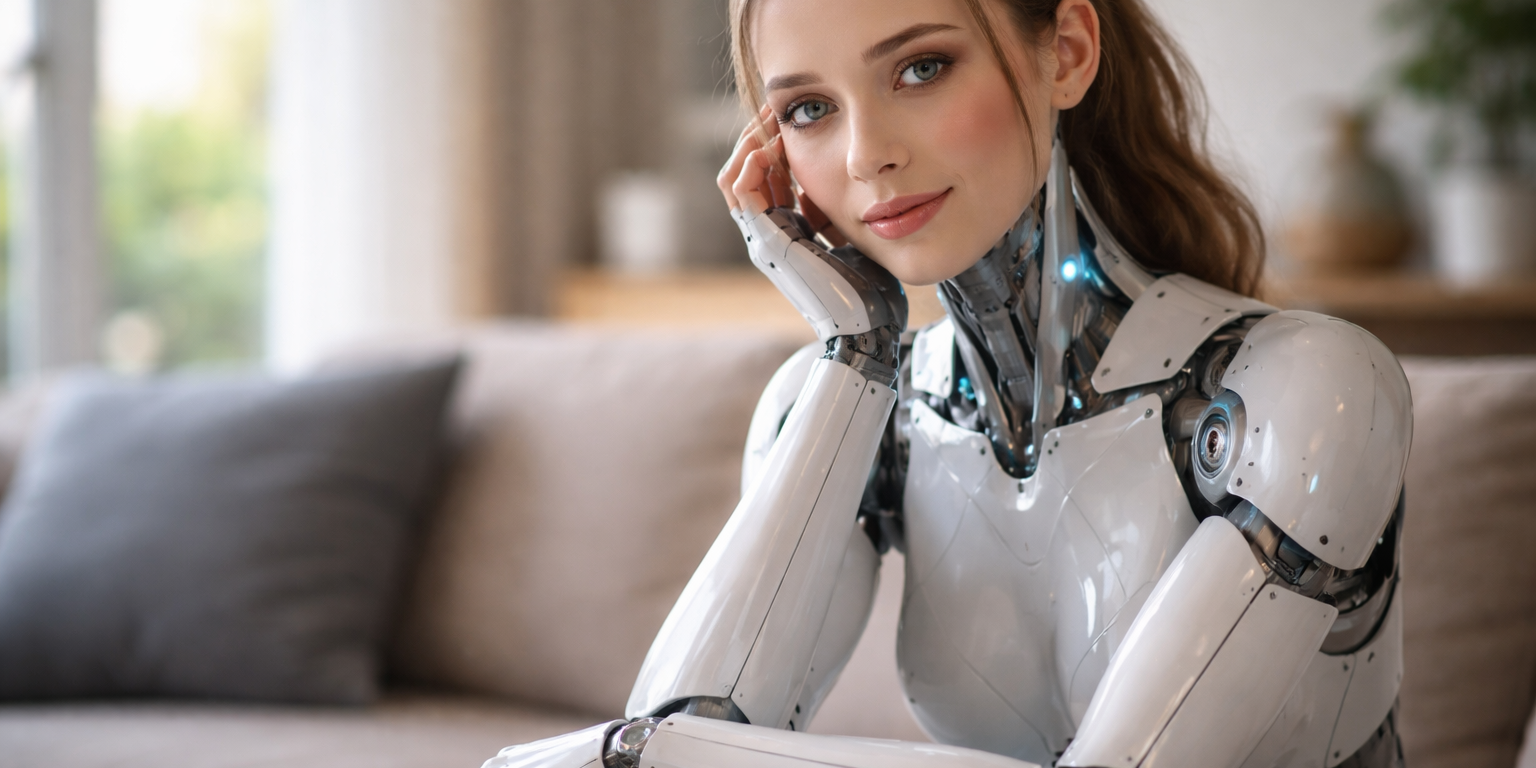
A humanoid robot with manicured fingernails and skin that mimics human texture now sits in UBTech Robotics' product catalog, marking one of the first commercially available companion robots designed explicitly for emotional engagement rather than task execution. The U1, as UBTech designates the model, features synthetic dermis layered over its metallic endoskeleton and ships with proprietary conversational AI that the company describes as "always loyal" in marketing materials reviewed by RoboticsIntl.com. Unlike industrial humanoids from Boston Dynamics or Agility Robotics, which prioritize load-bearing and navigation, the U1 optimizes for physical appearance and social interaction. The robot stands at approximately human height, though UBTech has not disclosed exact dimensions or weight specifications in initial product documentation.
UBTech's entry into companion robotics follows a broader industry pivot among Chinese manufacturers, who have accelerated development of consumer-facing humanoids after watching Tesla's Optimus prototypes gain media attention throughout 2024 and early 2025. The Shenzhen firm, previously known for educational robots and the Walker humanoid platform used in commercial demonstrations, now positions the U1 as a household product rather than a research curiosity. Pricing remains undisclosed, though industry observers expect the unit to retail between $15,000 and $25,000 based on component costs and manufacturing scale. That range would undercut Japanese competitor Groove X's Lovot companion robot, which debuted at $2,800 in 2019 but lacks humanoid form factor, while remaining well below the six-figure price tags associated with research-grade humanoids. The synthetic skin itself represents a manufacturing challenge that few robotics firms have solved at scale. Early attempts by Hanson Robotics with its Sophia platform relied on custom fabrication that limited production volume. UBTech's willingness to ship a dermis-covered robot suggests either a breakthrough in materials science or acceptance of higher per-unit costs in exchange for market positioning.
The "always loyal" framing in UBTech's promotional language raises questions about intended use cases and target demographics. Companion robots occupy an ambiguous regulatory space in most jurisdictions, falling outside medical device classification yet designed for psychological interaction. Japan's AIST has published guidelines for care robots since 2014, but no equivalent framework exists in China, where the Ministry of Industry and Information Technology focuses primarily on industrial automation standards. The U1's conversational AI component, which UBTech describes as adaptive to user personality over time, likely runs on large language model architecture similar to implementations from Alibaba Cloud or Baidu's Ernie platform. Neither company has confirmed partnerships with UBTech, though supply chain analysis by Nikkei Asia in March 2026 indicated that Shenzhen-based humanoid manufacturers increasingly license cloud-based AI rather than developing proprietary models. The hand-holding feature, highlighted in product demonstrations, requires force-sensitive actuators in the fingers and palm—technology that Boston Dynamics proved viable in its Atlas platform but has not yet commercialized for consumer products. UBTech's ability to integrate such sensors at a consumer price point, if verified, would represent measurable progress in humanoid dexterity outside laboratory settings.
China's domestic companion robot market has grown without the cultural hesitation that slowed adoption in Western markets, where ethical debates about artificial relationships remain prominent in media coverage. Sales data from JD.com and Tmall, China's two largest e-commerce platforms, showed personal service robots—a category that includes vacuum cleaners, telepresence devices, and companion units—generated $3.2 billion in gross merchandise volume during 2025. Humanoid robots represented a minor fraction of that total, but growth rates exceeded 40% quarter-over-quarter in the second half of the year. UBTech faces competition from EX Robots, a Dalian-based manufacturer that unveiled its own synthetic-skin humanoid at the World Robot Conference in Beijing last August, and from smaller startups like Stardust Intelligence, which raised $50 million in Series A funding in January 2026 specifically for companion humanoid development. The market remains fragmented, with no clear category leader and significant questions about long-term consumer retention. Groove X, despite early enthusiasm for Lovot, reported flat sales in its 2024 fiscal year and has not released updated figures. Whether humanoid form factor drives sustained engagement compared to non-anthropomorphic companions remains an open question.
What to Watch: Track whether UBTech discloses U1 unit sales figures in its next earnings report, expected in August 2026, as transparency on volume will indicate genuine market traction versus proof-of-concept production. Monitor licensing announcements from Alibaba Cloud or Baidu regarding conversational AI partnerships, which would clarify the technological foundation behind the U1's adaptive personality features. Watch for regulatory guidance from China's Ministry of Industry and Information Technology on companion robot safety standards, particularly regarding data privacy for devices designed to learn user behavior patterns over extended periods.