UBTech Robotics moved $334 million worth of bionic humanoid units in the four weeks ending June 23, a sales run that eclipses the company's entire 2025 calendar-year revenue from its Walker series and positions humanoid hardware as a category now scaling beyond pilot programs and research labs. The Shenzhen manufacturer, which went public on the Hong Kong Stock Exchange in December 2023, disclosed the figures in a June 26 filing ahead of its second-quarter earnings call. No consumer robotics company has previously reported nine-figure sales in a single month for humanoid products, a milestone that arrives as hardware costs fall and software toolchains mature enough to support non-technical buyers.
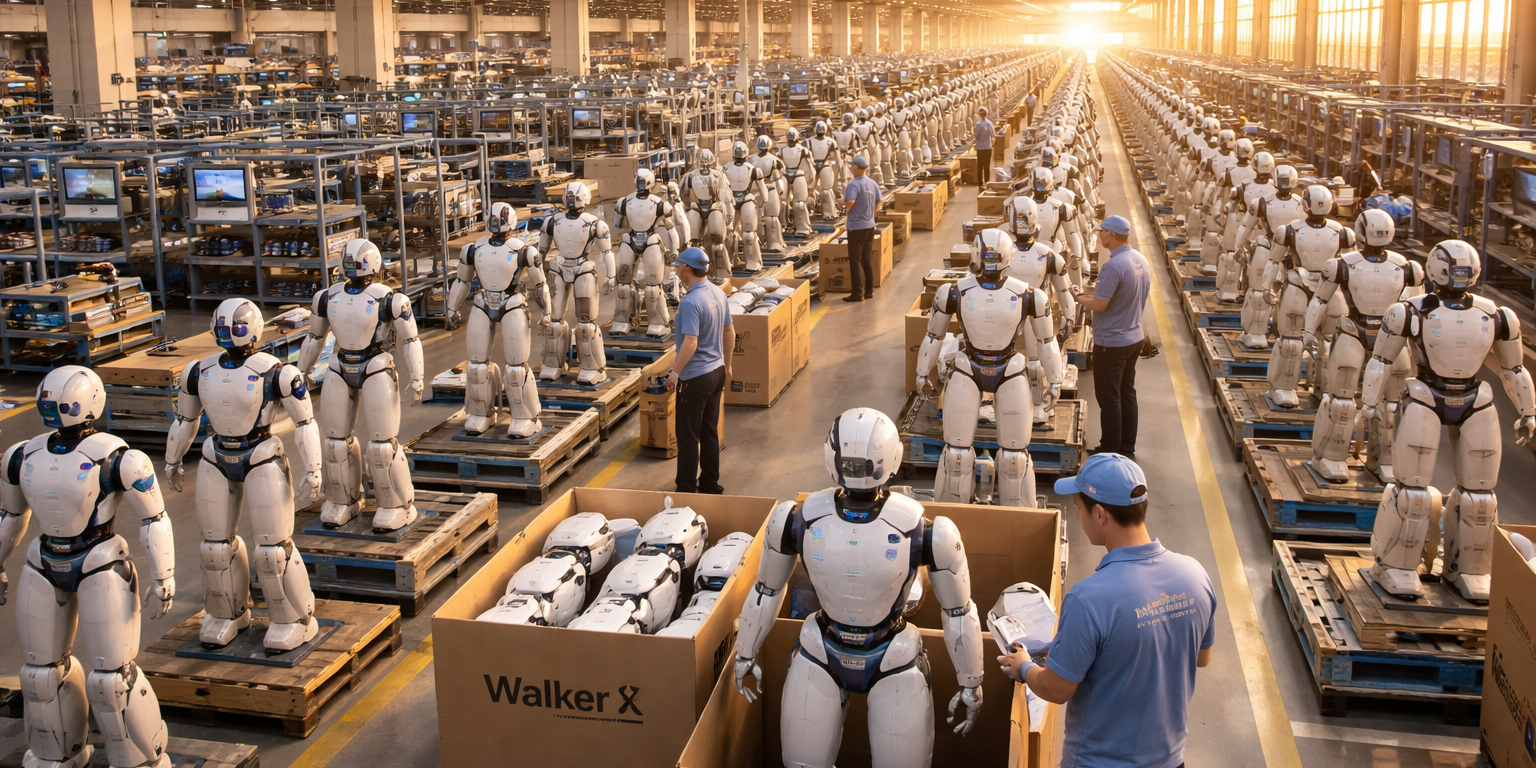
The numbers point to a demand profile investors have anticipated but not yet seen materialized at volume. UBTech's Walker X humanoid, priced at approximately $38,000 per unit depending on configuration, accounts for the majority of reported sales according to sources familiar with the company's order book. That would imply roughly 8,800 units shipped or committed in under 30 days, a production pace enabled by UBTech's Dongguan facility expansion completed in March and a supply agreement with Foxconn subsidiary FII that brought online additional torque-actuator capacity earlier this year. The Walker X features 41 degrees of freedom, integrated vision and language models running locally on Qualcomm's Snapdragon Ride chipset, and bi-manual manipulation rated for up to 10 kilograms per hand. UBTech began volume shipments in April following 18 months of field trials with hospitality chains and eldercare providers across Guangdong province.
Who bought remains as significant as how many. Industry sources indicate institutional buyers represent roughly 60 percent of the order volume, with hotel operators, senior living facilities, and commercial real estate developers leading demand. The remainder came from direct-to-consumer channels targeting affluent households in tier-one Chinese cities, where Walker X units have been positioned as both domestic assistants and status symbols. UBTech's retail strategy includes showrooms in Beijing, Shanghai, Shenzhen, and Hangzhou where prospective buyers can interact with demo units for appointments lasting up to two hours. Conversion rates from these engagements reportedly exceed 20 percent, a figure that speaks to how tangible functionality, not just novelty, drives purchase decisions when the product reaches a threshold level of capability. The company's June disclosures also reference initial shipments to buyers in South Korea, Japan, and Singapore, though volumes in those markets remain modest compared to domestic Chinese demand.
The sales surge arrives as competing humanoid manufacturers scramble to reach production scale. Figure AI's Figure 02 began limited shipments to BMW's Spartanburg facility in May but remains supply-constrained pending expanded actuator sourcing from Schaeffler. Tesla's Optimus Gen 3, showcased in prototype form at Giga Texas in March, has yet to enter customer trials outside the company's own facilities. Agility Robotics' Digit v3 continues deployment at Amazon and Spanx warehouses but has not announced pricing or availability for third-party buyers. Boston Dynamics, now majority-owned by Hyundai, pivoted its Atlas platform toward commercial applications in late 2025 but has not disclosed production timelines or unit economics. UBTech's ability to ship volume while competitors refine prototypes creates a window to establish brand recognition and iterate on software based on field data from thousands of deployed units. Network effects matter in robotics: the more Walker X units operating in real environments, the faster UBTech can refine manipulation policies, conversational interfaces, and edge-case handling through fleet learning.
Broader implications hinge on whether UBTech's sales velocity reflects pent-up demand from early adopters or the start of sustained category growth. If institutional buyers who committed to humanoid trials in 2025 are now converting to volume orders, that signals confidence in return-on-investment models for labor automation in hospitality and eldercare, two sectors facing chronic staffing shortages across East Asia. Consumer demand, meanwhile, tests the hypothesis that humanoid robots can enter households not as novelties but as functional assistants worth tens of thousands of dollars. UBTech's financing options, which allow buyers to spread payments over 36 months with monthly costs comparable to employing a part-time domestic worker in major Chinese cities, make the value proposition legible to households that previously considered humanoids aspirational rather than accessible. The four-week sales window also coincides with increased media coverage of UBTech's Walker X deployments at the Shenzhen Bay Hotel and Guangzhou Baiyun International Airport, where units handle guest services, luggage transport, and wayfinding. Visibility drives demand when the product performs reliably in high-traffic public environments.
What to Watch: Track whether UBTech sustains production at this pace through third-quarter 2026 or whether the surge reflects a backlog clearing after capacity expansion. Monitor Figure AI's shipment volumes to BMW once Schaeffler actuator supply ramps, expected in August. Watch for Tesla's first Optimus external pilot announcements, rumored for late September. Pay attention to whether UBTech's institutional customers, particularly hotel chains, report productivity or cost metrics publicly, as that data will shape enterprise buyers' willingness to commit to humanoid deployments at scale. Any announcements from UBTech regarding manufacturing partnerships or facility expansions outside China would signal ambitions to address demand in North American and European markets, where regulatory and consumer dynamics differ significantly from the company's home base.