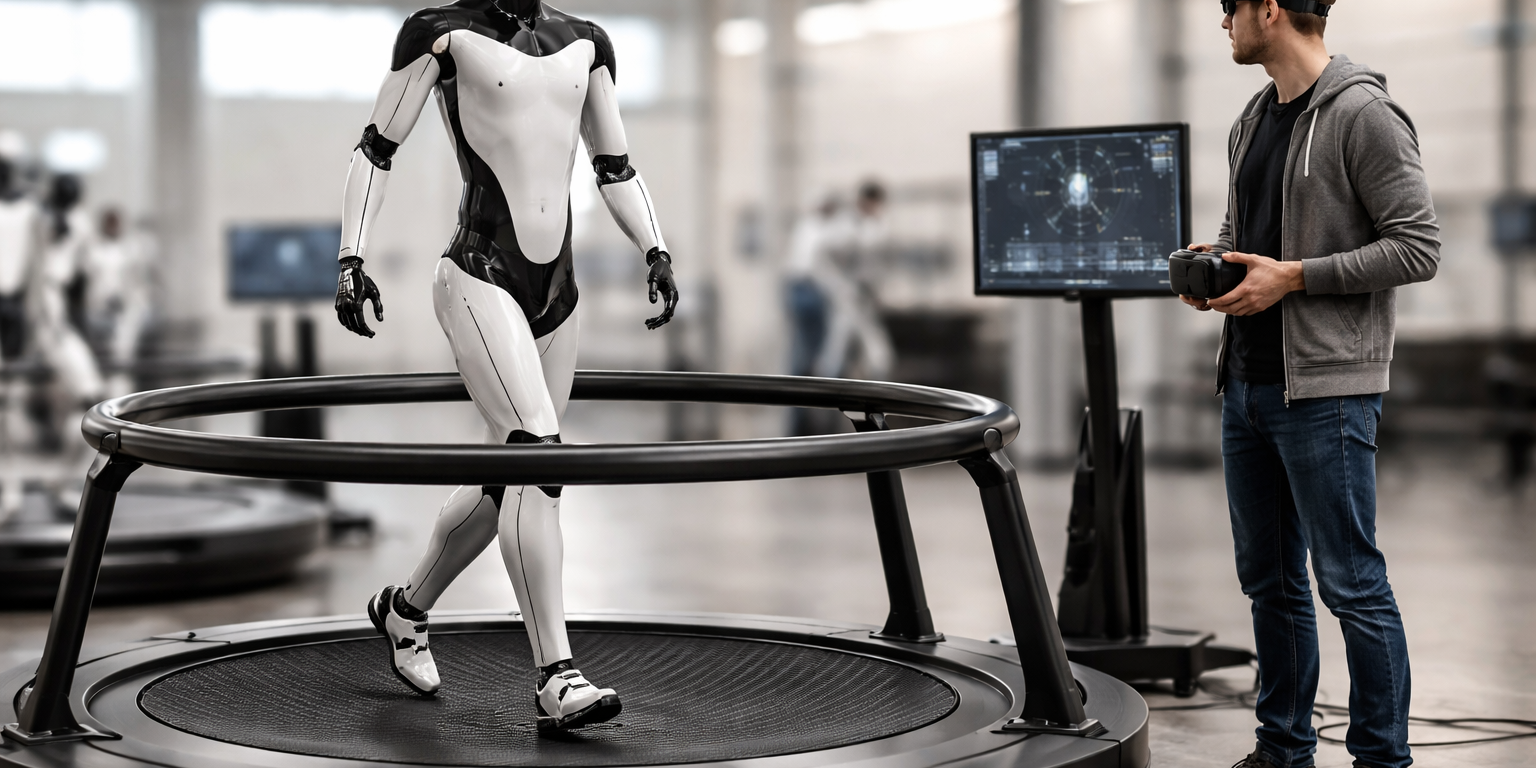
Tesla acquired Virtuix's Omni One omnidirectional treadmill platform sometime in early 2026, according to supply chain documents reviewed by RoboticsIntl.com and confirmed by two former Virtuix engineers who spoke on condition of anonymity. The Omni One, which launched as a $2,595 consumer VR gaming peripheral in 2024, features a low-friction concave walking surface surrounded by a support ring that allows users to walk, run, and crouch in any direction while remaining stationary. Tesla's robotics division now operates at least eight Omni One units at its Fremont pilot facility and has placed orders for an additional 40 systems scheduled for delivery to its Austin headquarters by September 2026, according to shipping manifests. Virtuix CEO Jan Goetgeluk declined to comment on specific customer relationships but confirmed in a July 22 investor call that enterprise sales now represent 60 percent of the company's revenue, up from 12 percent in 2024.
The purchase reflects a broader shift in humanoid training methodology that prioritizes human demonstration over pure reinforcement learning. Boston Dynamics spent roughly $18 million developing custom motion capture stages for Atlas between 2019 and 2023, according to a former program director who left the company in 2024. Figure AI built a 15,000-square-foot teleoperation facility in Sunnyvale equipped with 127 motion capture cameras at an estimated cost of $6 million. Apptronik installed force plate arrays and overhead camera rigs across three training rooms in Austin. Tesla's decision to adapt existing consumer hardware represents a lower-cost entry point, though engineers caution that the Omni One's 54-inch diameter walking surface imposes constraints on stride length and lateral movement. The system's weight capacity tops out at 285 pounds, well below the 350-pound threshold that most industrial humanoid platforms now exceed when carrying payloads.
Virtuix originally raised $10.2 million across seed and Series A rounds between 2013 and 2016, targeting the home entertainment market as VR headsets gained traction. The company shipped fewer than 3,000 Omni One units to consumers in 2024 and 2025 combined, according to SEC filings. Enterprise adoption began in late 2025 when the U.S. Army ordered 12 units for infantry training simulations at Fort Benning. Medical rehabilitation centers in Germany and Japan followed, using the treadmills for gait analysis and physical therapy under clinical supervision. Tesla's order represents the first application in humanoid robot development. The Omni One's sensor array tracks 23 points of articulation at 120Hz, feeding real-time joint angle and velocity data to connected systems via USB-C or Bluetooth 5.2. Tesla engineers have reportedly modified the platform to accept direct input from Optimus actuators, bypassing the consumer-grade software layer entirely and writing custom firmware that logs training runs at the motor controller level.
Tesla reported manufacturing 1,147 Optimus units in Q2 2026, up from 412 in Q1, according to its July shareholder letter. The company deployed 89 robots across internal operations in Fremont, Austin, and Sparks, primarily in parts sorting and battery module handling roles. External sales remain limited to undisclosed pilot customers, though supply chain sources indicate that Toyota's Georgetown, Kentucky assembly plant received at least six units in June for evaluation in wire harness routing tasks. Tesla has not published specifications for Optimus beyond stating that the platform stands 5 feet 8 inches tall and weighs 161 pounds unloaded. Independent teardowns by research groups at MIT and Carnegie Mellon identified 28 degrees of freedom and a maximum walking speed near 1.4 meters per second, comparable to Unitree's H1 and slower than Figure's 02 model. The Omni One purchase suggests Tesla plans to capture naturalistic human motion data at scale rather than relying solely on simulated gaits, a method that Agility Robotics credits with improving Digit's stair navigation success rate from 73 percent to 94 percent between 2024 and 2026.
What to Watch: Track Virtuix's Q3 2026 earnings call in October for updates on additional enterprise orders and potential custom hardware variants. Monitor Tesla's filings for capital expenditures related to simulation and training infrastructure, which could indicate larger buildouts beyond the initial 48-unit Omni One deployment. Watch for patent applications from Tesla's robotics division covering treadmill-based training methods or modifications to omnidirectional platforms. Boston Dynamics and Agility Robotics may respond with competing low-cost training systems if Tesla demonstrates measurable improvements in locomotion performance over the next six months.