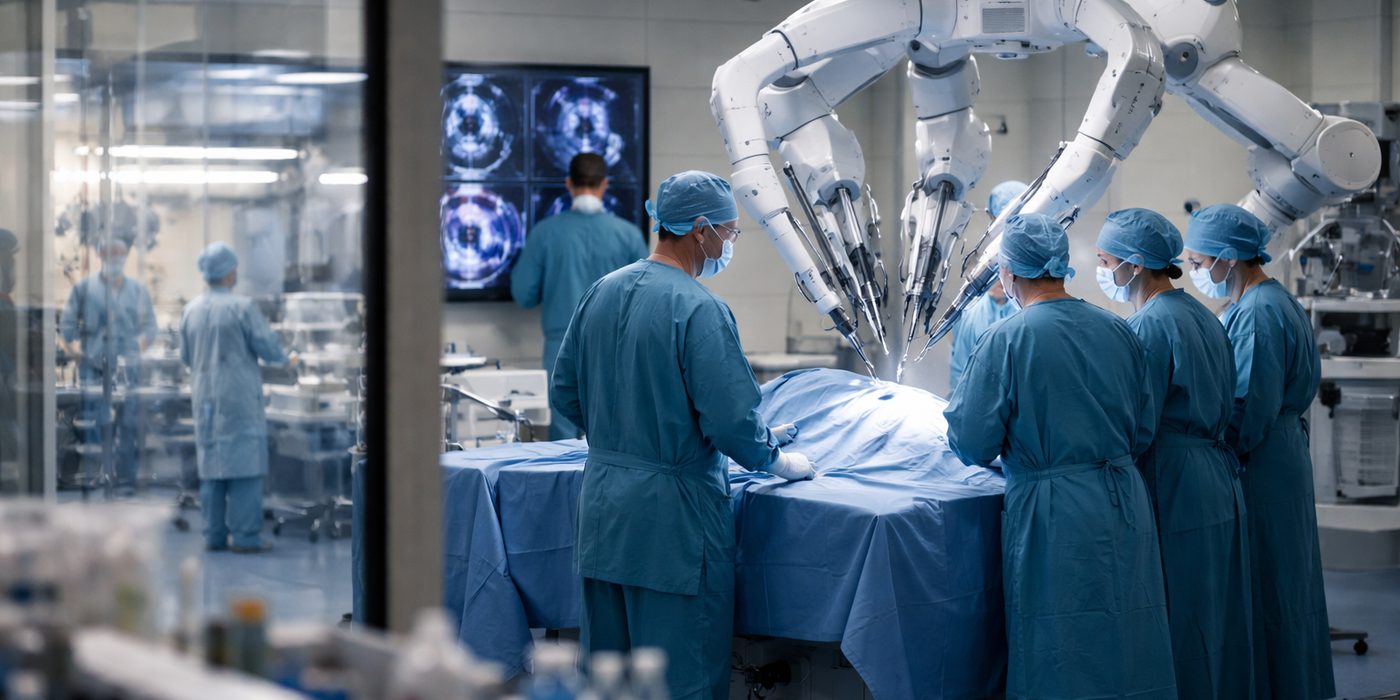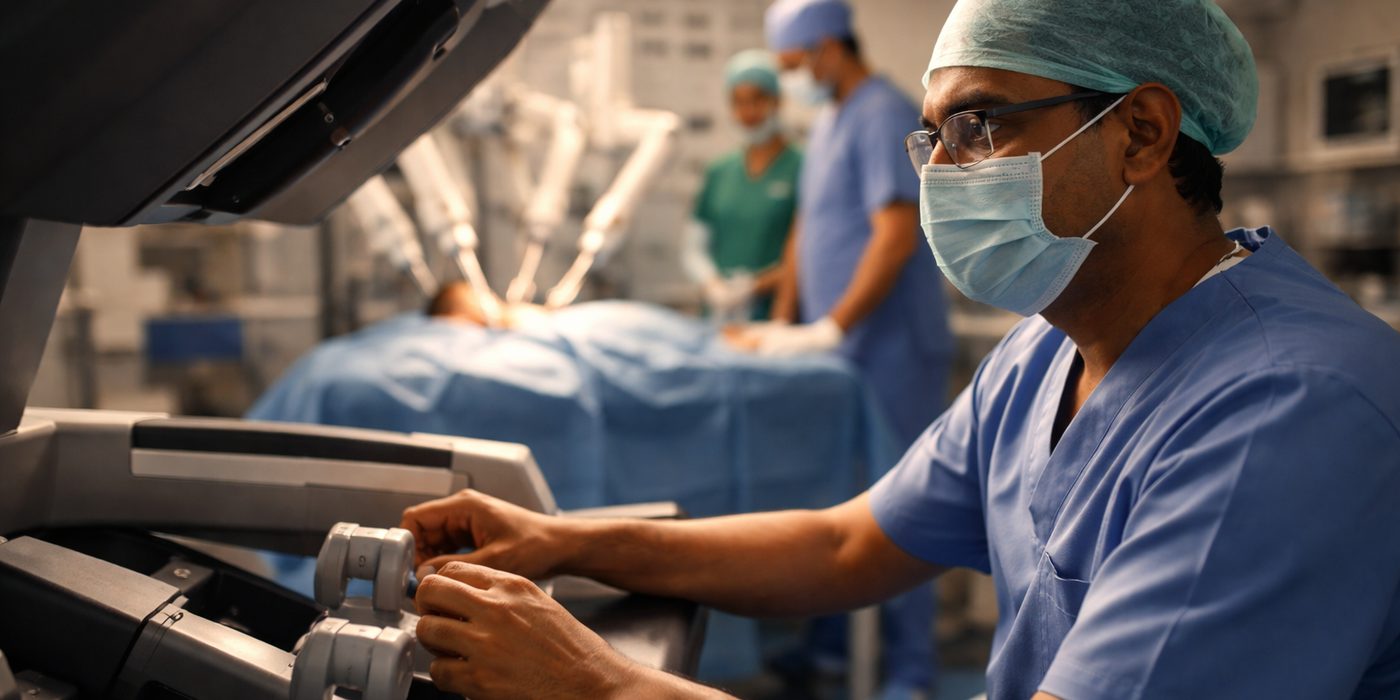

Rs 35 crore buys a lot of hospital. It will buy one robot. That is the central fact of the plan taking shape at Government Medical College and Hospital in Nagpur, which is set to become the first state-run hospital in Maharashtra to operate a single-access robotic surgery system. The machine works through one small incision rather than the three to five ports used by conventional multi-arm platforms. At roughly $4 million at current exchange rates, it is a serious capital bet for an institution whose patients mostly arrive through the public system, and the hospital intends to put it to work for them rather than for a paying private clientele.
The buying logic starts with access. Robotic surgery in India has grown steadily over the past decade, but almost entirely inside private hospitals in Mumbai, Delhi, Bengaluru, Chennai and Hyderabad, where a single procedure can run several lakh rupees. For a family in Vidarbha, that price puts the technology out of reach. GMCH's plan routes procedures through the Mahatma Jyotirao Phule Jan Arogya Yojana, the state's flagship health insurance scheme, which covers eligible families for defined surgical packages. If the hospital can bill robotic cases against those packages and keep the machine busy, it turns a luxury asset into a public service. If it cannot, it becomes an expensive monument.
Single-access platforms occupy a particular niche, and the engineering tradeoffs are worth understanding. Instead of several rigid arms entering through separate ports, a single-port system feeds a bundle of articulated instruments and a camera through one cannula roughly the width of a few fingers. That demands tightly coupled kinematics, instruments that triangulate inside the body without colliding, and a control scheme that keeps the surgeon's hand motion intuitive despite the cramped geometry. The reward is smaller scars, less tissue trauma and, in suitable cases, faster recovery. The cost is a narrower set of procedures where the design clearly wins. Urology, certain gynecologic operations, colorectal work and some head and neck procedures are the usual targets, while complex multi-quadrant cases still favor multi-arm designs.
For robotics vendors and investors, the interesting signal is the buyer, not the product. India's surgical robotics market has been shaped by imported systems carrying heavy price tags, and a growing group of domestic developers is competing on cost. A state government committing Rs 35 crore to a single platform in a public college hospital shows a procurement channel that barely existed a few years ago. It also raises hard operational questions that decide whether these deployments succeed: surgeon training pipelines, uptime and service contracts outside metropolitan hubs, disposable instrument costs that recur with every case, and reimbursement rates that must cover them. A platform that is cheap to buy but costly to run per procedure can drain a public budget quickly.
GMCH also matters as a teaching institution. Medical colleges train the next generation of surgeons, so a robot installed there reaches beyond its own operating theatre. Residents who learn on it carry that familiarity to district hospitals and private practice, which shapes future demand for whichever vendor's system they trained on. That makes the selection a long-term commercial decision as much as a clinical one, and it explains why manufacturers court academic centers aggressively. Maharashtra's other government medical colleges will be watching closely. A clean first year of throughput and outcomes would give health officials a template to replicate. A stumble would give budget skeptics their argument.
What to Watch
Track the formal procurement and installation timeline at GMCH Nagpur through the first quarter of 2027, including which vendor is selected and whether the Rs 35-crore figure holds once service and instrument contracts are priced in. Watch for the first procedures billed under the Mahatma Jyotirao Phule Jan Arogya Yojana package structure, since reimbursement rates will determine whether robotic cases are financially sustainable. Follow whether other Maharashtra government medical colleges, including those in Mumbai, Pune and Aurangabad, file comparable robotic procurement requests in the 2026-27 budget cycle. Finally, monitor domestic Indian surgical robotics developers for pricing responses, because a public-sector buyer of this size gives them a reason to sharpen their offers.