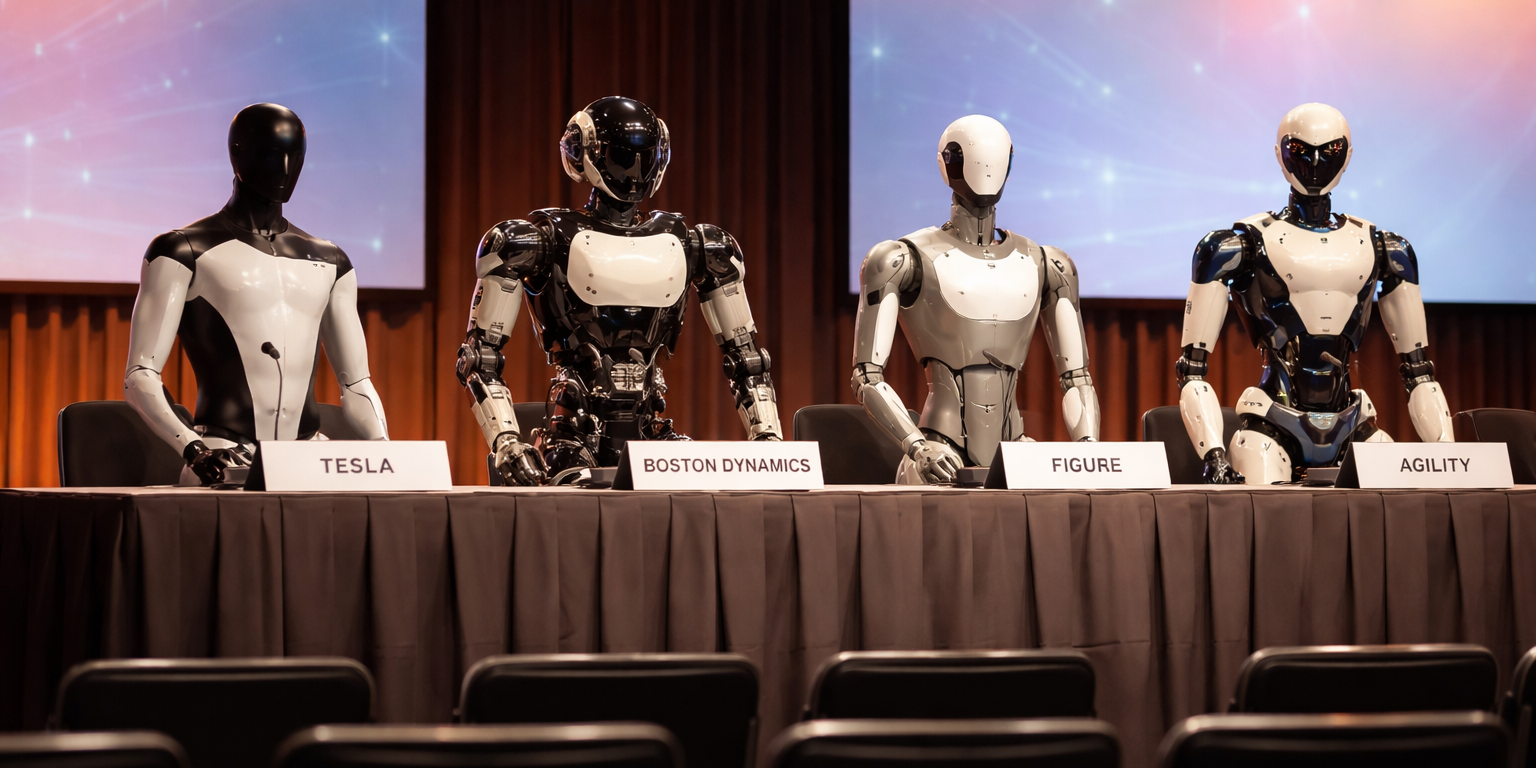

Taiwan's electronics manufacturing ecosystem is mapping out positions in the humanoid robot supply chain while the industry itself continues to grapple with fundamental technical obstacles that push practical deployment timelines further into the future. Component suppliers across the island nation report active engagement with robotics companies on everything from actuators to sensing systems, driven by the expectation that humanoids will eventually require production scale similar to consumer electronics. The optimism comes with a caveat that has become increasingly difficult to ignore: the machines themselves remain far from ready for the warehouse floors and retail environments where early adopters hoped to deploy them.
The enthusiasm among Taiwanese manufacturers reflects a broader pattern in robotics investment, where supply-chain infrastructure often develops ahead of product readiness. Companies that built businesses serving the smartphone and PC industries see humanoids as a logical next category, one that promises similar component volumes once technical hurdles clear. Several major Taiwanese suppliers have reportedly established dedicated engineering teams to work on actuator assemblies, battery management systems, and sensor integration packages specifically for humanoid platforms. These efforts assume that bipedal robots will eventually achieve the kind of cost-per-unit economics that justify high-volume component production, a threshold that remains elusive. The gap between supply-chain preparation and market reality underscores a persistent disconnect in the robotics sector, where hardware availability frequently outpaces the software and control systems necessary to make that hardware useful.
The technical challenges that continue to delay humanoid deployment have proven more stubborn than many industry observers anticipated. Bipedal locomotion in unstructured environments remains computationally expensive and mechanically fragile, particularly when machines must navigate spaces designed for human movement patterns. Companies building humanoid platforms have demonstrated impressive capabilities in controlled settings, but the transition from demonstration to reliable daily operation involves solving problems in energy efficiency, real-time decision-making, and mechanical durability that resist straightforward engineering solutions. Several robotics executives interviewed by industry analysts have quietly revised their deployment schedules, acknowledging that the gap between prototype performance and production readiness stretched wider than initial projections suggested. The shift in timeline has not dampened investment activity or supply-chain interest, but it has injected a note of realism into conversations that previously centered on aggressive deployment targets.
Meanwhile, the practical robotics market continues to expand around platforms that sacrifice humanoid form factors for functional reliability. Wheeled mobile manipulators, collaborative arms, and specialized automation systems are seeing accelerating adoption precisely because they sidestep the complexity that makes humanoids appealing in theory but challenging in practice. Taiwanese manufacturers serving this segment report consistent growth, driven by customers who prioritize task completion over biomimetic design. The divergence between humanoid aspirations and near-term deployments raises questions about where the industry's center of gravity will settle. If practical automation continues to deliver measurable productivity gains using non-humanoid architectures, the economic case for bipedal platforms weakens, regardless of their technical elegance. The supply chain is hedging both directions, investing in humanoid-specific capabilities while maintaining strong positions in the robotic systems actually shipping today.
What to Watch: Track quarterly guidance from Taiwanese motion control and actuator manufacturers through late 2026 and early 2027 for signals on whether humanoid component orders are translating to production volumes or remaining at prototype scale. Monitor deployment announcements from major humanoid developers for shifts in timeline language and pilot program scope. Pay attention to venture funding flow into wheeled manipulation platforms versus bipedal systems as a leading indicator of where near-term commercial traction is building.