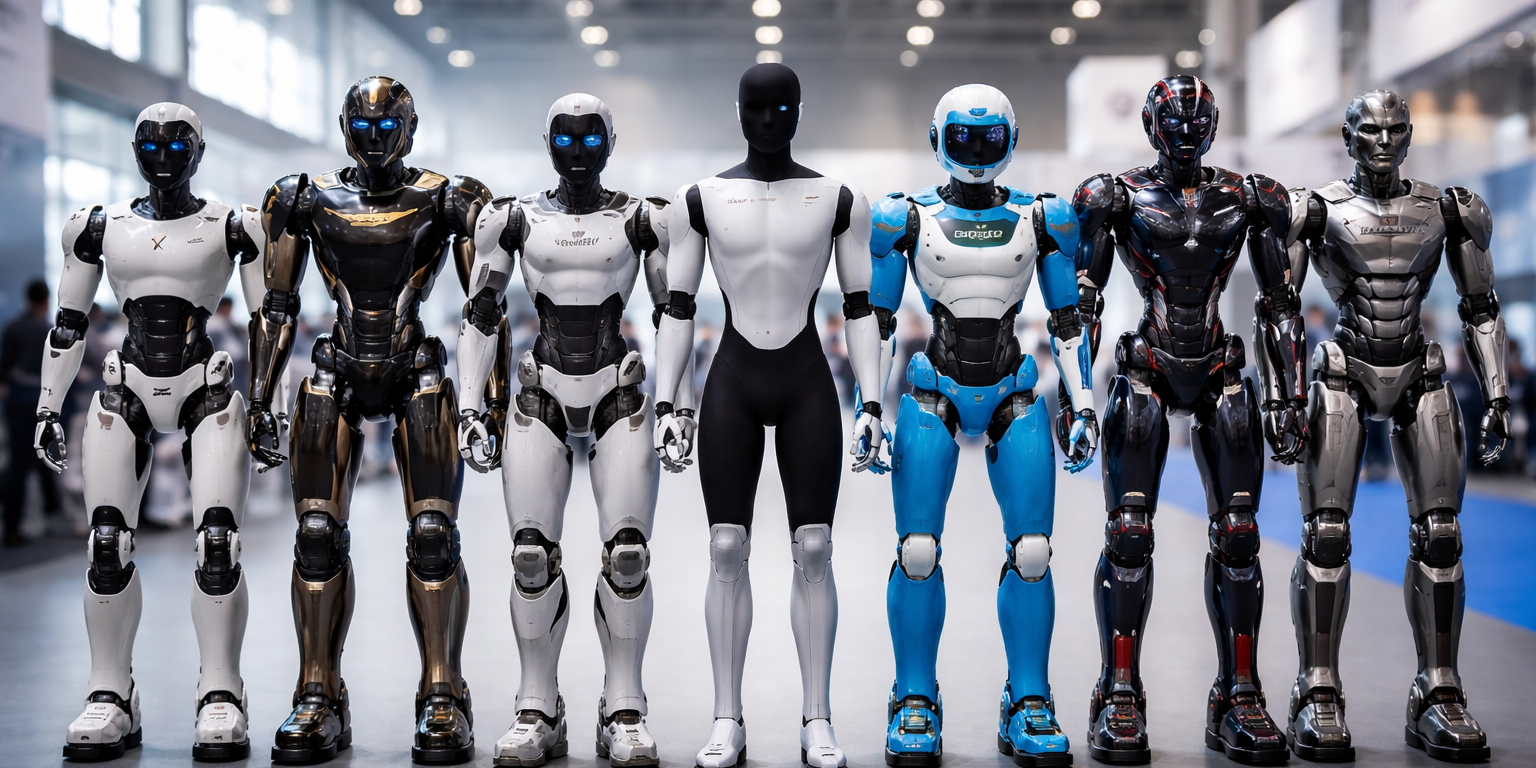
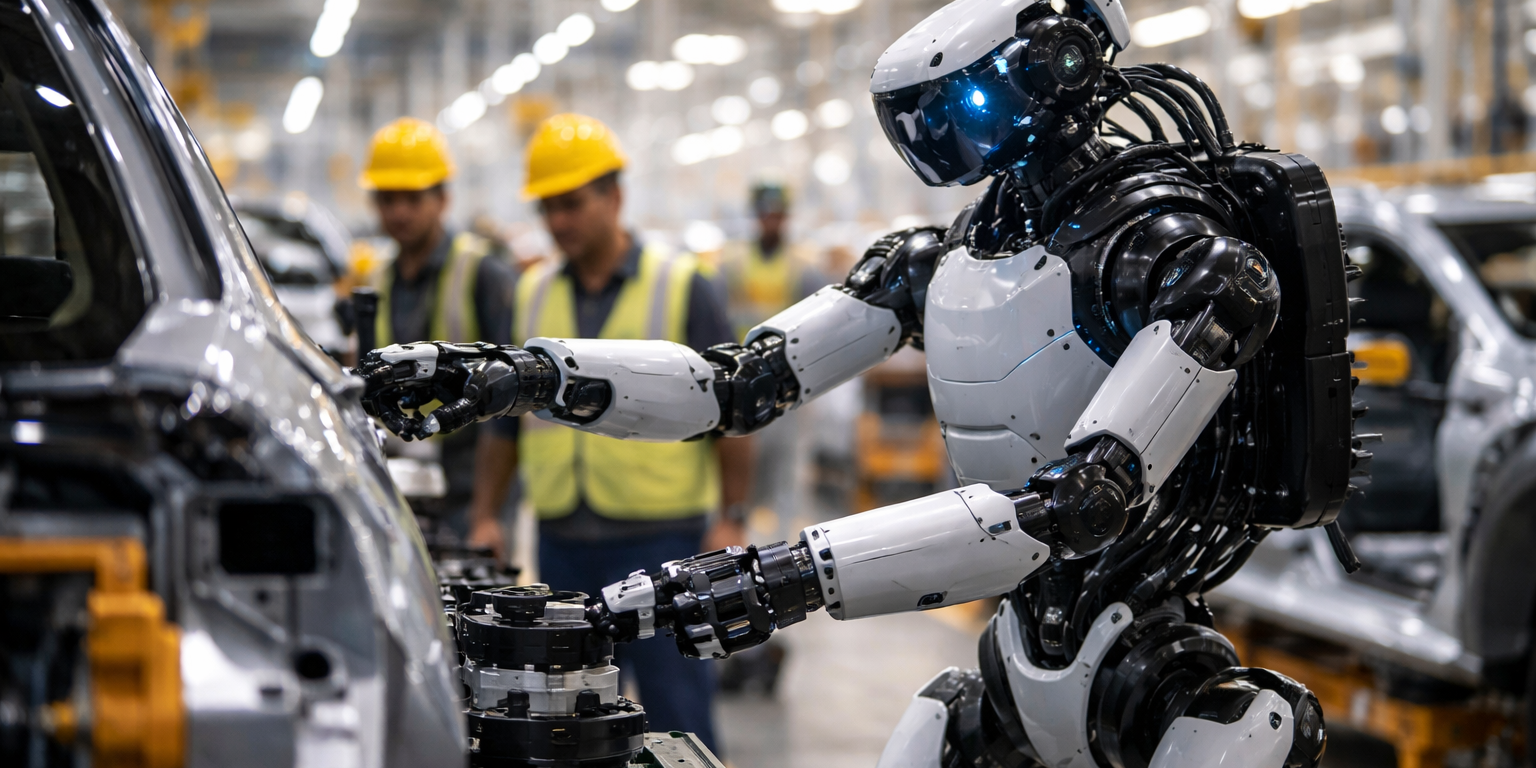
Solomon received NT$100 million ($3.16 million) from Taiwan's Ministry of Economic Affairs on May 18 for humanoid robot Vision-Language-Action technology development. The subsidy came through the ministry's sixth round of research and development funding, which approved three projects spanning robotics and materials innovation. Solomon built its reputation on 3D vision systems for industrial automation—technologies that guide pick-and-place operations, quality inspection, and assembly tasks in factories worldwide. The funding marks the company's first major push into humanoid robotics, where it will apply computer vision expertise to robots designed for general-purpose work rather than fixed manufacturing tasks. Vision-Language-Action systems represent a convergence of three AI capabilities: interpreting visual scenes through cameras and depth sensors, understanding natural language commands from human operators, and translating both inputs into physical actions. A humanoid robot equipped with VLA technology could, for example, watch a human demonstrate a task while listening to verbal instructions, then replicate the action in varied contexts without explicit programming.
The subsidy arrives as global investment in humanoid robotics accelerates past $10 billion in cumulative funding across startups like Figure AI, 1X Technologies, and Sanctuary AI. Chinese manufacturers including Unitree and Fourier Intelligence ship humanoid platforms priced between $16,000 and $90,000, while Tesla continues development of its Optimus robot with commercial deployment targeted for late 2025. Taiwan's government views this momentum as an opportunity to extend its hardware manufacturing dominance into robotics systems integration. The island's semiconductor fabrication capabilities through TSMC, precision mechanical component production, and contract manufacturing expertise through Foxconn create natural advantages for robotics production. Yet Taiwan has historically focused on component supply rather than finished robotic systems, leaving Chinese and American companies to dominate the integration and AI software layers where margins run higher. The Ministry of Economic Affairs subsidies aim to shift that dynamic by funding domestic companies that can combine hardware production with advanced AI capabilities. Solomon's existing industrial customer base provides immediate testing grounds for humanoid perception systems before broader deployment.
Solomon's 3D vision systems currently operate in automotive plants, electronics assembly lines, and logistics warehouses across Asia, Europe, and North America. The company's AccuPick technology uses structured light and stereo vision to generate point clouds—three-dimensional maps of objects and surfaces that robots use for navigation and manipulation. Translating this technology to humanoid robots requires solving different problems than fixed industrial arms face. A stationary robot arm works in controlled lighting with known object types arriving on conveyors at predictable positions. A walking humanoid encounters variable lighting, unfamiliar objects, moving people, and constantly changing perspectives as it navigates. Solomon must develop perception systems that function reliably across these conditions while processing visual and language inputs in real time to generate appropriate motor commands. The company has not disclosed technical details of its VLA architecture, including whether it will use foundation models like those from OpenAI and Google or develop proprietary systems. Given the NT$100 million budget and typical robotics development timelines, Solomon likely targets initial demonstrations within 18 to 24 months with commercial applications following two to three years later. The company's industrial relationships could accelerate adoption if it develops humanoid systems for warehouse, assembly, or inspection tasks where customers already trust Solomon vision technology.
Taiwan's broader strategy connects robotics subsidies to its position in global technology supply chains. Foxconn manufactures humanoid robots at its facilities for Figure AI, which raised $754 million in February 2024 at a $2.6 billion valuation. Foxconn also develops its own humanoid platforms and acquired a stake in Taiwanese collaborative robot maker Techman Robot. TSMC produces the AI accelerators that power robot perception and decision-making systems, while dozens of smaller Taiwanese firms supply motors, sensors, bearings, and mechanical components. The missing piece has been integration expertise and AI software development, domains where Chinese companies like Unitree and American startups like Agility Robotics lead. By funding companies like Solomon to develop VLA systems and other AI capabilities, Taiwan aims to move up the value chain into complete humanoid platforms rather than remaining a components supplier. Success would position Taiwanese companies to capture larger shares of revenue as the humanoid robotics market scales. Boston Consulting Group projects the market could reach $38 billion by 2035 if technical challenges around dexterity, autonomy, and cost resolve favorably. Goldman Sachs published even more aggressive estimates suggesting humanoid robots could address a $154 billion market by 2035 if they achieve human-level capability at competitive cost points.
What to Watch: Solomon's technical publications and conference presentations over the next six months will reveal whether the company pursues foundation model integration or proprietary VLA architectures. Foxconn's manufacturing roadmap for humanoid robots will indicate if Taiwanese contract manufacturers see sufficient demand to justify dedicated production lines. Taiwan's Ministry of Economic Affairs typically announces R&D subsidy results quarterly, with the seventh round of funding decisions expected in August 2025—watch whether additional humanoid robotics projects receive support, signaling sustained government commitment to the sector.