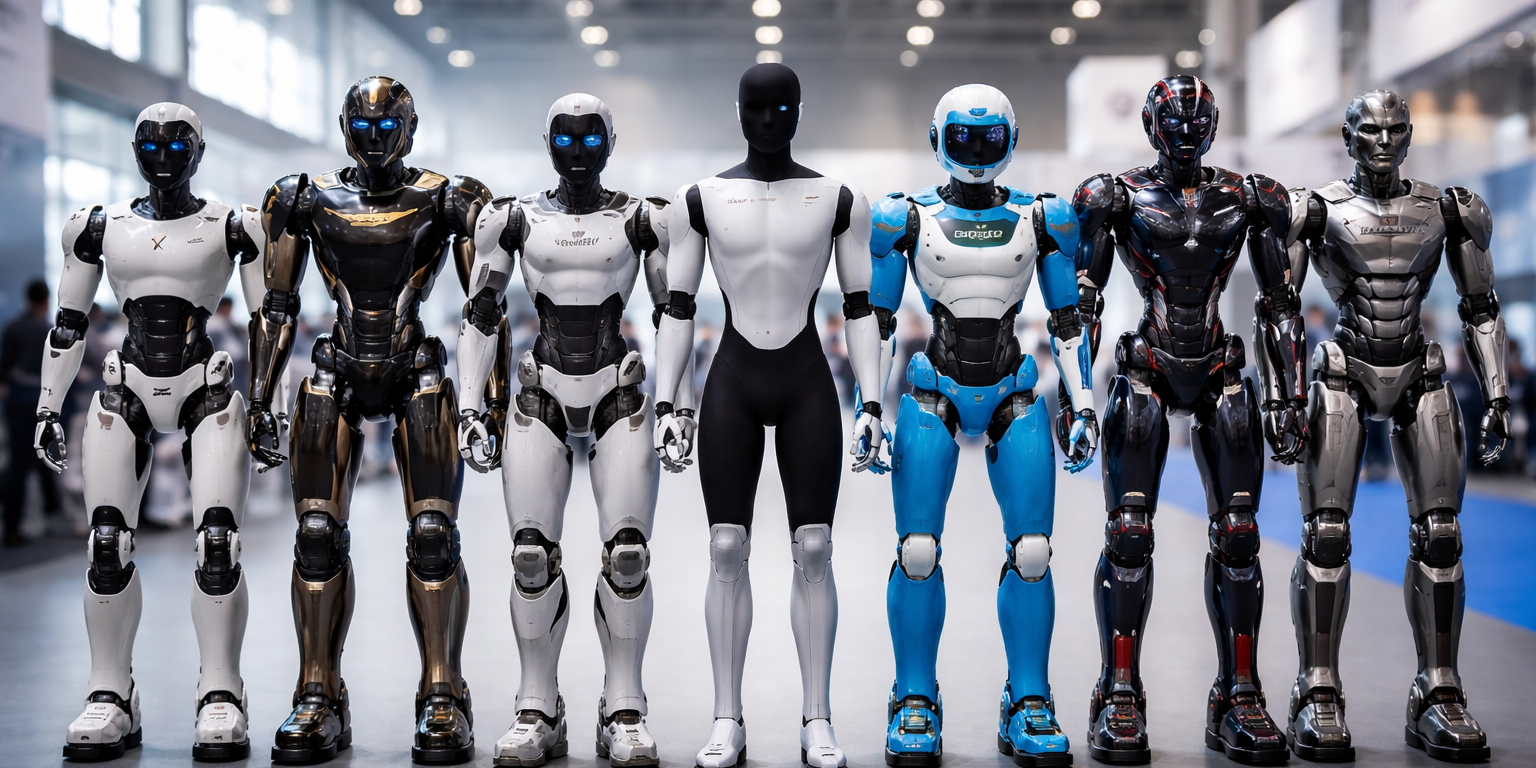
Nine companies will determine whether commercial humanoid robotics becomes a viable industry or a cautionary tale about capital misallocation. A new market research report tracking the sector through 2030 identifies UBTECH as one of the only players currently converting humanoid robot sales into meaningful revenue, while competitors burn through venture funding to refine prototypes. The study examines Figure AI, Agility Robotics, Tesla, Boston Dynamics, and Apptronik on the American side, alongside UBTECH, AgiBot, Unitree, and Leju from China. Industrial logistics emerges as the sector's first real commercial proving ground, where humanoid form factors must justify their premium over wheeled autonomous mobile robots and traditional fixed automation systems.
The divide between US and Chinese strategies has become stark. American companies have pulled in substantial venture capital—Figure AI alone raised $675 million in a February 2024 round that valued the company at $2.6 billion—to build sophisticated, high-capability platforms targeting specific industrial applications. These machines feature advanced manipulation, perception systems, and AI-driven autonomy designed for complex tasks in human-designed spaces. Chinese manufacturers have taken the opposite approach: aggressive capacity expansion aimed at driving per-unit costs down through manufacturing volume. UBTECH's Walker series and Unitree's H1 platform sell at price points that undercut Western competitors by 40 to 60 percent in some configurations. The Chinese bet assumes that affordability, not technical sophistication, will unlock mass adoption. The American bet assumes that premium capabilities will command premium pricing in applications where humanoid form factors solve problems wheeled robots cannot.
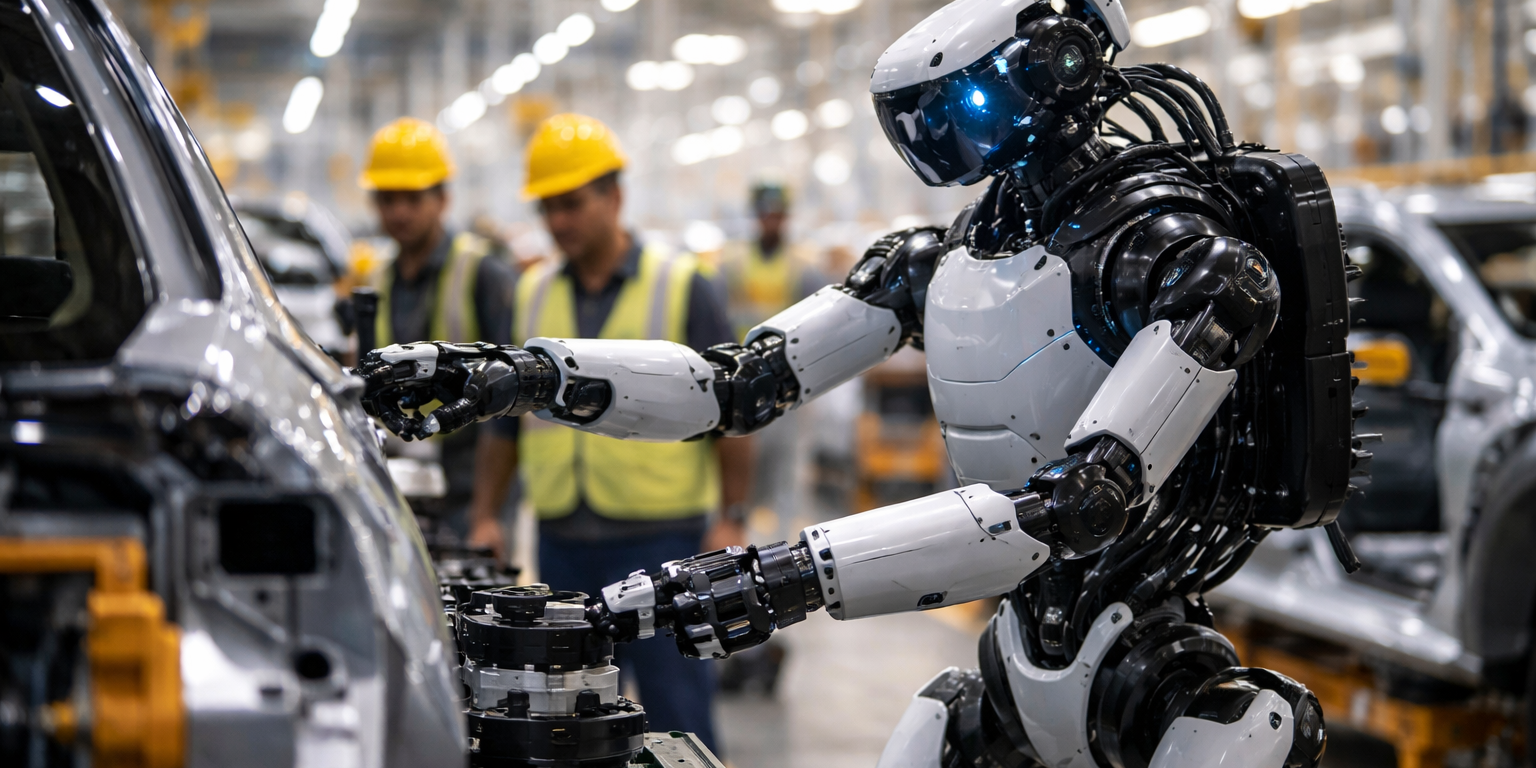
Industrial logistics represents the sector's most immediate commercial opportunity because warehouses and distribution centers combine human-centric layouts with repetitive tasks. Agility Robotics deployed its Digit robot at Amazon facilities in late 2023, handling tote movement and package sorting in areas where conveyor systems and traditional automation prove impractical. Figure AI signed agreements with BMW to test Figure 02 units in manufacturing settings, focusing on parts handling and kitting operations. These deployments share common characteristics: controlled environments, clearly defined tasks, and operational parameters that allow companies to measure productivity gains against deployment costs. Boston Dynamics, which spent years developing Atlas as a research platform, shifted toward commercial viability with its electric Atlas variant announced in April 2024, targeting automotive and logistics applications. Tesla's Optimus program remains the wildcard, with Elon Musk projecting volume production by 2026 at price points below $20,000 per unit, though the company has yet to demonstrate commercial deployments outside its own facilities.
The report identifies a fundamental tension that will define the next five years: the gap between venture capital deployed and revenue generated. American humanoid robotics companies have collectively raised over $2 billion since 2022, yet commercial shipments remain in the double or low triple digits for most players. UBTECH reported approximately $500 million in 2023 revenue across its entire robotics portfolio, including educational robots and the Walker humanoid line, making it an outlier in a field where most competitors remain pre-revenue or generate income in the low single-digit millions. Chinese manufacturers benefit from lower development costs, proximity to component suppliers, and domestic market access that provides deployment volume even at modest per-unit margins. Whether this translates to sustainable profitability depends on how quickly costs decline and whether international markets adopt Chinese platforms despite concerns about data security and supply chain dependencies. Western companies face the opposite challenge: justifying premium pricing while scaling production from low volumes to the thousands of units annually required to achieve healthy unit economics. The 2025-2030 window will reveal whether current business models hold or if the sector requires consolidation, pivots, or a fundamental reassessment of humanoid robots' commercial viability.
What to Watch: Track Figure AI's BMW manufacturing deployment progress through mid-2025 for concrete productivity metrics that validate or challenge the premium-capability thesis. Monitor UBTECH's quarterly revenue figures to see whether commercial humanoid sales grow or remain a small fraction of its broader robotics business. Watch for Tesla Optimus production volume announcements and third-party customer deployments beyond internal factory use, likely in the second half of 2025. Pay attention to whether Chinese manufacturers—specifically AgiBot and Unitree—announce international logistics contracts, which would signal that cost advantages outweigh Western buyers' supply chain concerns.