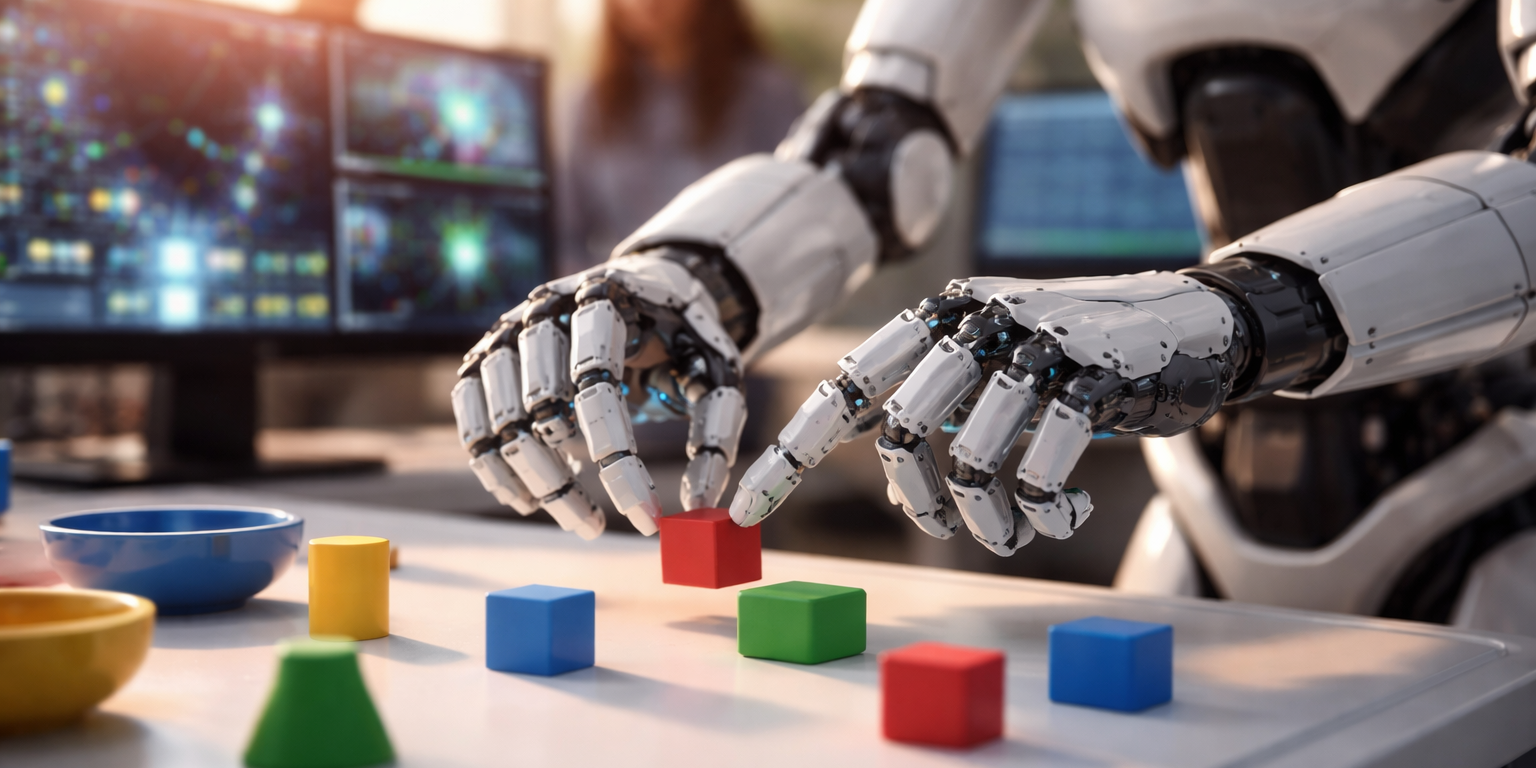
Boston Dynamics engineers now train Atlas to manipulate objects and navigate obstacles by first running thousands of digital trials in simulation, then transferring successful behaviors to the physical robot for validation under actual gravitational and frictional forces. The company detailed this methodology in recent technical documentation, revealing how the electric humanoid learns tasks like grasping irregular loads and moving through industrial environments cluttered with equipment. Engineers adjust parameters including object mass, surface texture, and spatial constraints within the virtual environment, identifying movement sequences that maintain balance and grip stability before committing to hardware tests. Once a simulated behavior demonstrates consistent success rates, the team loads those control algorithms onto Atlas, where real sensor feedback—from force-torque measurements at joints to vision system data—exposes discrepancies between modeled physics and physical reality. This gap analysis drives the next iteration of simulation refinements, creating a loop that Boston Dynamics credits with dramatically reducing development time while minimizing wear on expensive actuators and structural components.
The company's decision to publicly describe its training architecture arrives as the humanoid sector experiences unprecedented commercial pressure, with at least seven well-funded competitors now targeting warehouse and manufacturing deployments within the next eighteen months. Figure announced partnerships with BMW and signed agreements for facility trials in Germany starting this quarter. Tesla continues development of Optimus with Elon Musk projecting limited production by late 2025, though external observers remain skeptical of that timeline given the hardware's current demonstrated capabilities. Apptronik secured partnerships with NASA and Mercedes-Benz parent company for Apollo, a humanoid designed specifically for automotive logistics tasks. Sanctuary AI operates pilot programs in retail environments across Canada, while Agility Robotics already deployed multiple Digit units in Amazon fulfillment centers for tote handling. Boston Dynamics historically maintained tighter control over developmental details, making this disclosure notable for an organization that spent decades under military research contracts before Hyundai Motor Group acquired it in 2021 for $880 million. The Korean conglomerate explicitly directed the robotics unit toward commercial applications after years of viral videos that showcased technical prowess without clear revenue paths.
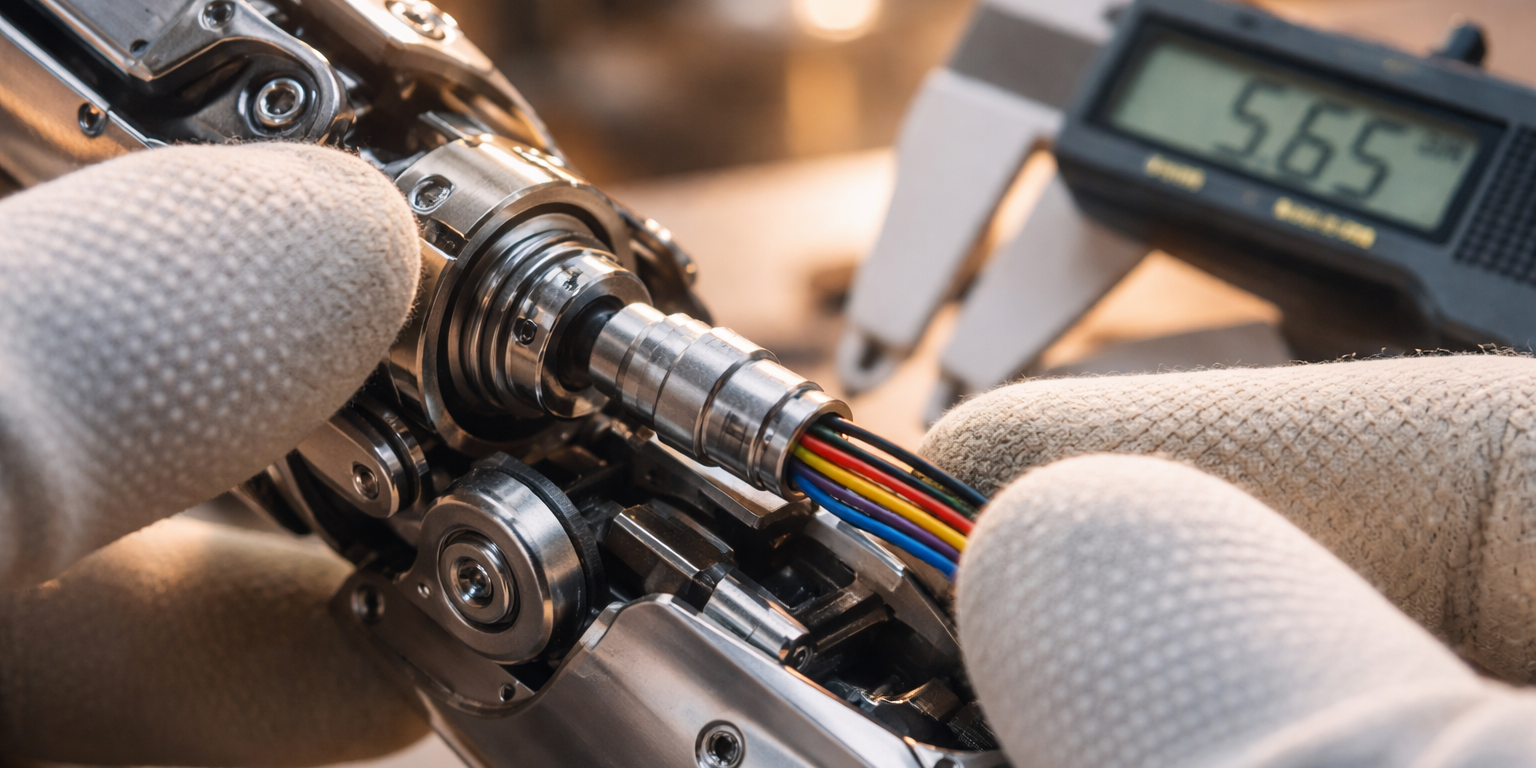
Atlas itself represents Boston Dynamics' second approach to humanoid form factors after the company retired its hydraulic Atlas prototype in April 2024. The electric version uses custom actuators that provide what the company describes as superior strength-to-weight ratios compared to both hydraulic predecessors and competitor designs relying on off-the-shelf motors. Engineers configured the robot with a sensor suite including stereo cameras, depth sensors, and inertial measurement units that feed into perception systems running simultaneous localization and mapping algorithms. The physical design deliberately incorporates joints with range of motion exceeding human anatomical limits, allowing Atlas to rotate its torso 360 degrees and contort into configurations impossible for human workers—capabilities the company argues will prove essential for spaces designed around human dimensions but requiring access angles humans cannot achieve. Boston Dynamics has not announced commercial availability timelines for Atlas, instead emphasizing continued research into manipulation dexterity and autonomous decision-making in unstructured environments. This measured pace contrasts sharply with competitors racing toward deployment, several of whom have accepted that early commercial units will require extensive human oversight and teleoperation rather than full autonomy.
The simulation-to-reality training pipeline that Boston Dynamics described has become foundational across robotics development, but implementation quality varies dramatically between organizations. Companies with deep expertise in physics simulation and access to substantial computing resources can model contact dynamics, material deformation, and sensor noise with sufficient fidelity that simulated behaviors transfer to hardware with minimal degradation. Organizations lacking that infrastructure often discover that behaviors appearing robust in simplified simulations fail immediately when friction coefficients, sensor latency, or actuator response curves differ from modeled assumptions. Boston Dynamics benefits from decades of experience in legged locomotion, where simulation proved essential for developing the control algorithms that enable Spot quadrupeds to navigate stairs and rough terrain. That institutional knowledge in modeling complex physical interactions now applies to manipulation tasks where contact forces and object compliance create similar challenges. The company's engineering team uses reinforcement learning techniques to explore movement strategies within simulation, rewarding behaviors that accomplish tasks while penalizing actions that risk hardware damage or violate safety constraints. Successful policies then undergo validation on physical Atlas units in controlled environments before progressing to more challenging scenarios. This conservative approach accepts slower capability expansion in exchange for reliability—a calculation that assumes industrial customers will prioritize consistent performance over cutting-edge functionality that works only under ideal conditions.
What to Watch: Boston Dynamics will likely announce specific commercial applications for Atlas within the next six months as Hyundai Motor Group pushes for revenue generation from its robotics investments. Monitor whether competitors like Figure and Apptronik report successful transitions from pilot programs to paid deployments in automotive facilities during Q2 2025, which would validate market readiness for humanoid manipulation tasks. Track any technical publications from Boston Dynamics describing Atlas's perception systems and decision-making architecture, which remain less documented than the training methodology. Watch for partnerships between humanoid developers and simulation platform providers like NVIDIA Isaac or MuJoCo, signaling industry standardization around virtual training environments.