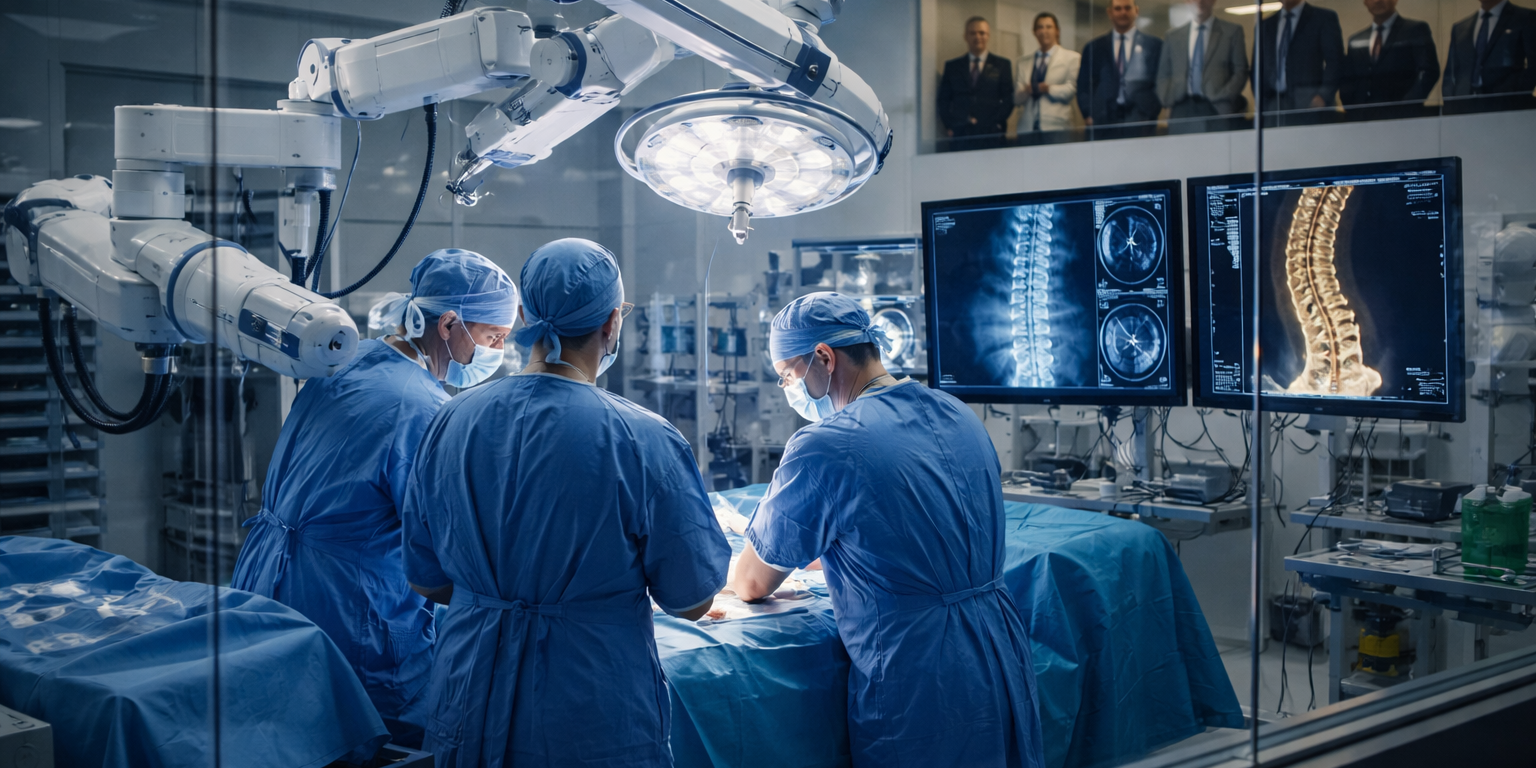

Hospital operating rooms will spend an additional $13.45 billion on surgical robots over the next four years, with the market reaching $27.14 billion by 2030, according to projections published Monday by MarketsandMarkets. The research firm pegs current 2026 market value at $13.69 billion, representing a compound annual growth rate of 14.7% through the end of the decade. The expansion reflects hospitals moving beyond initial pilot programs into broader deployment of robotic systems for procedures ranging from hip replacements to brain surgery, though reimbursement questions and clinical outcome data remain central to purchasing decisions at major health systems.
Intuitive Surgical has dominated the sector for two decades with its da Vinci platform, but the forecast period coincides with patent expirations and market entry from Medtronic, Johnson & Johnson, Stryker, and smaller specialized firms targeting specific surgical disciplines. Orthopedic robotics represents the fastest-growing segment, driven by Stryker's Mako platform for joint replacement and Zimmer Biomet's Rosa system. Neurosurgical robotics, while smaller in total market value, commands premium pricing due to the precision requirements and regulatory complexity involved in brain and spine procedures. General surgery remains the largest category by procedure volume, but pricing pressure from competing platforms has compressed margins compared to earlier years when Intuitive faced limited competition. The market structure resembles industrial robotics a decade ago: an established incumbent defending market share while newer entrants pursue vertical specialization strategies.
Hospital capital equipment budgets drive purchasing cycles, and the 2026-2030 window includes delayed investments from institutions that postponed robotic surgery programs during recent economic uncertainty. A 400-bed hospital typically allocates $3 million to $5 million for a multi-arm surgical robot, plus annual service contracts running $150,000 to $200,000 and per-procedure instrument costs. Those economics make adoption decisions strategic rather than tactical, with hospital boards examining five-year total cost of ownership against surgeon training requirements, patient throughput gains, and competitive positioning within their regional markets. Academic medical centers typically lead adoption curves, followed by large community hospitals and eventually ambulatory surgery centers as system costs decline and platforms become more compact. The shift toward outpatient procedures for certain surgeries creates demand for smaller, less expensive robotic platforms that fit into facilities without the infrastructure of a major hospital operating room.
Reimbursement policy remains the wildcard in growth projections. Medicare and commercial insurers do not pay higher rates for robotic-assisted procedures compared to conventional surgery in most cases, which limits the financial incentive for hospitals to invest unless they can demonstrate reduced complications, shorter hospital stays, or faster surgeon throughput. Clinical data on patient outcomes has been mixed, with some studies showing marginal benefits and others finding no significant difference compared to conventional laparoscopic techniques in experienced hands. That evidence gap gives hospital CFOs pause, particularly at mid-size institutions without the surgical volume to justify premium capital expenditures. The strongest business case emerges in orthopedics, where robotic systems demonstrably improve implant positioning accuracy in joint replacement. Neurosurgery applications offer clear precision advantages for stereotactic procedures. General surgery faces the most skepticism, as skilled laparoscopic surgeons can achieve comparable outcomes with conventional instruments at a fraction of the cost. Market growth to $27 billion assumes continued improvement in clinical evidence and gradual expansion of robotic techniques into procedures where the value proposition remains unproven today.
What to Watch: Intuitive Surgical reports third-quarter earnings in October 2026, with procedure volume trends indicating whether the company is retaining market share or losing ground to competitors in general surgery. Medtronic's Hugo RAS platform, launched commercially in 2024, should reach 100 installed systems by year-end if adoption tracks company guidance. Watch for CMS reimbursement policy updates in late 2026 or early 2027 that could create separate payment codes for robotic-assisted orthopedic procedures, which would accelerate hospital investment decisions. Johnson & Johnson's Ottava system, delayed from its original 2024 launch target, remains in limited clinical trials with broader availability expected in 2027 pending FDA clearance.