The most telling detail in Daegu's plan is not the headline figure but the roster. Of the 12 companies identified for a KRW2.2 trillion private investment push, a sizable share are automotive and machinery component makers: firms that today stamp, machine, and assemble parts for internal combustion drivetrains and conventional industrial equipment. They are being asked to become the parts base for humanoid robots. Reported by Digitimes, the plan frames Daegu, a city with deep roots in auto parts and machinery, as South Korea's candidate for a localized humanoid supply chain. The money is private, not state-funded, which changes the conversation. Companies are underwriting their own bet on a market that has yet to prove volume demand.
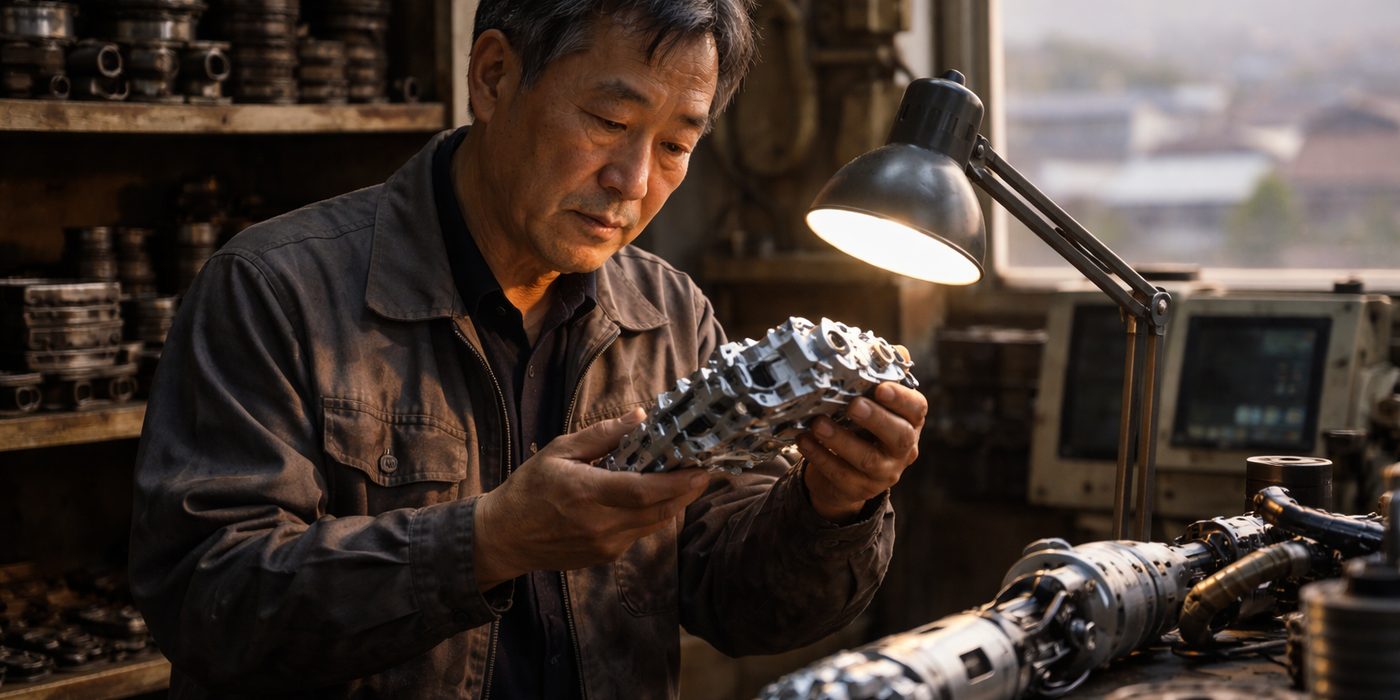
The logic is easy to follow once the bill of materials is on the table. A humanoid robot is, by cost, largely an actuator problem. Joint modules, which combine a frameless motor, a harmonic or planetary reducer, a torque sensor, and a driver board, typically account for the biggest share of a humanoid's hardware cost, with a single machine carrying 25 to 40 of them depending on hand design. Those are precisely the kinds of precision-machined, tightly toleranced parts that auto and machinery suppliers already know how to make. Daegu's pitch is that the capability exists in the region but is pointed at a shrinking end market, as electric vehicles strip out the transmission and engine components that built these firms.
That adjacency is real, but it is not automatic, and engineers should weigh it carefully. Automotive tolerances and humanoid joint tolerances overlap without being identical. A strain-wave gear for a humanoid wrist demands sub-arcminute backlash, low cogging, and a fatigue profile tuned for constant reversal under shock load, a duty cycle unlike steady-state automotive gearing. Korean suppliers also face an established competitor set. Chinese component makers, working alongside the roughly dozen domestic humanoid developers that have emerged in the past two years, have driven planetary roller screw and frameless motor pricing down fast, and Japanese incumbents such as Harmonic Drive Systems and Nabtesco still anchor the high end of reducer quality. Daegu's cluster has to land somewhere between those poles, and price will matter as much as precision.
The broader significance is industrial-policy shaped, even though the capital is private. South Korea already has demand-side anchors for humanoids: Hyundai Motor Group owns Boston Dynamics and has publicly discussed deploying Atlas in its own plants, while Samsung and LG have taken stakes in humanoid developers such as Rainbow Robotics and Bear Robotics. What the country lacks is a domestic parts ecosystem that lets those buyers source locally rather than import actuators and sensors. A functioning Daegu cluster would give Korean integrators shorter lead times, tighter co-design loops with suppliers, and a hedge against export-control and tariff volatility that has made cross-border robotics sourcing unpredictable. For investors, the more useful question is which of the 12 firms already hold design wins and which are still holding a slide deck.
What to Watch Over the next 30 to 90 days, track whether the 12 named companies convert the investment framework into disclosed capex, with filings or exchange announcements from Daegu-based component makers being the cleanest signal. Watch Hyundai Motor Group and Boston Dynamics for any statement on local sourcing of Atlas production components, since an anchor-buyer commitment would do more for this cluster than any funding headline. Monitor Rainbow Robotics and the Samsung-linked humanoid effort for supplier announcements tied to Korean-made actuators or reducers. Finally, follow Q4 2026 earnings from Korean auto-parts suppliers for any revenue line carved out for robotics components, the first hard evidence that the pivot is producing orders instead of plans.