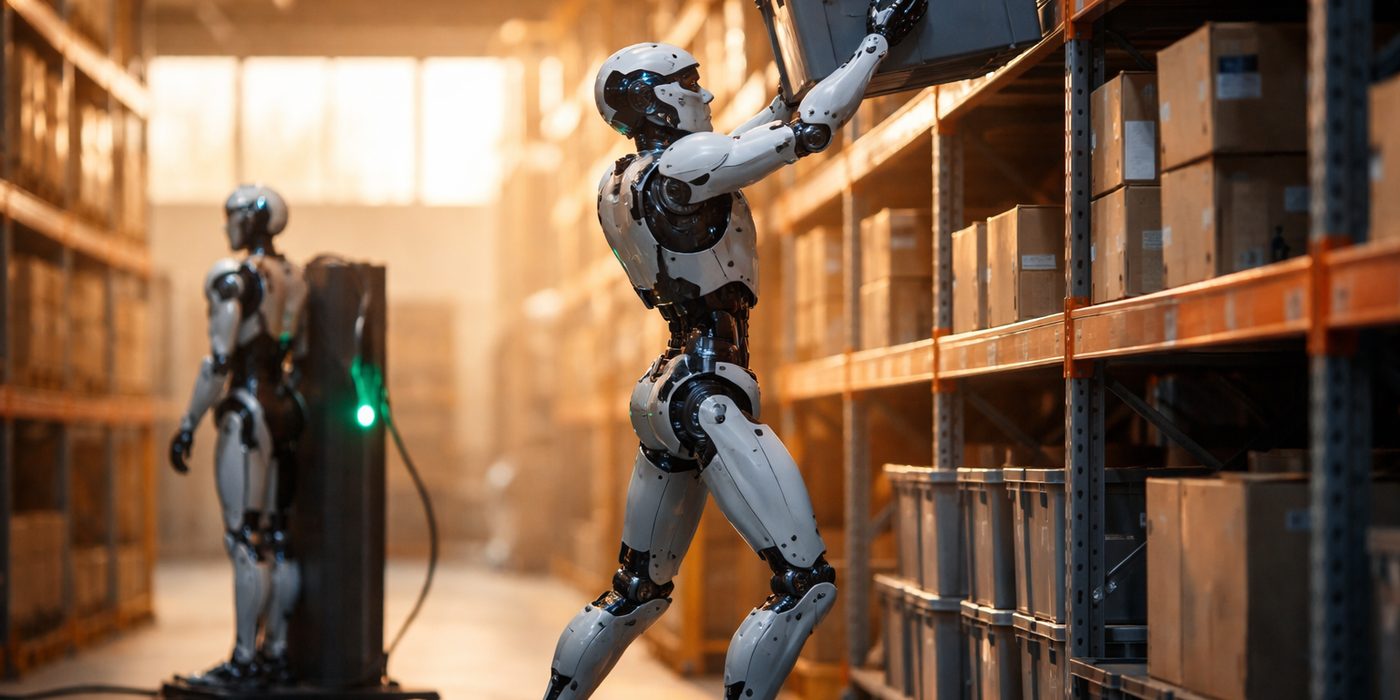
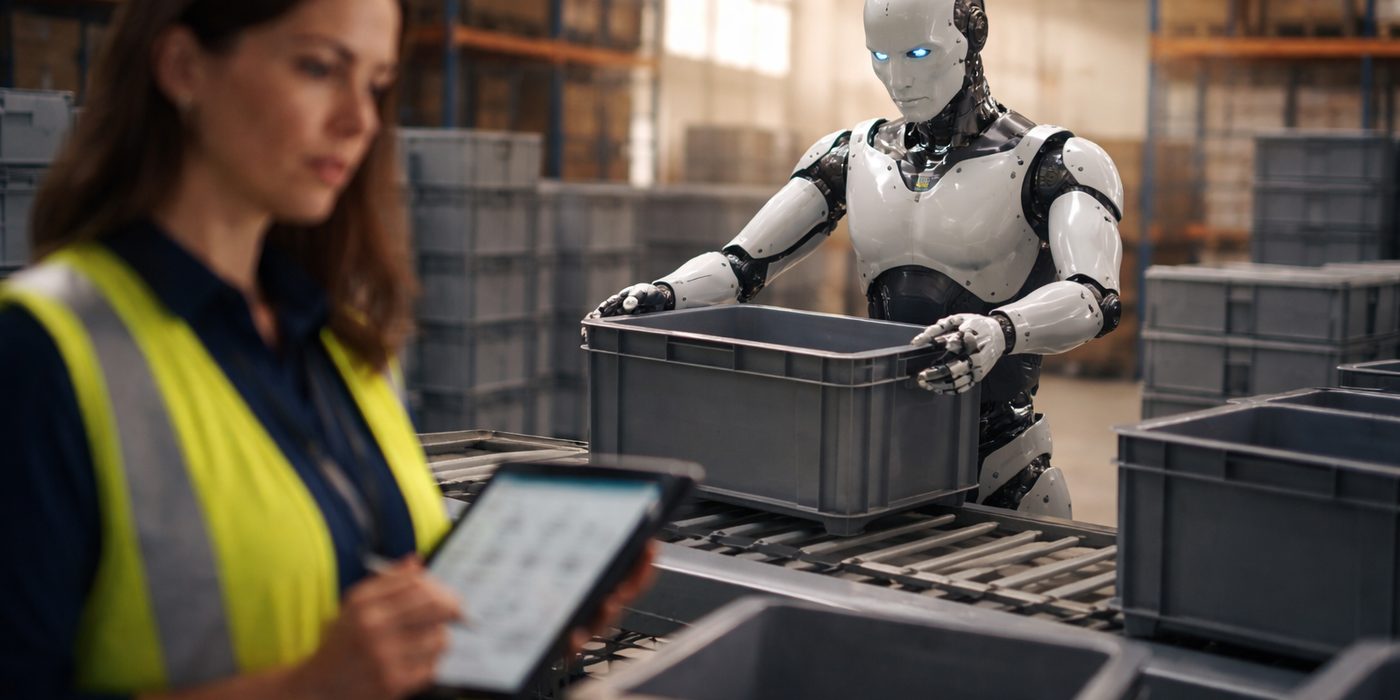
The most telling number in warehouse humanoids is not a payload rating or a walking speed. It is a payback period, and nobody who has deployed one will state it with a straight face yet. That reticence is the real story of the 2026 pilot season. Companies like Agility Robotics, Figure AI, Apptronik, and Boston Dynamics have moved from stage demos to paid work inside distribution centers, and the questions from operators have shifted accordingly. Can the machine move 400 totes a shift without a human nearby? What happens when it falls? Who pays for the downtime? The enthusiasm of 2024 has given way to spreadsheets, and the spreadsheets are far less forgiving than the videos ever were.
The skepticism has deep roots. For more than a decade, humanoids were the industry's most visible ambition and its least commercial one. Boston Dynamics' Atlas could backflip, but backflips do not clear dock doors. Meanwhile, wheeled autonomous mobile robots from Locus Robotics, Geek+, and Symbotic quietly captured the actual warehouse budget by doing one boring thing reliably. Their pitch was simple: remove walking from the picker's day. Humanoid vendors face the same buyer, the same facility, and the same throughput targets, but they carry a cost structure and failure profile that mature automation shed years ago. Unit prices in the low six figures are common, and that figure excludes integration, safety validation, and the engineers needed to babysit early fleets.
What has changed is the supporting stack. Learned manipulation policies trained on large teleoperation datasets now handle the messy variance of real totes, shrink-wrap, and damaged cartons better than hand-coded grasp planners ever did. Battery swap routines, charging docks, and fleet orchestration software have matured enough that a humanoid can run a multi-hour shift without a technician hovering. Agility's Digit became an early reference case, moving totes at a logistics partner's facility under a robots-as-a-service model, an arrangement that shifts capital risk from the customer to the vendor. That structure matters. It tells you vendors themselves are hedging, preferring recurring revenue and controlled deployments over outright hardware sales into unknown conditions.
The sharpest observation for engineers and investors is that the humanoid form factor is being justified by brownfield economics, not by anthropomorphic romance. A legacy warehouse built around human reach, human-height shelving, and human-width aisles cannot be cheaply rebuilt. A humanoid slots into that geometry without moving a rack. But that advantage is only as large as the cost of the alternative, and the alternative keeps getting cheaper. A fixed robotic arm on a mobile base, or a tote-handling shuttle, often outperforms a bipedal machine on speed and uptime at a fraction of the price. Legs, in other words, are a tax. They are worth paying only where the environment genuinely demands them, such as stairs, mixed-height transfers, and ad hoc tasks that no single-purpose machine covers.
That tax shows up in three places that procurement teams now interrogate: energy, safety, and mean time between interventions. Bipedal balance burns power that a wheeled base simply does not, which shortens duty cycles and inflates charging infrastructure. Safety is harder still. A walking robot that falls is a heavy object in motion, and certifying one to work beside people, without cages, remains an unresolved standards problem as ISO and ANSI working groups continue to draft guidance specific to dynamically stable machines. Intervention rate is the metric buyers trust most. A robot that needs a human to rescue it every hour has not automated anything; it has relocated the labor and added a maintenance line item.
Capital is still flowing despite the sober math, which says something about how investors weigh optionality against near-term returns. Funding rounds for humanoid developers have run into the hundreds of millions, priced on the belief that a general-purpose body will eventually amortize across many tasks, not just totes. That thesis is coherent, but it is a bet on software generalization, not on today's warehouse results. If learned policies keep improving, one robot could shift from unloading trailers to replenishing pick faces with a software update. If they plateau, humanoids settle into a niche beside cheaper specialists. Warehouse operators, who live on thin margins and punishing peak-season deadlines, are in the unusual position of funding that experiment one pilot at a time.
What to Watch Track whether Agility Robotics, Apptronik, and Figure AI publish intervention-rate and uptime figures from live deployments through the fourth quarter, because disclosed numbers would be the first real basis for comparing vendors. Watch peak-season results from November through January, when throughput pressure exposes weaknesses that quiet pilots hide. Follow the ISO and ANSI working-group drafts on dynamically stable robot safety, since a published standard would unlock cage-free deployments. Finally, monitor whether any logistics operator converts a pilot into a multi-site rollout of 50 or more units, the clearest signal that the ROI argument has closed.