SoftBank Group is exploring an acquisition of Gravis Robotics, a Zurich-based startup that manufactures retrofit autonomy kits for construction excavators, according to people familiar with the matter. The deal would push Masayoshi Son's robotics portfolio beyond the manufacturing plants and warehouses where his investments have concentrated for the past decade, extending into the $10 trillion global construction industry where labor shortages and productivity stagnation have created demand for automation that traditional equipment makers have been slow to address.
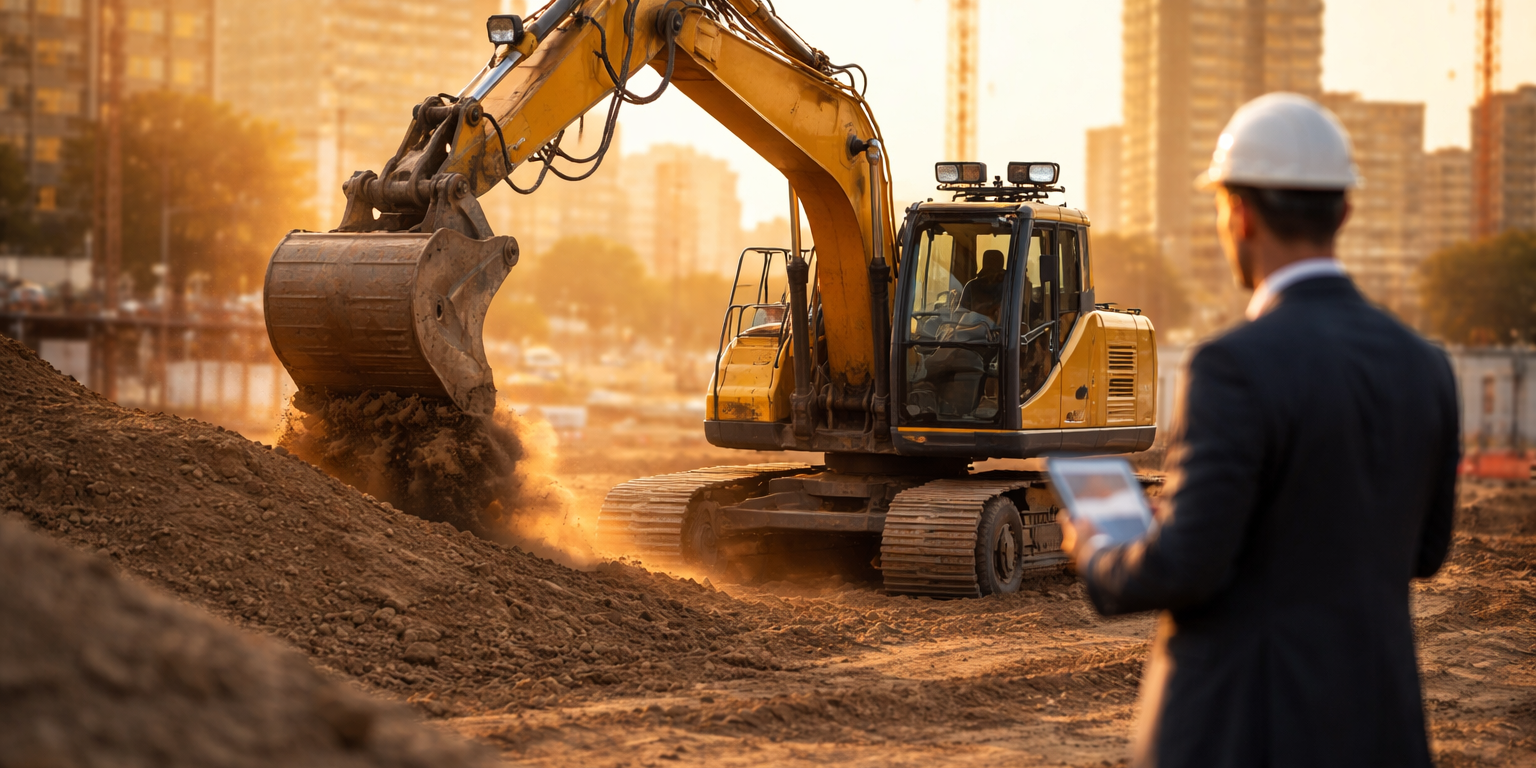
Gravis emerged from ETH Zurich's Autonomous Systems Lab in 2021 as a spinout focused on a specific problem: heavy equipment operators are aging out of the workforce faster than new ones are entering, while construction projects require increasingly precise earthmoving to meet sustainability standards and tight urban constraints. The company's approach bypasses the capital-intensive cycle of buying new machinery. Its retrofit kits bolt onto existing Caterpillar, Komatsu, and Volvo excavators, adding lidar arrays, stereo cameras, hydraulic actuators, and a compute stack running perception and planning algorithms developed in-house. An operator programs tasks through a tablet interface, then supervises from a distance while the machine executes grading, trenching, or material placement work. Gravis claims its systems reduce fuel consumption by eighteen percent on typical grading operations and cut rework rates to below three percent, compared to industry averages near twelve percent for manual operation. The company has installed kits on more than two hundred machines across Switzerland, Germany, and the Netherlands since commercial deployment began in early 2023, primarily with mid-sized contractors working on infrastructure projects where precision matters more than speed.
SoftBank's interest follows a pattern Son established after the firm's 2016 acquisition of ARM Holdings and subsequent investments in Boston Dynamics, AutoStore, and a portfolio of factory automation startups. The construction sector represents a rare greenfield opportunity in autonomy. Agricultural robotics has attracted billions in venture funding; warehouse automation is a mature market dominated by established players; but construction remains fragmented, with most innovation dollars flowing to project management software rather than physical automation. Gravis competes primarily against Built Robotics, a San Francisco company backed by Founders Fund that sells purpose-built autonomous dozers and excavators, and Doosan Bobcat's in-house autonomy division. The retrofit model gives Gravis an edge in markets where contractors already own fleets of late-model equipment and face pressure to extend asset lifecycles. European emission regulations, which tightened further in January 2026, favor retrofits that improve fuel efficiency over wholesale fleet replacement. Gravis has also avoided the regulatory headaches that plague road-going autonomous vehicles; construction sites are private property, exempt from transportation safety rules that require years of testing and certification.
The timing aligns with broader shifts in how capital is flowing into robotics. SoftBank's Vision Fund posted losses exceeding $27 billion in fiscal 2025, forcing Son to focus on investments with clear paths to profitability rather than speculative moonshots. Gravis fits that profile. The company reportedly reached cash-flow positive operations in the fourth quarter of 2025, an unusual milestone for a hardware startup less than five years old. Its business model relies on upfront kit sales ranging from $85,000 to $140,000 depending on machine size, plus annual software subscriptions that generate recurring revenue. Monthly subscription fees run between $800 and $1,200 per machine, covering software updates, remote diagnostics, and cloud-based fleet management tools. That pricing structure appeals to contractors who view the kits as productivity multipliers rather than experimental technology. One German contractor, Heilit+Woerner Bau, publicly stated that Gravis-equipped excavators boosted output per machine-hour by twenty-three percent on a Munich rail extension project, allowing the firm to complete work with fewer machines and lower overhead.
SoftBank has not commented on the talks, and Gravis declined to confirm or deny the discussions. Neither party has disclosed potential deal terms. The acquisition would give SoftBank access to a manufacturing and deployment network across central Europe, a region where the firm has limited robotics exposure. It would also provide a hedge against the firm's heavy concentration in Asian manufacturing automation, where overcapacity concerns and slowing industrial investment have pressured returns. For Gravis, a SoftBank deal would bring capital to accelerate North American expansion, where the company has yet to establish significant presence despite strong demand signals from contractors facing similar labor constraints. The U.S. construction equipment market is worth roughly $54 billion annually, dwarfing the European market where Gravis currently operates.
What to Watch: SoftBank's acquisition activity often precedes strategic partnerships with portfolio companies; expect potential tie-ins between Gravis and AutoStore or other SoftBank-backed robotics firms if a deal closes. Track whether Gravis announces U.S. distribution agreements in the third or fourth quarter of 2026, which would signal preparation for scaled deployment ahead of a capital infusion. Monitor statements from Caterpillar and Komatsu, both of which have autonomy programs but have moved slowly on retrofit offerings; a SoftBank-Gravis deal could force incumbent equipment makers to accelerate their own autonomy roadmaps or pursue competing acquisitions.