The global market for robotics dedicated to electronics and semiconductor assembly will reach $17.1 billion by 2036, a trajectory set by accelerating fab construction and the industry's push toward fully automated production lines. Future Market Insights published the forecast July 28, drawing on manufacturer interviews, capital expenditure data from major chipmakers, and deployment figures from contract electronics manufacturers across Asia and North America. The report arrives as TSMC, Samsung, and Intel collectively commit more than $400 billion to new fabrication facilities through 2030, each requiring robotic systems for die placement, wire bonding, packaging, and inspection tasks that human operators cannot perform at the required speed or precision.
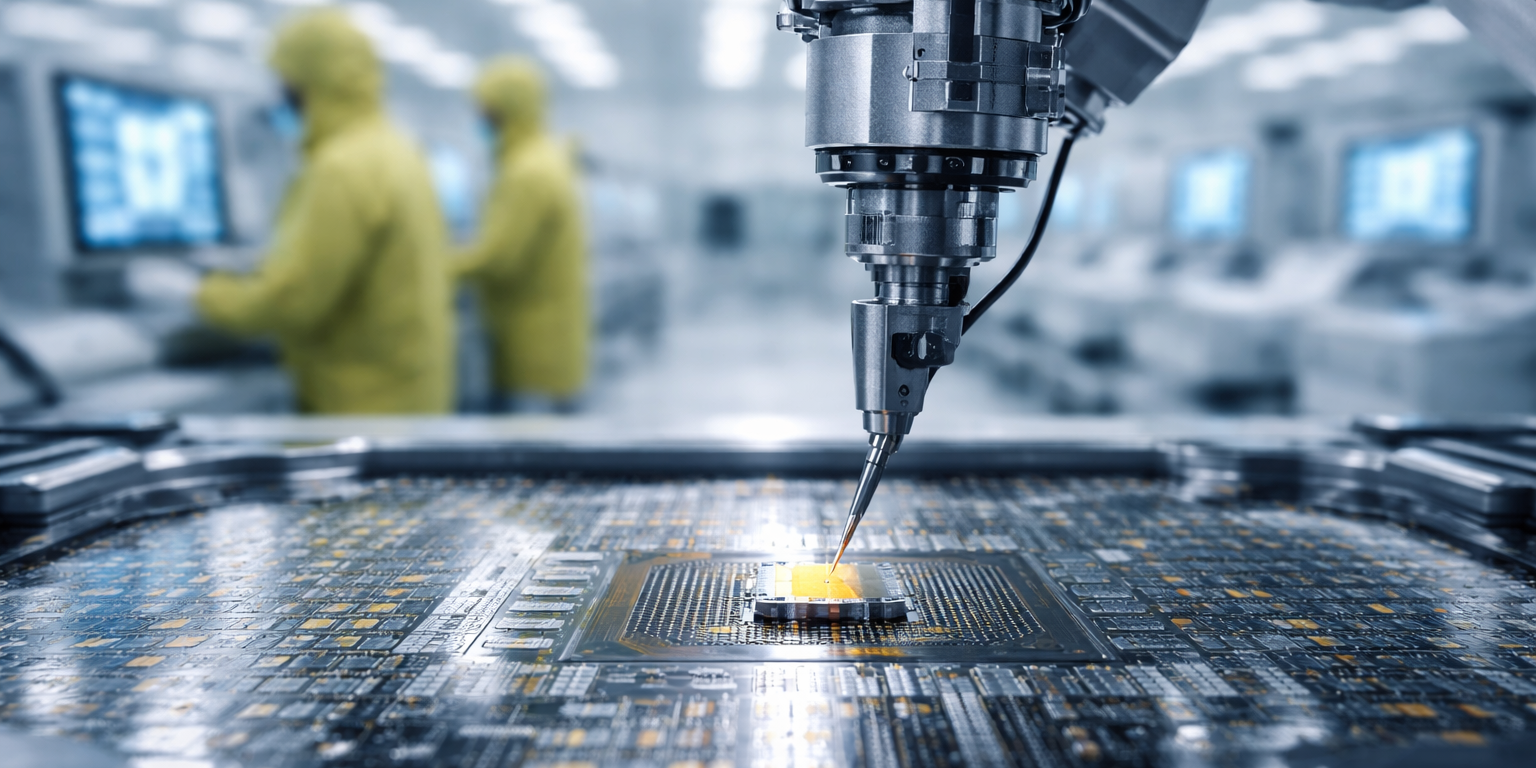
Semiconductor manufacturing represents the most demanding application for assembly robotics. Cleanroom environments prohibit human presence in many process steps. Die attach machines must place chips with sub-micron accuracy at rates exceeding 30,000 units per hour. Wire bonders connect integrated circuits to lead frames using gold or copper wire 15 to 25 microns in diameter, a task that has been fully automated since the 1990s but now operates at higher speeds and tighter tolerances. Pick-and-place systems for surface-mount technology boards handle components as small as 01005 package sizes, measuring just 0.4 by 0.2 millimeters. The FMI analysis identifies these precision requirements as the primary driver separating electronics assembly from general industrial robotics, creating a specialized market with higher average selling prices and longer integration timelines. Companies like ASM Pacific Technology, Kulicke & Soffa, and Shinkawa dominate wire bonding and die attach segments, while collaborative robot manufacturers including Universal Robots and Techman Robot target final assembly and testing operations where human oversight remains necessary.
Geographic concentration shapes investment patterns. Asia-Pacific accounts for approximately 70 percent of global semiconductor production and an even higher share of consumer electronics assembly. Taiwan, South Korea, China, Japan, and Singapore host the densest networks of fabs and contract manufacturers. TSMC operates more than a dozen major fabrication facilities in Taiwan and recently began production at its Arizona site, which required nearly $40 billion in capital investment including extensive automation infrastructure. Samsung's semiconductor division plans to add advanced packaging capacity in South Korea while expanding its Texas operations. Intel's IDM 2.0 strategy includes new fabs in Ohio, Arizona, Germany, and Poland, each designed around robotic material handling and process automation from the outset. Contract manufacturers like Foxconn, Pegatron, and Flex continue automating assembly lines in China, Vietnam, and India to address labor cost pressures and quality consistency demands. The FMI report notes that government incentives in the United States, European Union, and India specifically earmark funds for automation equipment, directly subsidizing robotics purchases that might otherwise face budget constraints.
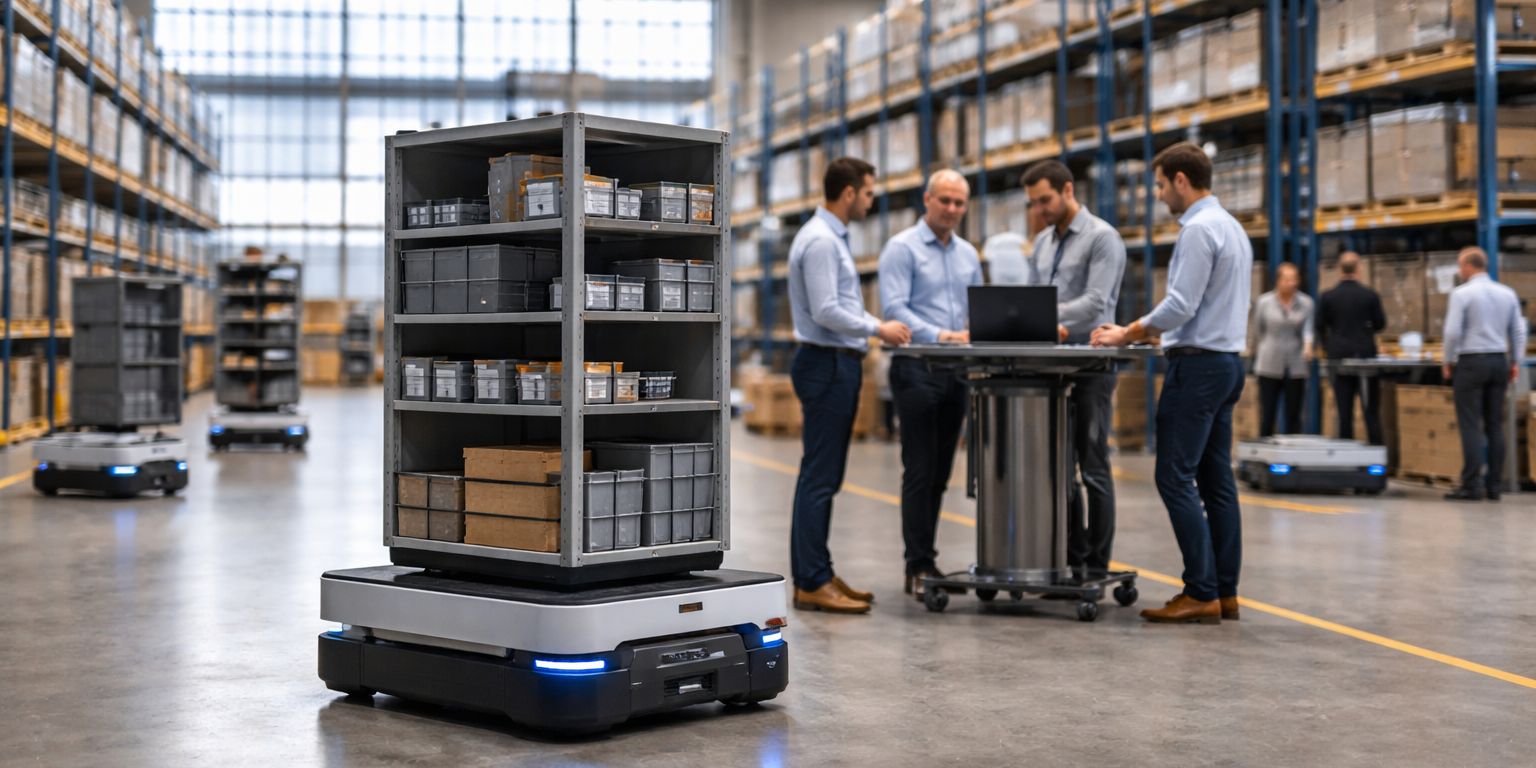
Smart factory architecture creates additional demand beyond traditional robotic arms. Autonomous mobile robots transport wafer carriers and finished products between process stations, eliminating manual material handling. Machine vision systems inspect solder joints, component placement, and surface defects at throughput rates that exceed 100 units per minute on high-volume lines. Collaborative robots work alongside technicians during prototype assembly and low-volume production runs, then redeploy to different tasks as product mix changes. Software platforms integrate these systems, collecting process data for predictive maintenance and yield optimization. The shift from fixed automation to flexible, reconfigurable cells accounts for a growing share of capital spending. Electronics manufacturers face product lifecycles measured in months rather than years, requiring production systems that adapt quickly to new designs without extensive retooling. Robotics suppliers respond with modular end-effectors, simplified programming interfaces, and simulation tools that validate new processes virtually before physical deployment. These capabilities justify higher initial costs by reducing changeover time and enabling multi-product manufacturing on shared equipment.
What to Watch: TSMC's Arizona fab ramp will test whether U.S.-based semiconductor production can match Asian automation efficiency, with implications for domestic robotics integration partners. Samsung's advanced packaging investments through late 2027 will determine whether heterogeneous integration creates new robotics applications beyond traditional assembly. Track quarterly capital expenditure guidance from Applied Materials, ASML, and Tokyo Electron for leading indicators of fab equipment spending cycles, which correlate directly with assembly robotics orders six to twelve months later.