The most telling detail in the Bryce Hall case is also the most mundane: the alleged trigger was a Roomba. According to Dailymail.com's account of the Las Vegas arrest, Hall, the internet personality, was booked on felony domestic violence charges after an argument with his ex-girlfriend that allegedly began when she came to his home to retrieve the robot vacuum. She alleges he threw her over his shoulder against her will. A court has since barred him from contact with her. Hall has not been convicted of anything, and the allegations remain just that. The device itself plays no role in the alleged violence beyond being the object in dispute. Still, for an industry that has spent two decades convincing consumers that a disc-shaped robot belongs in every living room, it is an unusual footnote: the Roomba as the thing people argue over when a household splits.
The facts available are thin, and responsible coverage should say so. The source reporting describes an arrest, felony-level charges, and a no-contact order tied to an ex-partner. It does not describe any defect, recall, software fault, or safety concern involving the vacuum. Nobody has alleged the robot did anything at all. That distinction matters for the readers of a trade publication, because it would be easy to stretch a tabloid-adjacent crime story into a product narrative that the evidence does not support. The honest read is narrower. A consumer robot became the object of a personal dispute, and the dispute escalated into a criminal case. Where it goes from here is a matter for Nevada prosecutors and the court, not for the robotics sector.
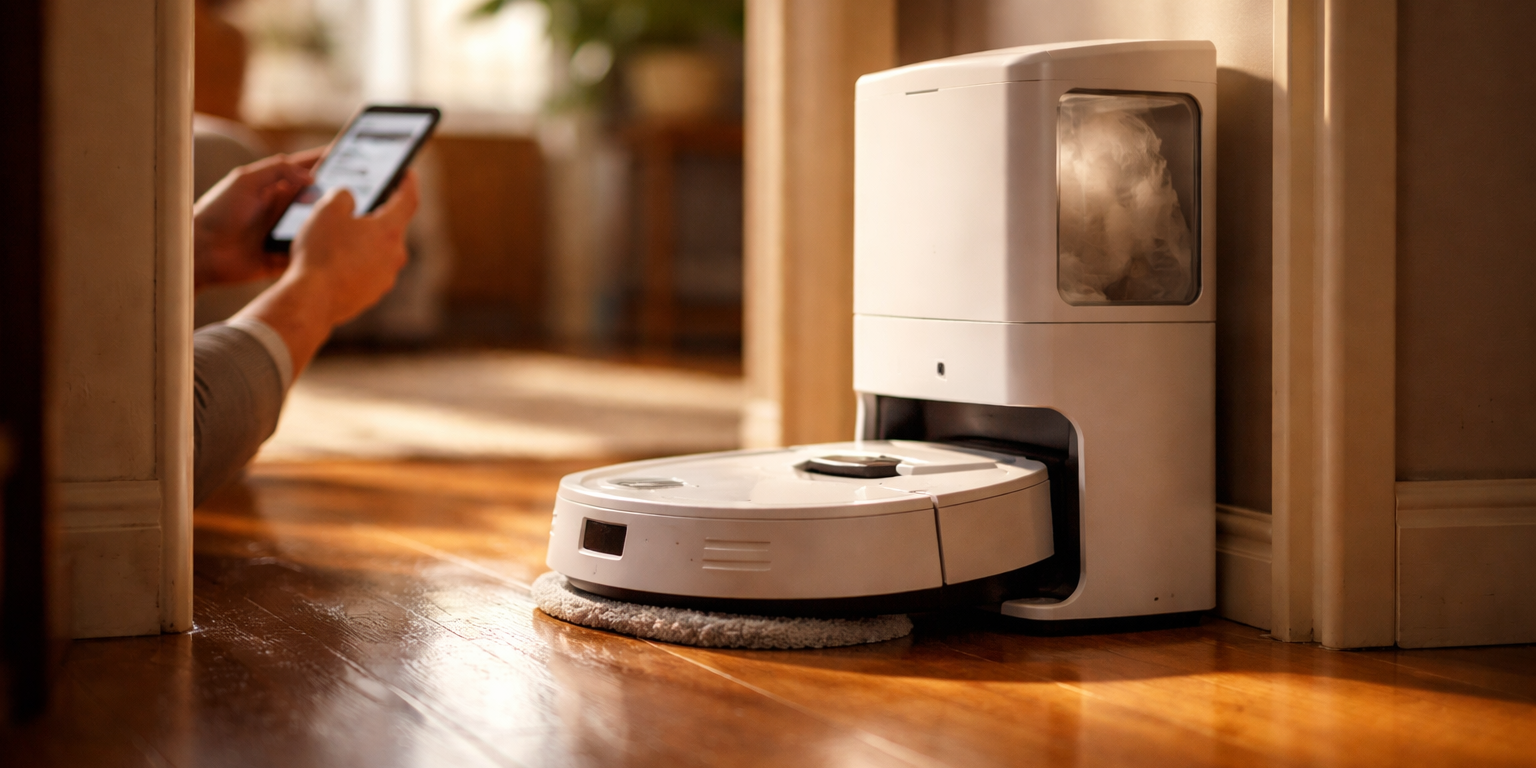
What makes the episode interesting for engineers and investors is what the Roomba has become in the intervening years. iRobot introduced the original model in 2002, and the category it created now sits in tens of millions of homes. These are no longer simple bump-and-turn machines. Current models map floor plans, recognize objects, schedule themselves around occupants, and sync with phone apps and cloud accounts. That makes them closer to a small connected sensor platform than an appliance. When a couple separates, the question of who keeps the vacuum is also a question of who keeps the account, the home map, and the stored preferences. Separation disputes over smart-home hardware are a documented friction point, and robot vacuums, which carry cameras and spatial data, sit near the center of it.
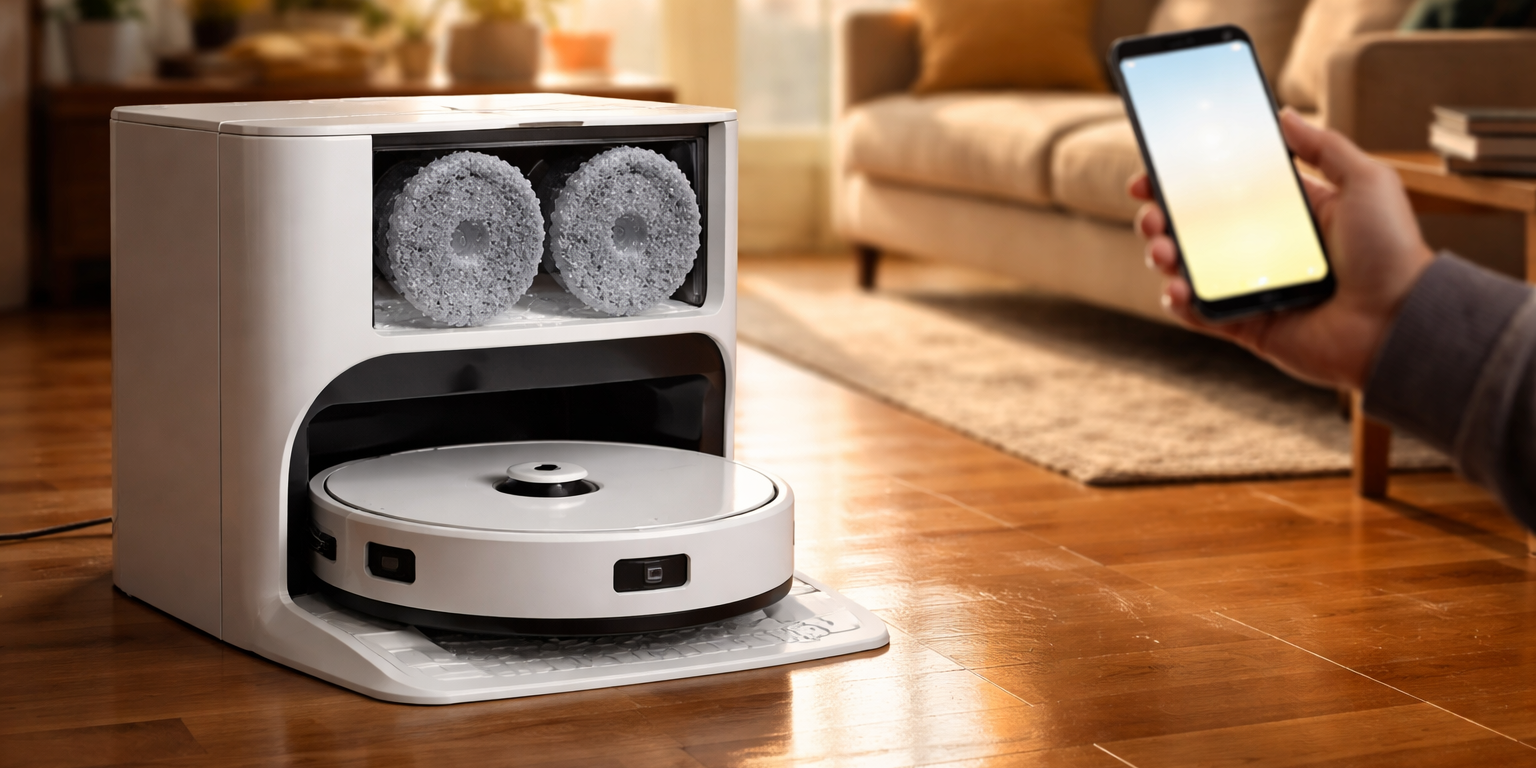
The corporate backdrop adds context the headline does not. iRobot, the maker of Roomba, has faced a difficult stretch as a business, with intense price pressure from Chinese competitors such as Roborock, Ecovacs, and Dreame, which have pushed advanced features like self-emptying docks, robotic mop arms, and obstacle-avoiding lidar into lower price tiers. Amazon's planned acquisition of iRobot collapsed in early 2024 under regulatory scrutiny in Europe, and the company has spent the time since restructuring. None of that connects to the Hall case, and no reporting suggests it does. But it frames why a Roomba showing up in a courtroom narrative lands in a market already asking harder questions about who owns the category's future, and who owns the data these devices generate inside private homes.
There is a practical lesson buried here for manufacturers, even if the incident itself is not a product failure. Consumer robots now live in the most contested spaces of people's lives, including shared households, breakups, custody arrangements, and rental disputes. Account ownership, device transfer, factory reset, and data deletion are not abstract privacy features in those moments. They are the mechanisms that determine whether a former partner retains a live map of someone's home, or a camera feed, after a relationship ends. Vendors that make ownership transfer clean, fast, and verifiable reduce the surface area for exactly the kind of conflict that surfaces in stories like this one. Vendors that bury those controls invite it. For product teams, the takeaway is less about this particular arrest and more about designing for the unglamorous edge case where two people both believe the robot is theirs.
For investors, the signal is subtle and should not be oversold. A single criminal case does not move demand for robot vacuums, and it should not. What it does illustrate is that the home robotics market has crossed from novelty into infrastructure, and infrastructure inherits the messiness of human life. As companies push toward more capable domestic machines, including humanoid and arm-equipped home assistants that several well-funded startups have promised for 2026 and beyond, the questions of ownership, data custody, and access control will only get harder. A vacuum that maps your floor is one thing. A robot that opens your cabinets and sees your mail is another. The industry's handling of the first is a preview of how it will be judged on the second.
What to Watch
Track the Nevada court docket in the Hall matter for any change in charges or contact restrictions, since the legal record, not tabloid summaries, is the only reliable source on what occurred. In the product arena, watch iRobot's next earnings report and any updated guidance on its restructuring, as well as feature rollouts from Roborock, Ecovacs, and Dreame that touch device-transfer and account-ownership controls. Keep an eye on consumer privacy regulators in the US and EU for any guidance on data-retention rules for camera-equipped home robots, since separation and shared-household scenarios are a growing test case. Finally, follow how the home-humanoid startups that have promised consumer pilots in 2026 describe their ownership and data-deletion policies, because those documents will say more about the category's maturity than any single headline.