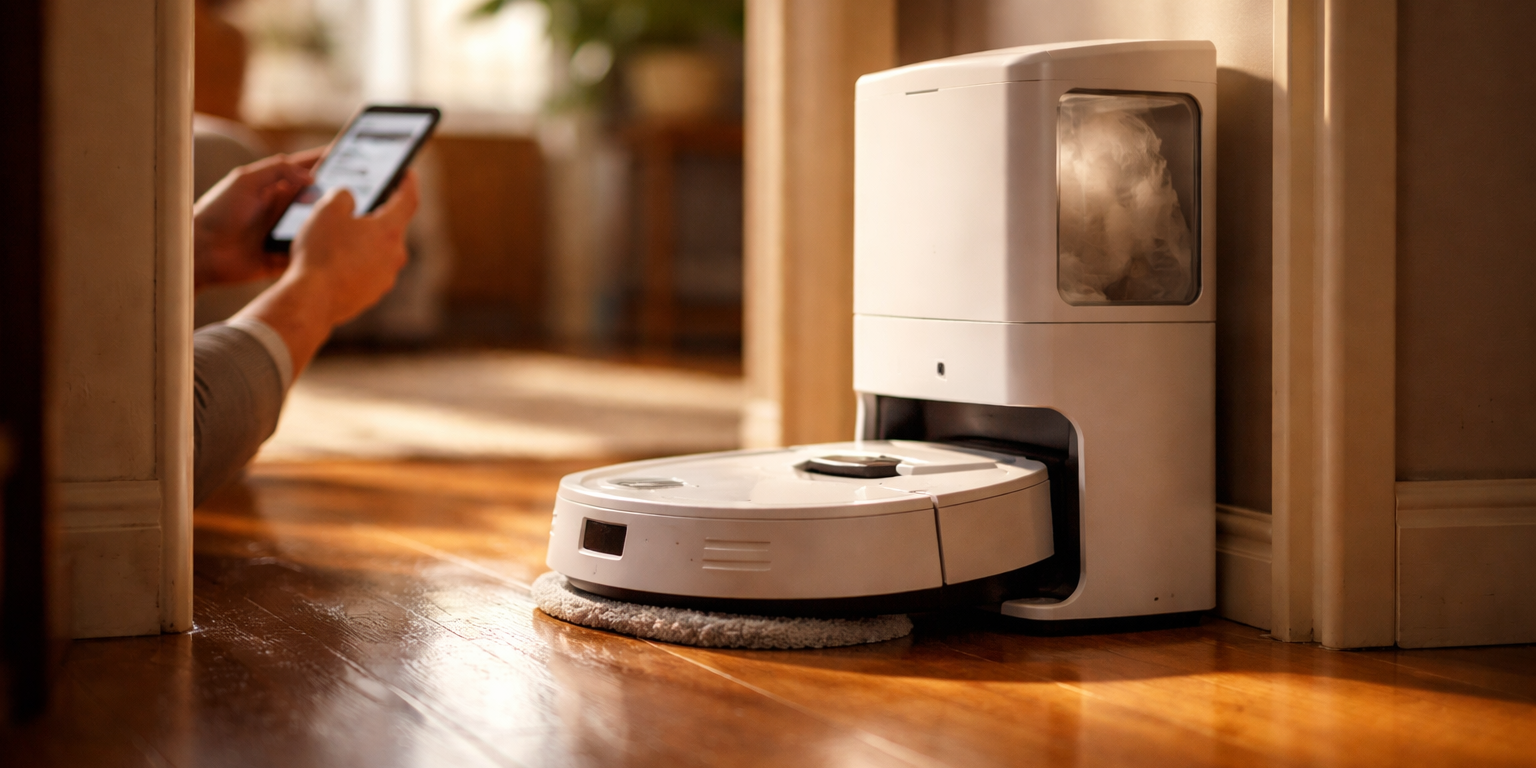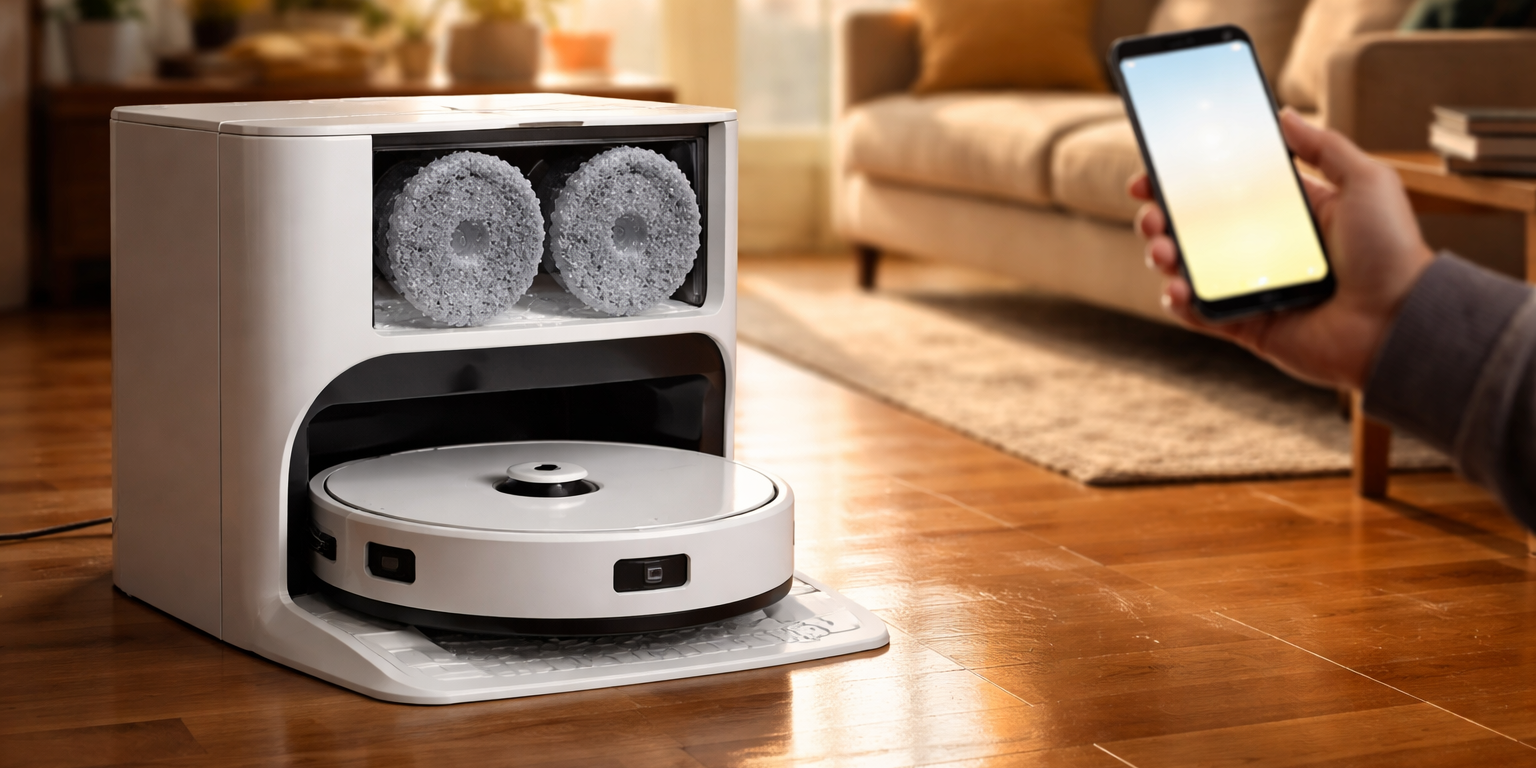
A robot that vacuums, mops, washes its own mop pads, and empties its own dustbin now costs $379.99. That is the current Amazon price for Roborock's Qrevo Series QV 35A, offered with free shipping in black or white. A few years ago, a multi-function dock like this one was the hallmark of $1,000-plus flagships. Today it anchors a mid-market product that a household can buy on impulse during a promotional window. The discount is a modest line item in a deal-tracker feed. It is also a clean snapshot of where the consumer cleaning-robot category has landed.
Roborock, the Beijing-based manufacturer formally known as Roborock Technology Co. Ltd, built its position by iterating relentlessly on the same core stack: lidar-based mapping, increasingly capable obstacle recognition, and docking stations that absorb more of the chores owners used to perform by hand. The Qrevo line is the company's attempt to push that full-featured experience into a lower price band without gutting the hardware that matters. The QV 35A sits in that family. Seller listings and promotional pricing on Amazon fluctuate, and the $379.99 figure should be read as a point-in-time price rather than a permanent repositioning. Still, the direction of travel is unmistakable and has been for several product cycles.
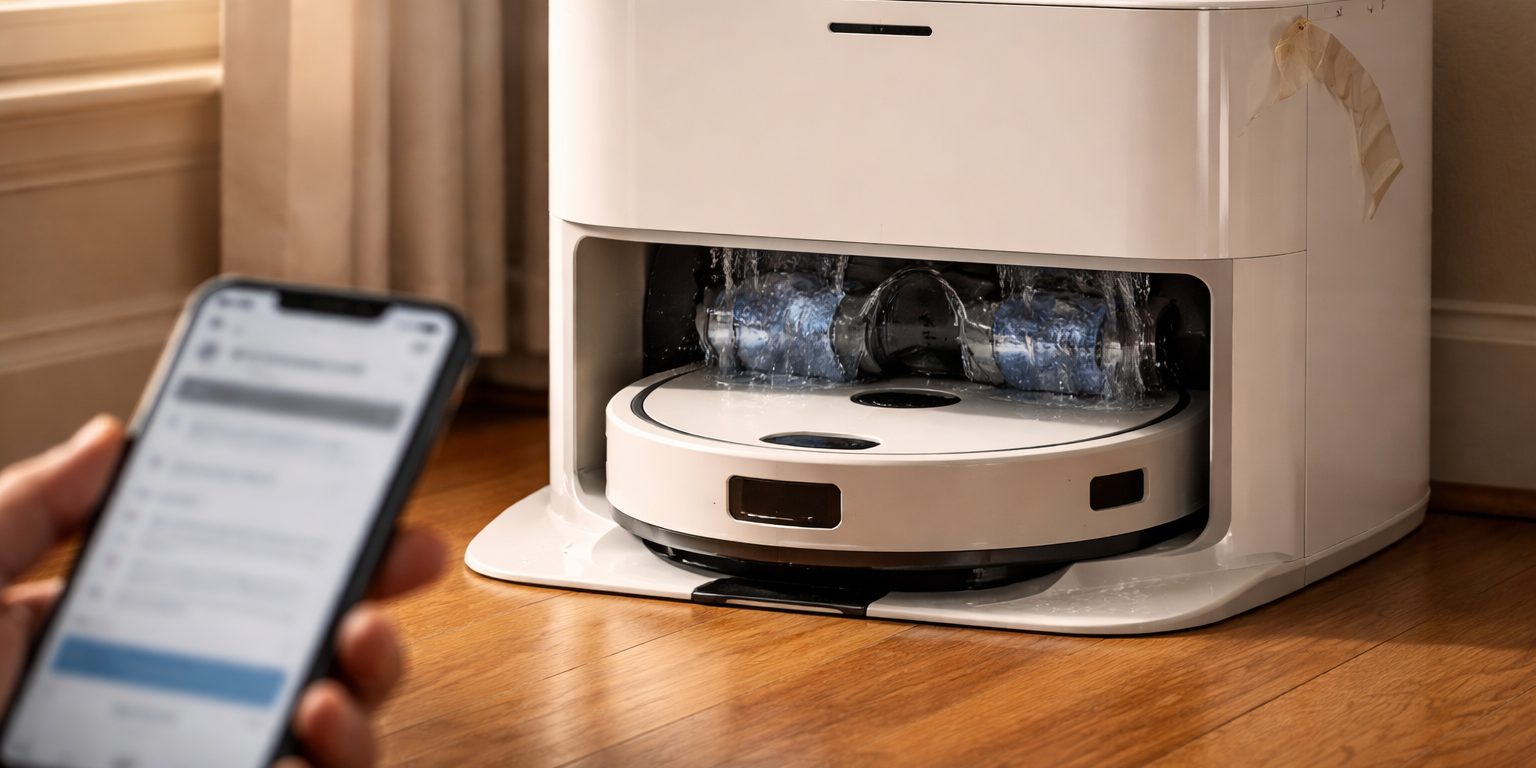
What a robotics engineer should notice is where the cost has been squeezed and where it has not. Navigation sensors, once a major bill-of-materials burden, have fallen steeply as lidar modules and low-power vision processors moved into high-volume production. Edge compute capable of running object-detection models on-device is now cheap enough to ship in budget SKUs. The dock, by contrast, remains a mechanical and fluidics problem: pumps, valves, water tanks, filtration, and the plumbing of a self-cleaning cycle. Those parts are harder to shrink on a cost curve than silicon, which is why the dock increasingly defines both a product's price tier and its failure modes. Mop pad lifting, edge-reaching mechanisms, and carpet detection add further moving parts that must survive years of wet-environment use.
For the industry, the implications cut two ways. On the demand side, aggressive pricing from established players compresses margins for everyone, and it raises the bar for newer entrants trying to differentiate on features alone. Rivals including Ecovacs, Dreame, and iRobot, along with large appliance makers, are all contesting the same shoppers, and promotional cadence on Amazon has become a competitive weapon in its own right. On the supply side, falling consumer prices create volume, and volume funds the component ecosystems that serious robotics developers rely on. The sensors, motors, and compact compute that make a $380 vacuum viable are the same building blocks flowing into light commercial cleaners, hospitality robots, and early household manipulators. Cheap vacuums are, in effect, a subsidy for the broader robotics supply chain.
There is also a sharper observation buried in the pricing. When self-maintenance becomes table stakes, the differentiator shifts from what the robot does to how little the owner has to do. Consumable cost, replacement-part availability, app and firmware support windows, and repair policies now matter as much as suction ratings. A robot that is inexpensive to buy but costly to keep running erodes trust in the whole category. Manufacturers that treat long-term support as a product feature, rather than an afterthought, will be better placed as hardware margins thin and recurring relationships with customers become the more durable asset.
What to Watch Track whether the $379.99 price holds or deepens as the 2026 holiday shopping season approaches, since Black Friday and Cyber Monday promotions will reveal how much further Roborock and its rivals are willing to cut on dock-equipped models. Watch for Roborock's next Qrevo-family and flagship launches heading into the new year, particularly any movement on obstacle-avoidance accuracy and dock reliability. Monitor competing promotions from Ecovacs, Dreame, and iRobot on comparable self-washing models for signs of a broader price reset. Finally, keep an eye on long-term owner reviews and warranty claims for dock components, which will show whether aggressive pricing is coming at the expense of durability.