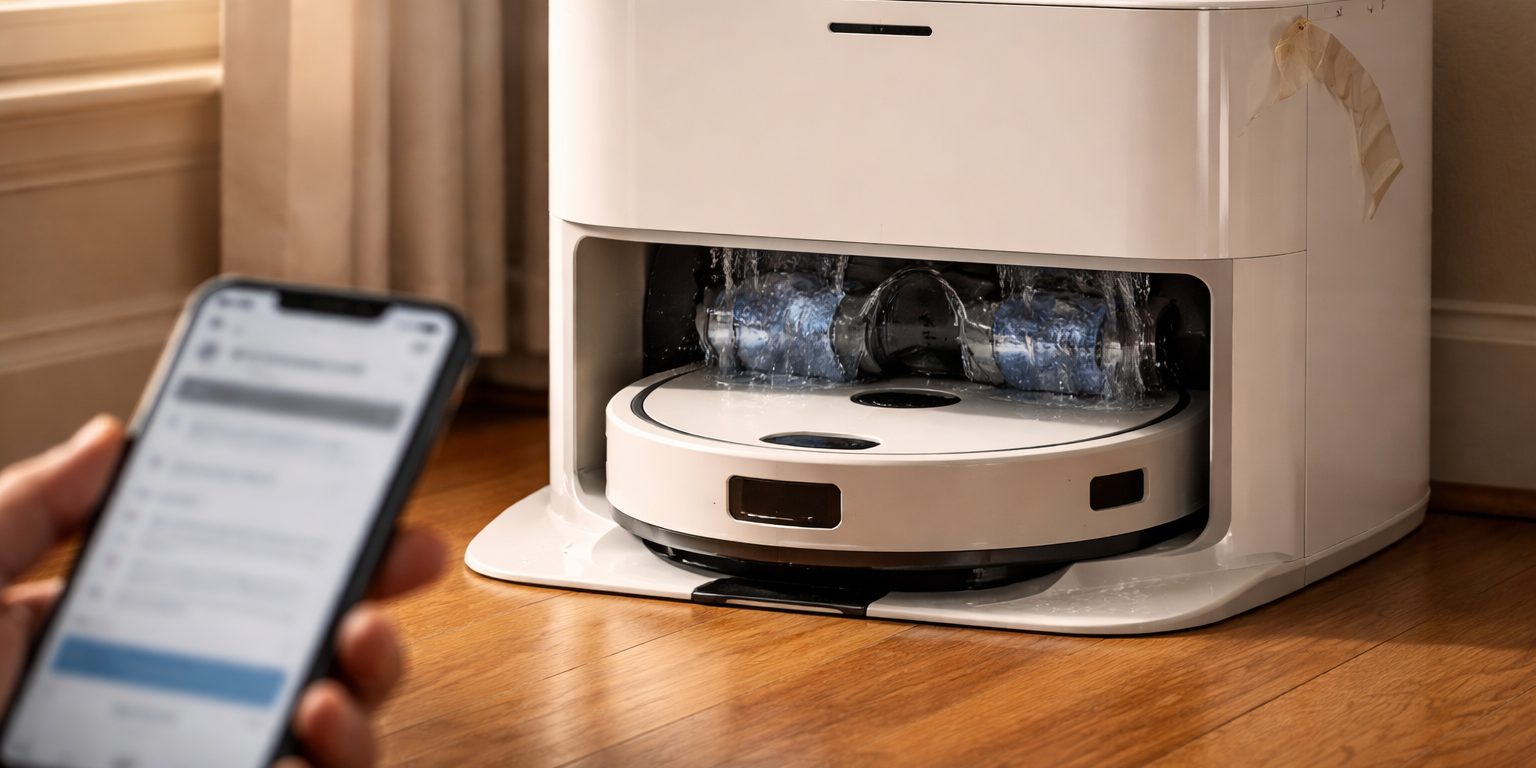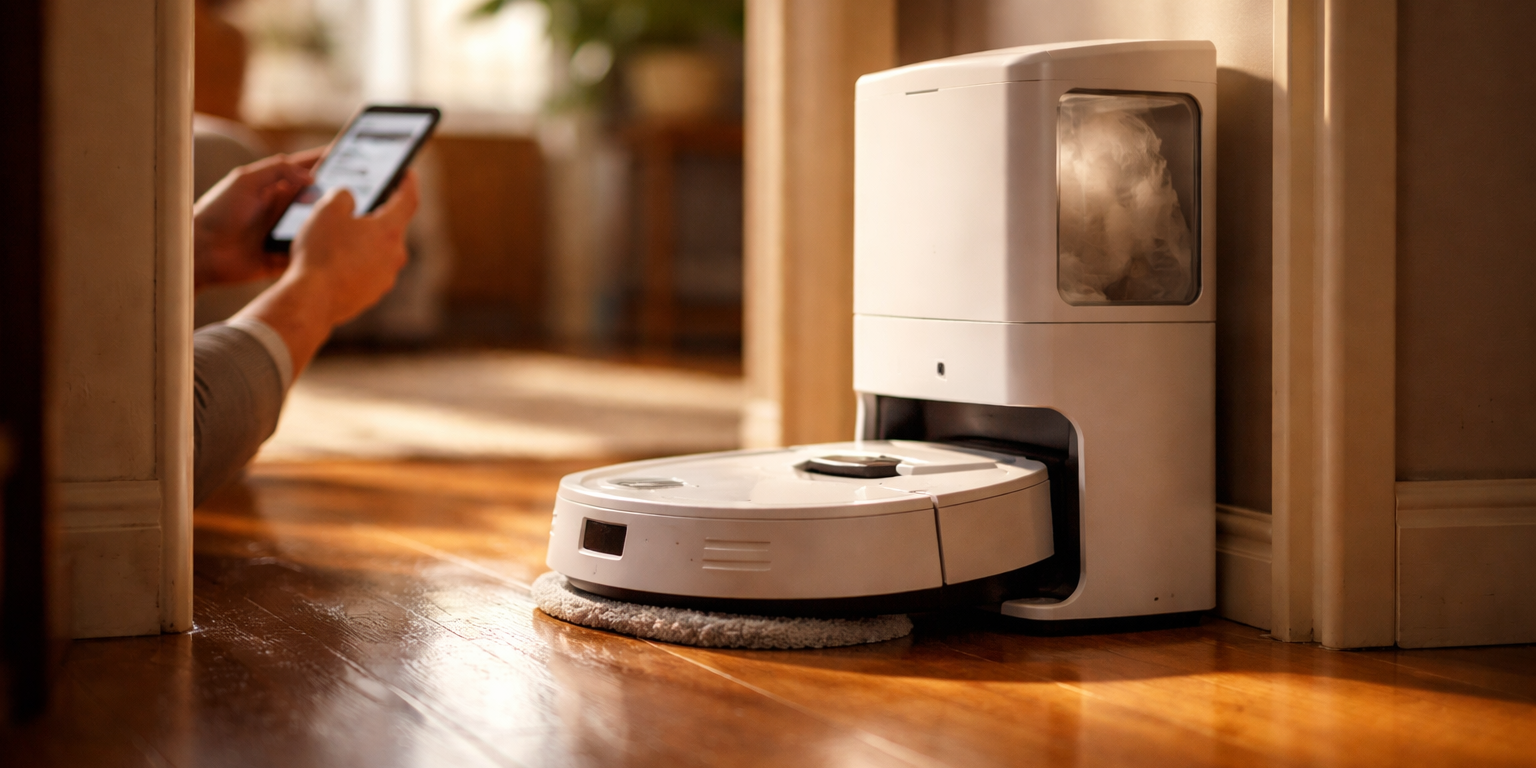
A robot vacuum that empties its own dustbin, scrubs floors with a wet pad, and pulls 10,000 pascals of suction now costs $249.99. That is the Prime-member price Amazon is listing for the Roborock Q10 S5+, according to a Slickdeals posting that flagged the offer with free shipping attached. Two years ago, a self-emptying dock alone could add $150 to $200 to the sticker of a mid-range machine. Today it arrives bundled in a sub-$250 package from a company that, by most market trackers, ranks among the top global vendors by revenue. For anyone who builds, buys, or invests in domestic robots, the number matters less as a bargain than as a data point on where the floor-cleaning category has settled.
The Q10 S5+ sits in Roborock's value-oriented Q line, a tier the Beijing-based company has used to push dock-equipped hardware down the price ladder while reserving obstacle-avoiding cameras, mechanical mop-lifting arms, and extendable side brushes for its flagship S and Qrevo families. The spec sheet tells the story of deliberate trade-offs. Suction is generous. The self-empty station is included. Navigation relies on lidar rather than the structured-light and RGB camera stacks found on pricier models, which means the machine maps rooms competently but will not reliably identify a stray sock or a pet accident. Roborock is betting that most households will accept that compromise in exchange for a three-figure price.
The economics behind that bet are worth studying. Roborock has spent years vertically integrating its supply chain, producing its own motors, suction modules, and navigation firmware, and it benefits from component volumes that smaller rivals cannot match. Competitors such as Ecovacs, Dreame, and Eufy are chasing the same shopper with near-identical feature sets, and the result is a promotional cadence in which flagship-adjacent specs reappear at steep discounts every few weeks. Amazon's Prime-exclusive pricing adds another lever: it rewards loyalty to the platform while letting the brand avoid a permanent list-price cut that would erode perceived value. Whether $249.99 is a sustained price or a promotional floor is not specified in the listing, and shoppers should treat it as the latter until proven otherwise.
For engineers, the more instructive detail is what a $250 machine no longer needs to prove. Self-emptying docks, once a differentiator that justified premium pricing, have become table stakes. Suction figures in the five-digit range have turned into a marketing arms race with diminishing real-world returns, since carpet pickup depends as much on brush design and airflow geometry as on raw pascal ratings. The meaningful frontier has moved to perception and manipulation: reliable obstacle recognition, adaptive mopping that detects floor type, and early experiments with robotic arms that move small objects out of the cleaning path. Roborock has shown arm-equipped concepts at trade shows, and its rivals have followed. Those capabilities will carry margin; the baseline vacuum-and-dock bundle increasingly will not.
Investors should read promotions like this as a signal about category maturity rather than distress. Robot vacuums are among the few consumer robots to reach genuine mass-market penetration, and their unit economics now resemble small appliances more than frontier hardware. That creates opportunity for the supply chain, from lidar module makers to battery suppliers, and pressure on any vendor that cannot differentiate on software. It also shapes the on-ramp for more ambitious home robots. Households that have trusted a $250 puck to map their floors and manage a dustbin autonomously are the same customers any future home-assistant robot will need to win. The vacuum is the beachhead, and its price keeps lowering the barrier to entry.
What to Watch
Track whether the $249.99 price on the Roborock Q10 S5+ persists past the next Amazon promotional window or reverts, since that will show whether this is a temporary markdown or a new baseline for the Q line. Watch the holiday-season discounting from Dreame, Ecovacs, and Eufy through November and December 2026, which will reveal how aggressively rivals match dock-equipped pricing under $300. Pay attention to Roborock's next flagship refresh and any commercial rollout of its arm-equipped vacuum concepts, because that is where premium margins will be defended. Finally, monitor Amazon's Prime-exclusive deal cadence and third-party price-tracking data for the Q series, which offer the clearest public view of real transaction prices versus list prices.