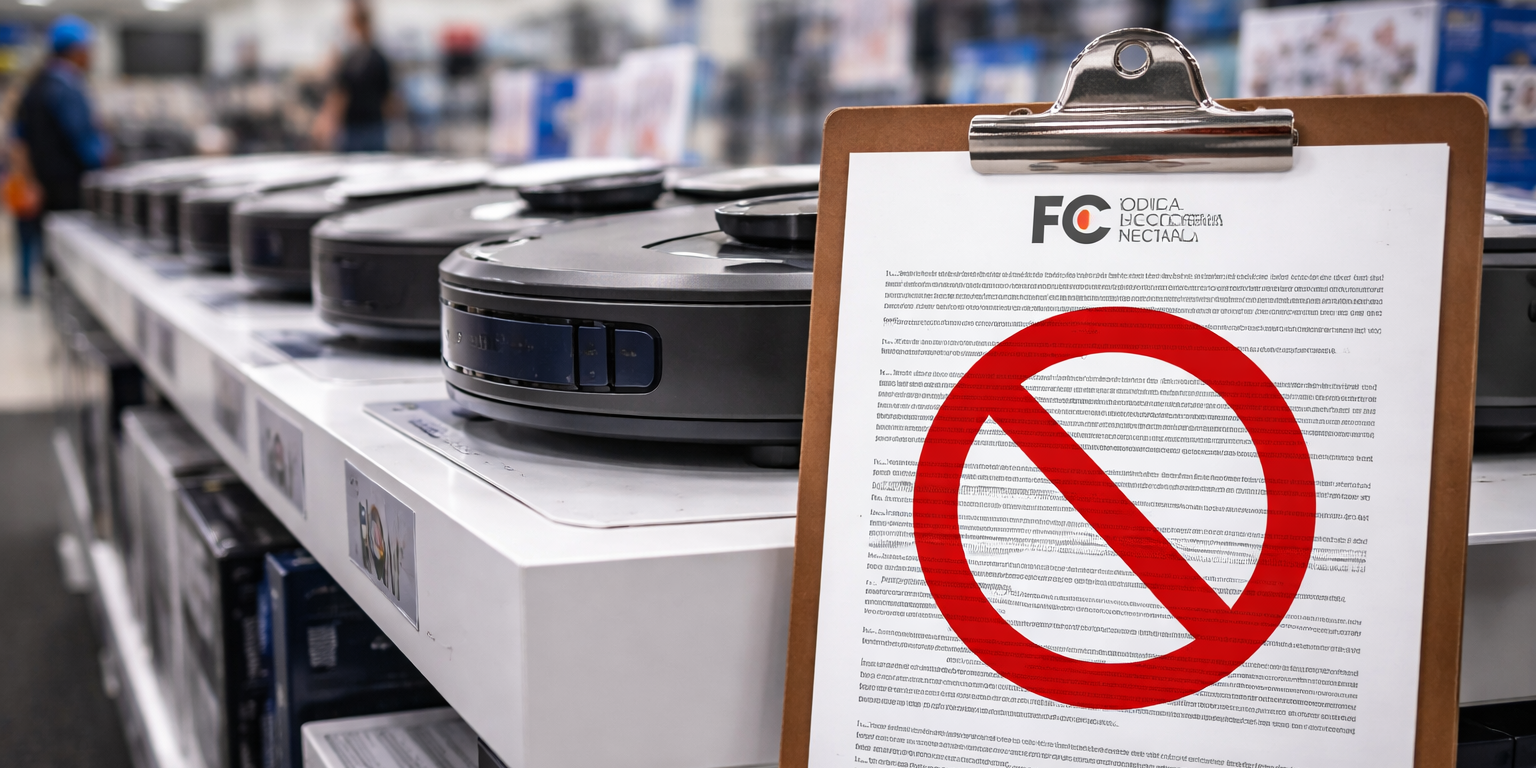
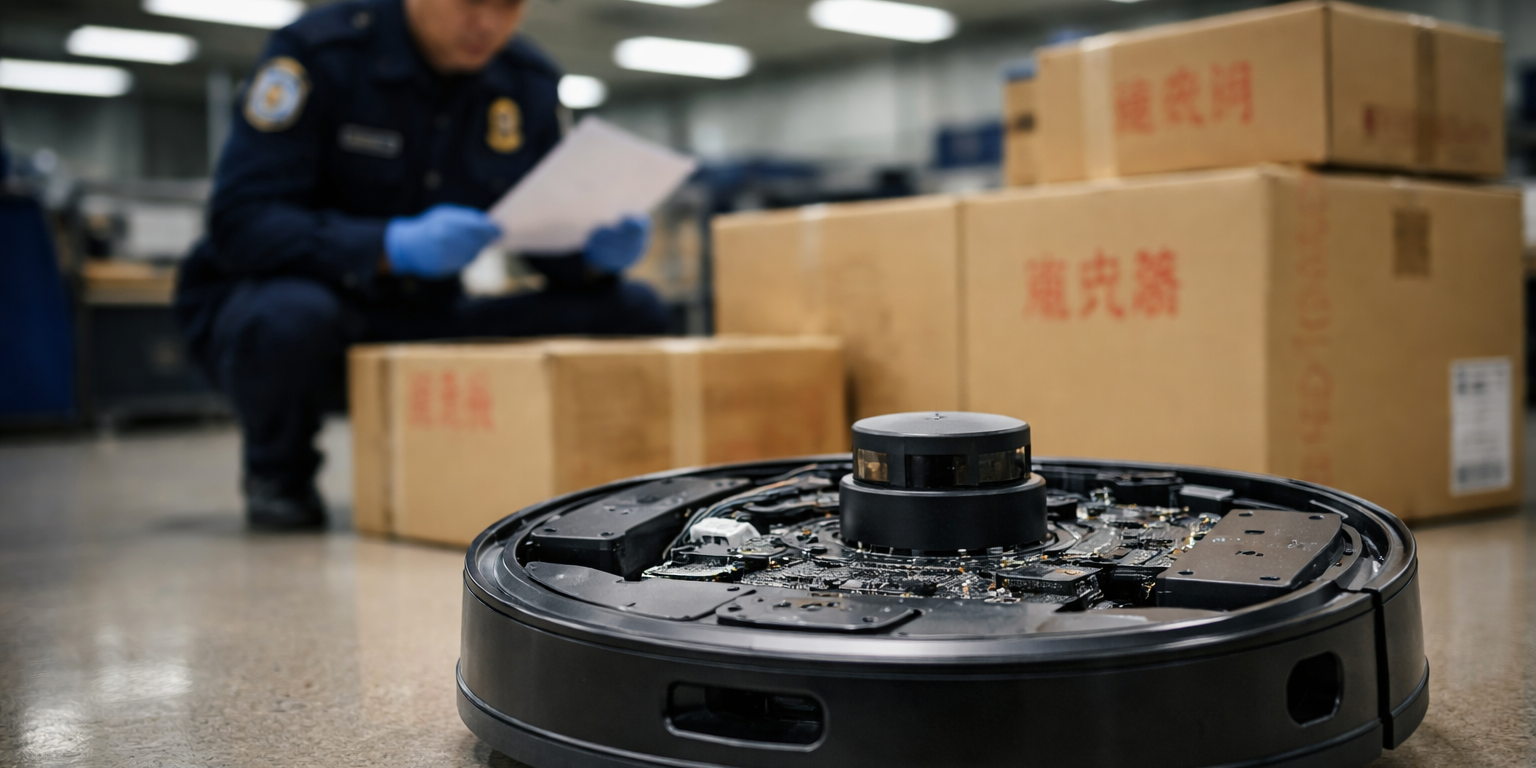
Federal regulators can now block robot vacuum cleaners from entering the United States under an executive order signed in late 2025 that expanded national security reviews to cover autonomous consumer products. The directive, implemented by the Committee on Foreign Investment in the United States (CFIUS) and the Commerce Department's Bureau of Industry and Security, lists household robotic vacuum cleaners alongside industrial robots, drones, and autonomous vehicles as technologies subject to enhanced scrutiny when manufactured in countries of concern. China produces roughly 80 percent of robot vacuums sold in America, including models from brands consumers consider domestic.
The policy shift follows eighteen months of intelligence community assessments warning that internet-connected home devices could serve as surveillance tools or entry points for cyber intrusions. Robot vacuums map interior spaces using LIDAR, cameras, and simultaneous localization and mapping algorithms, then transmit floor plans and usage data to cloud servers for processing and firmware updates. A National Security Agency report declassified in March 2026 identified twelve instances between 2023 and 2025 where Chinese-manufactured smart home devices transmitted encrypted data to servers beyond their stated operational requirements. The report did not name specific robot vacuum manufacturers but noted that mapping data from residential robots could reveal sensitive locations if aggregated at scale.
Amazon's $1.4 billion acquisition of iRobot, completed in August 2024 after regulatory approval, placed the Roomba brand under American corporate ownership but did not shift manufacturing. The company operates assembly facilities in Malaysia, China, and Mexico, with Chinese contract manufacturers producing approximately 60 percent of Roomba units by volume as of first quarter 2026. Competitors including Ecovacs, Roborock, and Dreame Technology manufacture exclusively in China and hold a combined 35 percent share of the US robot vacuum market, which reached 18 million units annually in 2025. European brands such as Vorwerk's Kobold series also rely on Chinese manufacturing. Only a handful of models, including select SKUs from SharkNinja's recent lineup, come from non-Chinese facilities. The executive order does not mandate immediate bans but requires importers to disclose manufacturing origins, ownership structures, and data handling practices for autonomous devices. Products failing review face prohibition from US sale.
Industry observers note the timing creates complications for product cycles already underway. Most manufacturers finalize hardware specifications twelve to eighteen months before retail launch, meaning robot vacuums scheduled for holiday 2026 release were designed under the assumption of continued market access. Amazon told investors during its April 2026 earnings call that iRobot would diversify manufacturing but provided no timeline for shifting production volume. The company's margin profile depends on Chinese manufacturing costs; moving assembly to higher-wage countries would require either price increases or accepting compressed profitability on a product line that lost $285 million in 2025. Smaller brands without Amazon's capital face steeper challenges. Ecovacs, which sells premium models above $1,200 with advanced obstacle avoidance and self-emptying bases, cannot easily absorb tariffs or comply with security audits that might expose proprietary algorithms to US review.
The regulatory framework mirrors restrictions already applied to DJI drones, which faced escalating limitations starting in 2020 before culminating in a de facto ban on federal procurement and pressure on consumer channels. DJI held 76 percent of the US consumer drone market in 2019; by 2025 that figure had fallen to 42 percent as Skydio, Autel, and smaller competitors filled the gap. Robot vacuum markets differ in key ways. Drones faced national security concerns tied to specific use cases like border surveillance and critical infrastructure inspection. Robot vacuums operate in private homes, making the threat model more abstract even as the data they collect might prove more intimate. Consumer tolerance for price increases also differs; drone enthusiasts accepted 40 percent higher costs for American alternatives, but mainstream vacuum buyers prioritize cost and cleaning performance over data sovereignty.
What to Watch: iRobot's manufacturing announcements through Q4 2026 will signal whether Amazon commits capital to non-Chinese production or seeks exemptions. Commerce Department guidance expected in August 2026 should clarify which technical specifications trigger reviews and whether existing inventory faces retroactive restrictions. Chinese manufacturers including Roborock and Ecovacs may pursue manufacturing partnerships in Vietnam or India; any such announcements would indicate long-term market access strategies rather than lobbying efforts to overturn the policy.