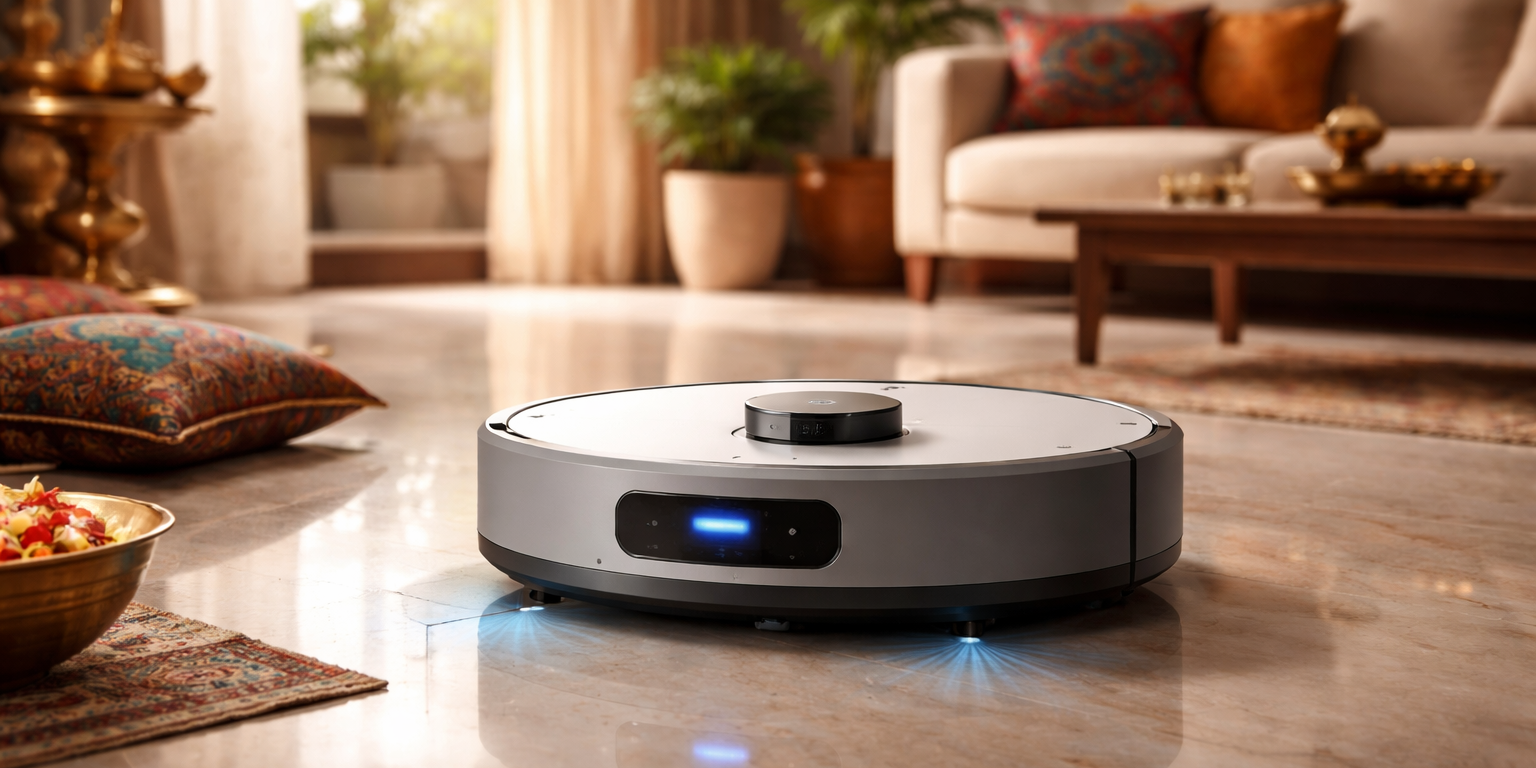
Roborock controls more than a quarter of the global residential cleaning robot market, part of a wider sweep that has put Chinese manufacturers in command of seven out of every ten units sold worldwide. The Shenzhen-based company holds 27% market share according to industry data, with compatriots Ecovacs and Dreame filling out the top tier of a segment that has consolidated rapidly around advanced autonomy features rather than price competition. The three companies together represent the core of Chinese dominance in a category where Western and Japanese brands once led on both technology and distribution.
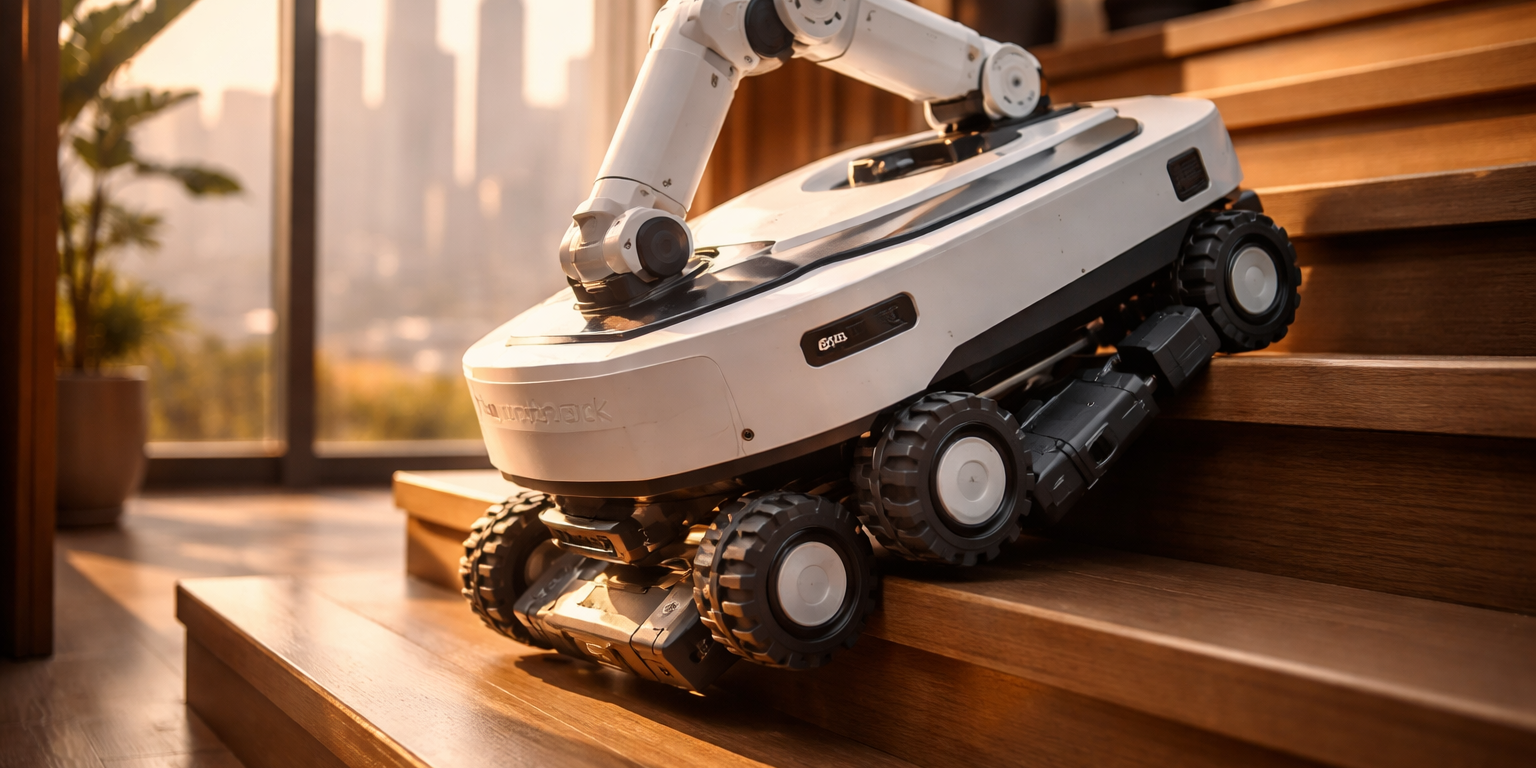
The market position reflects a decade-long buildout of robotics capabilities across southern China's manufacturing corridor, where proximity to component suppliers and aggressive R&D spending have produced machines that navigate complex home environments with capabilities unavailable in earlier generations. Stair-climbing systems now appear in multiple product lines, using articulated wheel assemblies or tracked configurations to traverse steps without human intervention. Robotic arms integrated into vacuum chassis allow units to manipulate objects, open doors, and clear obstacles autonomously. These features command premium pricing in developed markets, contradicting the assumption that Chinese hardware success derives from low-cost labor arbitrage. Roborock's flagship models retail above $1,400 in North America and Europe, competing directly with luxury appliance brands on feature sets rather than affordability.
Ecovacs has pursued a different technical path, embedding AI-driven object recognition that distinguishes between pet waste, cables, and debris to adjust suction patterns in real time. The company's Deebot X2 series employs dual-camera stereo vision paired with structured light projection, a sensor fusion approach common in industrial mobile robots but rare in consumer products until recently. Dreame, backed by Xiaomi's investment arm, has focused on hybrid wet-dry cleaning with pressure-controlled mopping systems that adjust water flow and scrubbing force based on floor type detection. All three manufacturers source lidar units domestically, relying on Chinese suppliers like Slamtec and RoboSense that have driven per-unit sensor costs below $15 for solid-state time-of-flight modules. That component cost advantage, combined with vertical integration in battery management and motor control electronics, allows Chinese brands to pack more sensing capability into consumer price points than competitors relying on global supply chains.
The competitive dynamics mirror shifts in other robotics segments where Chinese firms have moved from manufacturing partners to primary innovators. Roborock originated as a Xiaomi ecosystem partner before spinning out independently, a trajectory that provided both capital access and distribution reach through Xiaomi's retail channels. The company now operates research centers in Beijing, Shanghai, and Shenzhen employing more than 800 engineers focused on perception algorithms, motion planning, and mechatronics integration. Ecovacs maintains similar headcount dedicated to robotics development, with recent patent filings covering adaptive navigation in dynamic environments and predictive maintenance through cloud-connected diagnostics. Both companies recruit from China's expanding robotics talent pool, drawing graduates from Tsinghua, Harbin Institute of Technology, and Zhejiang University who once defaulted to positions at drone makers or industrial automation firms. The talent shift signals maturation of the consumer robotics sector as a destination for top-tier engineering work, not just manufacturing execution.
Market share concentration around Chinese brands carries implications beyond the cleaning robot category. The same supply chain infrastructure, talent networks, and go-to-market strategies apply to lawn care robots, window cleaning systems, and emerging categories like laundry folding machines. European appliance manufacturers have responded by partnering with Chinese robotics firms rather than competing directly, a pattern visible in licensing deals and white-label arrangements that put Chinese autonomy stacks inside Western brand chassis. iRobot, the Massachusetts-based company that pioneered consumer cleaning robots with the Roomba line, saw its attempted acquisition by Amazon collapse under regulatory scrutiny, leaving the company without the capital influx needed to match Chinese R&D spending. That competitive asymmetry may accelerate further as Chinese manufacturers expand into commercial cleaning applications, where facility management buyers prioritize total cost of ownership over brand heritage.
What to Watch: Roborock plans to introduce outdoor cleaning robots for patios and driveways by Q4 2026, directly challenging Segway's lawn robot division. Ecovacs will launch its first humanoid home assistant prototype in Shanghai this September, integrating cleaning functions with object manipulation. Monitor whether Western appliance brands increase robotics partnerships with Chinese firms or double down on internal development as the technology gap widens through late 2026.