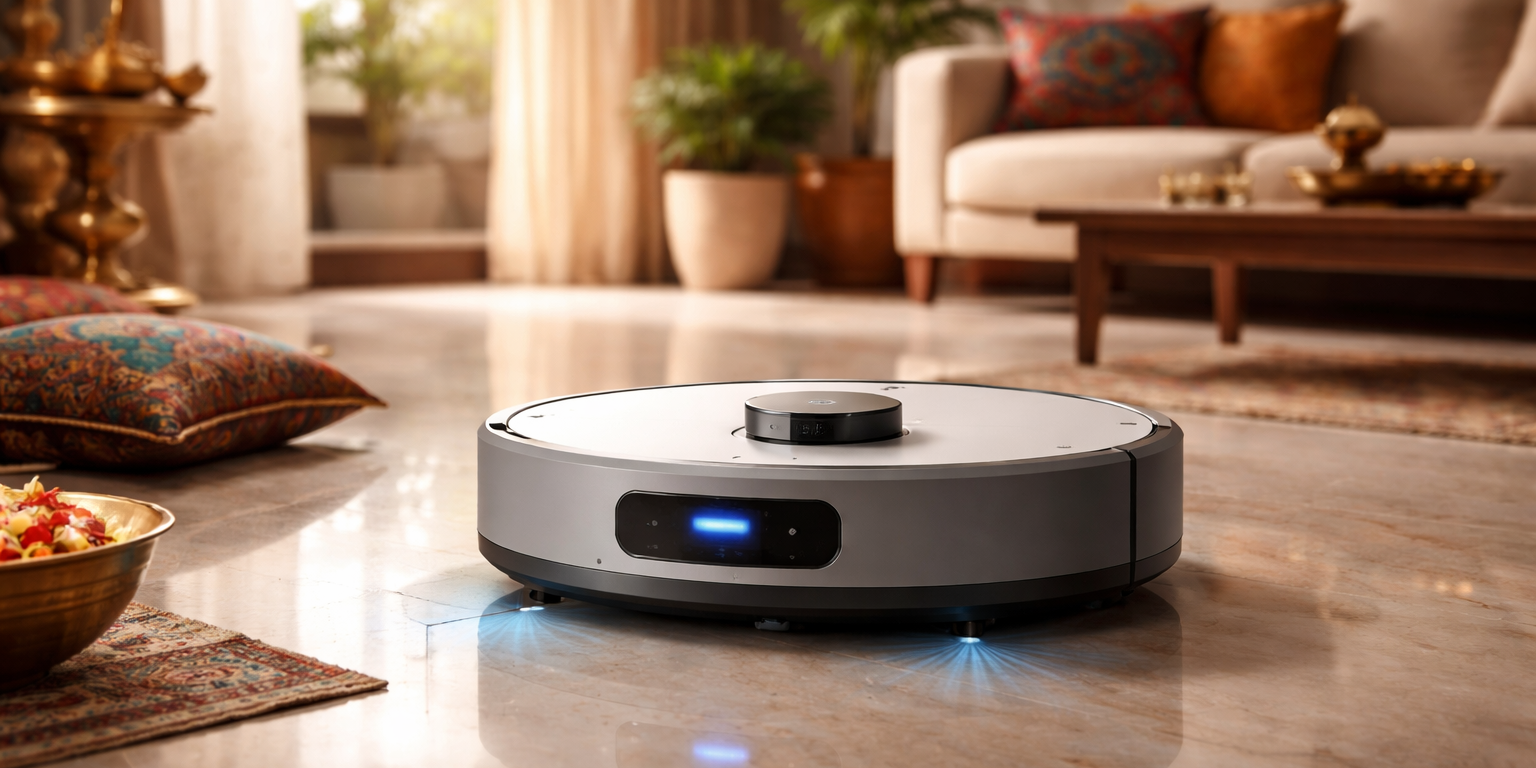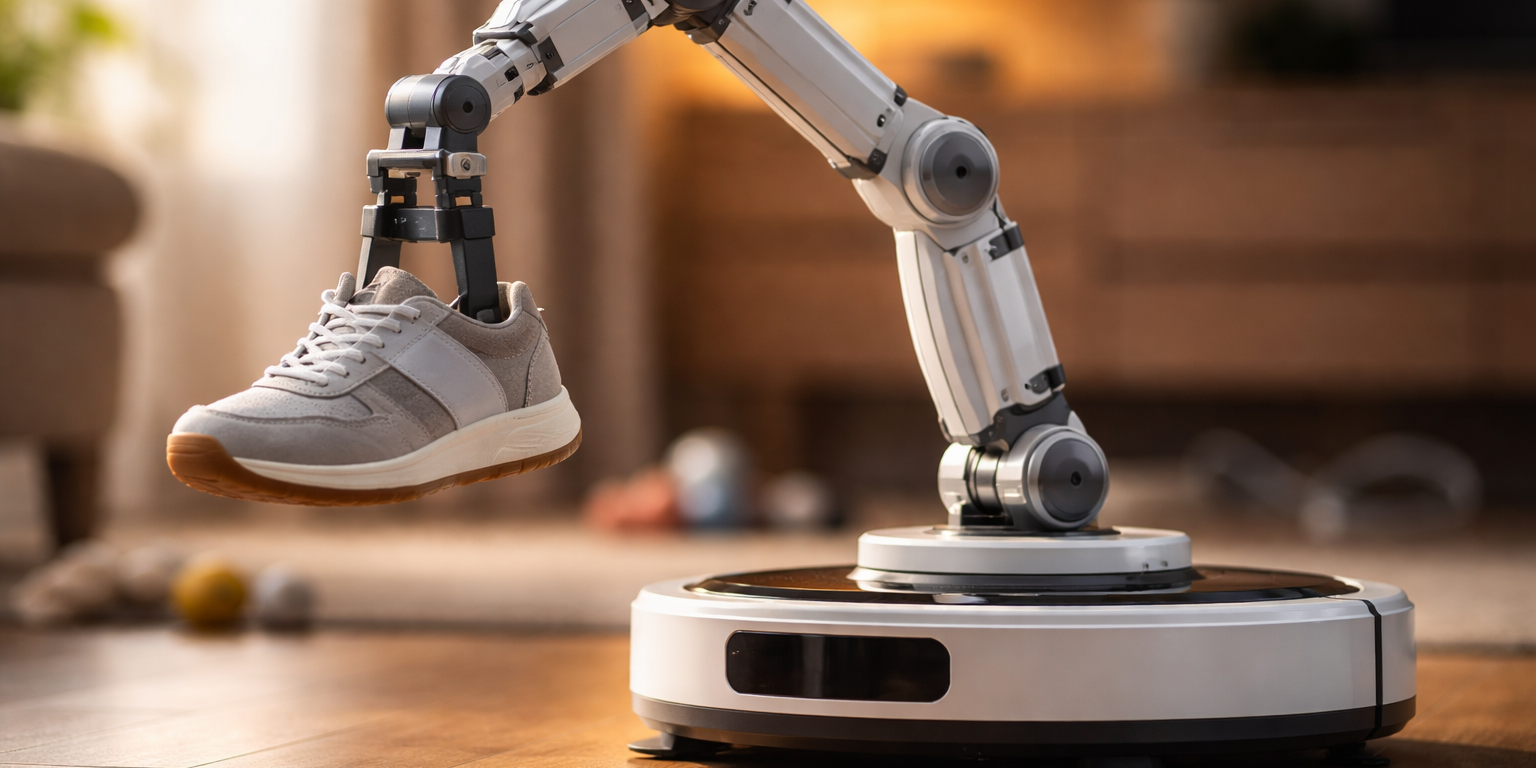
A five-axis robotic arm now ships inside a consumer vacuum priced under $1,100. Roborock's Saros Z70, currently available through Prime retailers at $1,085, represents the first sub-$1,500 floor-cleaning robot with integrated object manipulation capability. The arm extends from the robot's chassis to grip and relocate items up to 300 grams, addressing a constraint that has forced competing models to either navigate around obstacles or require human intervention to clear paths before cleaning cycles begin.
The gripper mechanism uses computer vision and force sensing to identify objects suitable for relocation, typically shoes, charging cables, pet toys, and lightweight household items that accumulate on floors between cleaning runs. According to specifications released with the product launch, the arm operates on five degrees of freedom and can reach 15 centimeters beyond the vacuum's footprint. Roborock has not disclosed the actuator technology or joint architecture, but the weight limit and reach profile suggest a cable-driven or hybrid linkage system rather than direct-drive servos at each joint. The vacuum navigates using lidar mapping combined with RGB-D cameras that feed the manipulation planning algorithms. When the system detects an object in its planned path, it evaluates whether the item falls within its manipulation envelope. If so, the arm deploys, grips, and moves the object to a nearby clear area before continuing the cleaning sequence.
This capability changes the value equation for households where floor clutter has rendered robot vacuums impractical. Market research from the Consumer Technology Association indicates that 38 percent of robot vacuum owners report manually clearing floors before each cleaning cycle, defeating much of the automation benefit. The Saros Z70 targets that cohort directly. Beyond the manipulation system, the unit delivers 22,000Pa of suction, placing it in the upper tier of consumer robot vacuum performance. The dual-function mop system uses two rotating pads with independent pressure control, and the base station handles both dustbin evacuation and mop pad washing. These features align with the current generation of premium robot vacuums from iRobot, Ecovacs, and Dreame, but the arm differentiates the platform.
The broader robotics industry implication centers on component cost trajectories for manipulation hardware. Five years ago, a five-axis arm with the sensing and control stack required for autonomous household object handling would have represented a $3,000 to $5,000 bill of materials. The Saros Z70's retail price suggests Roborock has driven arm subsystem costs below $400, possibly below $300 at volume production. That compression opens pathways for manipulation-equipped robots across additional consumer categories where objects need repositioning: lawn care robots that move garden tools, pool cleaners that relocate deck furniture, or eldercare assistants that retrieve dropped items. Several humanoid robotics startups, including Figure AI and Apptronik, have cited high manipulator costs as a barrier to sub-$50,000 general-purpose robots. If consumer appliance manufacturers have already crossed the cost threshold for basic manipulation at scale, those barriers may erode faster than industry roadmaps currently project. The manipulation logic also matters. Teaching a robot to distinguish between a sock that should be moved and a floor mat that should not requires perception systems that generalize across household environments. Roborock has not published details on its training dataset or whether the system uses foundation models, but the engineering team has clearly solved enough of the generalization problem to ship a consumer product. That represents validated technology that other manufacturers can reference or license.
What to Watch: Roborock has not announced international availability timelines for the Saros Z70 beyond North American distribution. Monitor whether European or Asian launches follow in Q3 2026, which would signal confidence in regulatory approval and localization. Competitors including Ecovacs and Dreame will likely respond with manipulation-equipped models by late 2026 or early 2027. Track patent filings from those companies over the next 90 days for clues about alternative gripper designs. Finally, watch whether Roborock publishes technical papers or opens API access for third-party manipulation routines, which would indicate a platform strategy beyond single-function floor cleaning.