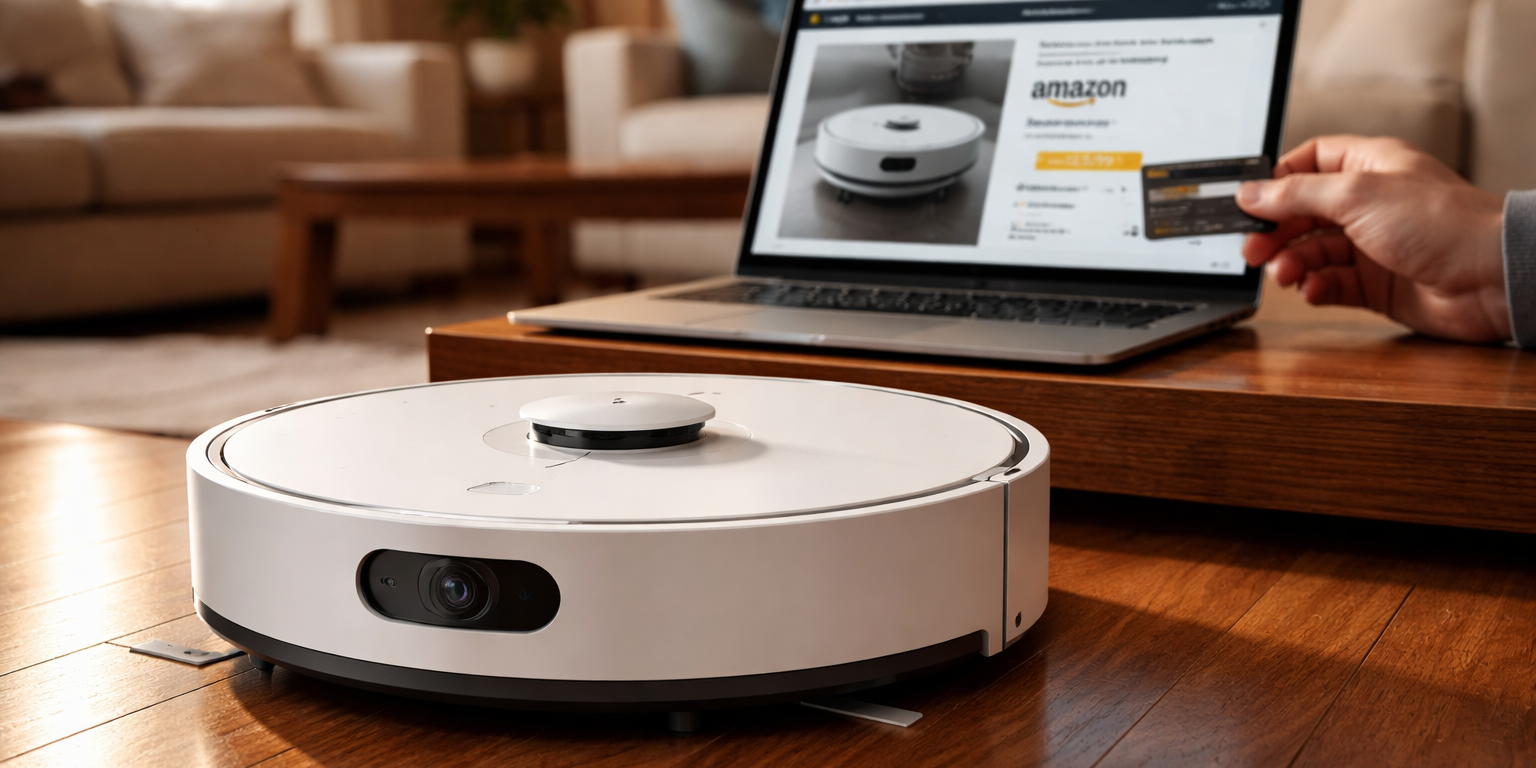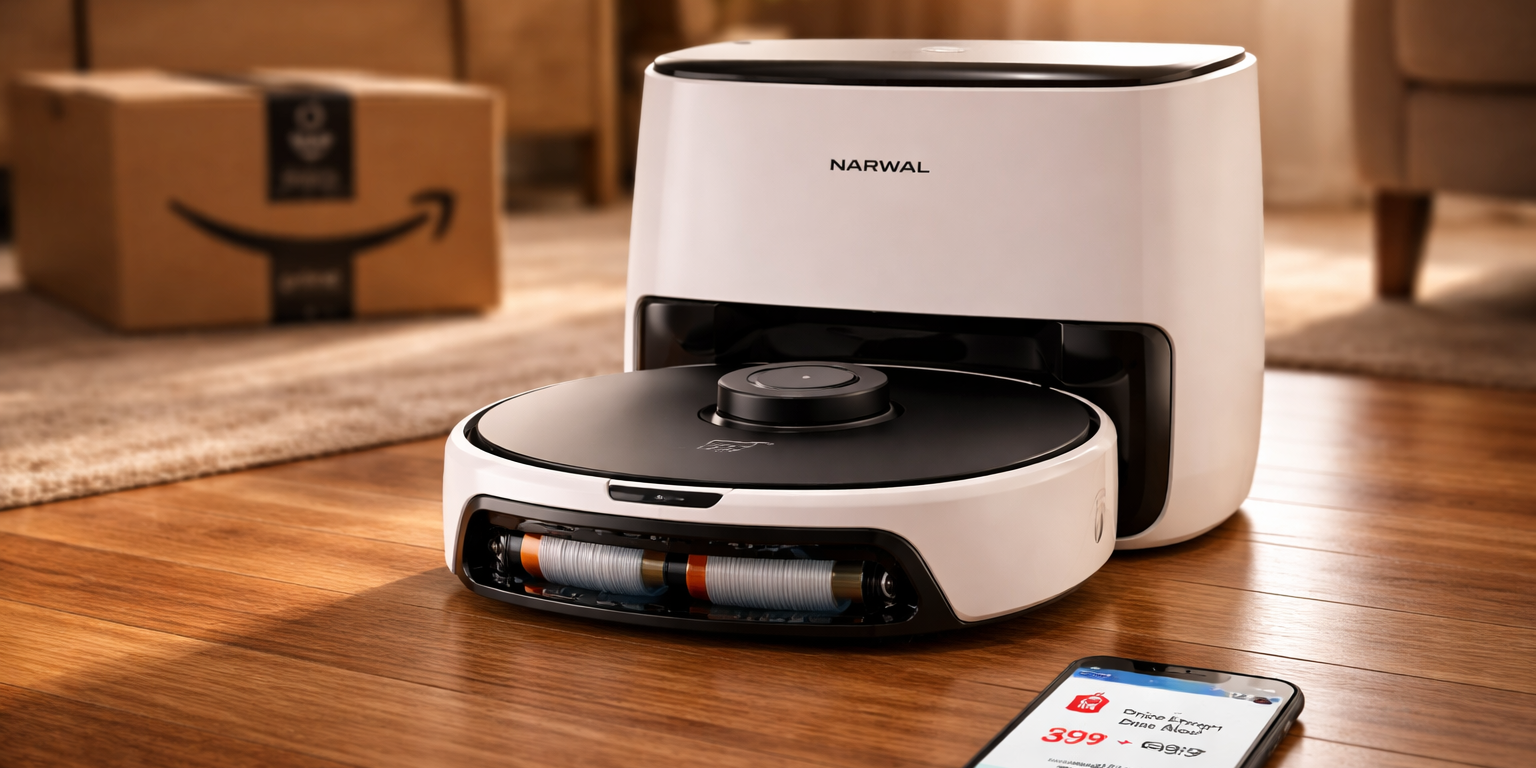
A flagship robot vacuum from Narwal Robotics sold for $370 on Amazon this week, less than half its list price and a data point that underscores how quickly premium features are migrating downmarket in consumer robotics. The Freo X10 Pro, which launched at $799 in late 2025, includes an 11,000Pa suction motor, dual roller system engineered to resist hair tangling, and a base station that handles both debris disposal and mop pad cleaning. For context, that suction figure exceeds the 8,000Pa found in many mid-tier competitors and approaches the performance envelope of units that sold above $1,200 eighteen months ago. The discount was limited to Amazon Prime subscribers and appeared as a limited-time promotion, but the pricing itself tells a broader story about margin pressure and inventory dynamics across the home robotics category.
Narwal, a Shenzhen-based company founded in 2016, entered the North American market aggressively in 2024 with a portfolio designed to compete directly against iRobot's Roomba Combo series and Roborock's S8 line. The Freo X10 Pro sits near the top of that portfolio. Its DualFlow Tangle-Free System uses counter-rotating brushes and silicone fins to minimize hair wrap, a persistent pain point for households with pets or long-haired occupants. The base station operates on a closed-loop water system, meaning it can wash and dry mop pads without user intervention between cleaning cycles. Narwal claims the unit can operate autonomously for up to seven weeks before requiring consumable replacement or tank service. Those specifications matter because they eliminate much of the manual handling that limited earlier mopping robots to niche adoption. The engineering is sophisticated. The market reception, however, has been complicated by a consumer pullback that began in Q1 2026 and has yet to reverse.
Unit sales of robot vacuums priced above $500 fell 19% year-over-year in the first quarter of 2026, according to data from Circana, which tracks point-of-sale transactions across major North American retailers. The decline followed similar drops in Q3 and Q4 of 2025, creating a three-quarter trend that has forced brands to choose between protecting margin or defending volume. Narwal appears to have chosen volume. The $370 price point positions the Freo X10 Pro below the Roborock Q Revo, which typically retails around $450, and well under the iRobot Roomba Combo j9+, which hovers near $899 even on promotion. Amazon's role as the distribution channel is notable. The platform now accounts for an estimated 43% of robot vacuum sales in the United States, giving it substantial influence over pricing strategy. Brands that maintain strong visibility in Amazon's recommendation algorithms and deal feeds can move significant inventory, but doing so often requires accepting lower unit economics than traditional retail channels would support. Narwal's decision to offer a 54% discount suggests the company is prioritizing market share and cash flow over short-term profitability, a common playbook for brands still establishing themselves against entrenched competitors.
The promotional pricing also reflects a structural shift in consumer expectations. Features that commanded premium pricing two years ago—LiDAR navigation, app-based room mapping, obstacle avoidance, auto-emptying docks—are now table stakes in the $300-$500 segment. Narwal's inclusion of an 11,000Pa motor and a self-cleaning mop system at $370 raises the bar for what buyers expect at that price point, which in turn pressures competitors to either match the feature set or accept reduced market position. Ecovacs, Eufy, and Dreame have all introduced models in the past six months with similar capabilities priced between $350 and $450, creating a cluster of functionally equivalent products competing primarily on brand recognition and incremental feature differences. For engineers and product managers watching this space, the lesson is clear: differentiation through hardware specs alone no longer sustains premium pricing. Software intelligence, user experience design, and service ecosystems are becoming the durable competitive moats. iRobot, for instance, has leaned heavily into its iRobot OS platform and integration with smart home ecosystems, betting that connectivity and AI-driven cleaning routines will justify higher price points even as hardware commoditizes. Whether that strategy holds depends largely on how quickly consumer spending recovers and whether households view these devices as essential infrastructure or discretionary purchases.
What to Watch: Monitor Amazon's Prime Day event in mid-July 2026 for additional pricing moves from Roborock, Ecovacs, and Dreame—historically, competitors match or undercut each other within 48 hours during major shopping events. Track Narwal's U.S. market share data from Circana's August retail report to see if the aggressive discount translates to sustained unit volume gains. Watch for iRobot's Q2 earnings call in late July, where the company is expected to address pricing strategy and its response to intensified competition in the mid-market segment. Finally, keep an eye on inventory levels at major retailers heading into Q4—if brands are still clearing stock aggressively in September, it signals expectations for a weak holiday season and potential further price compression across the category.