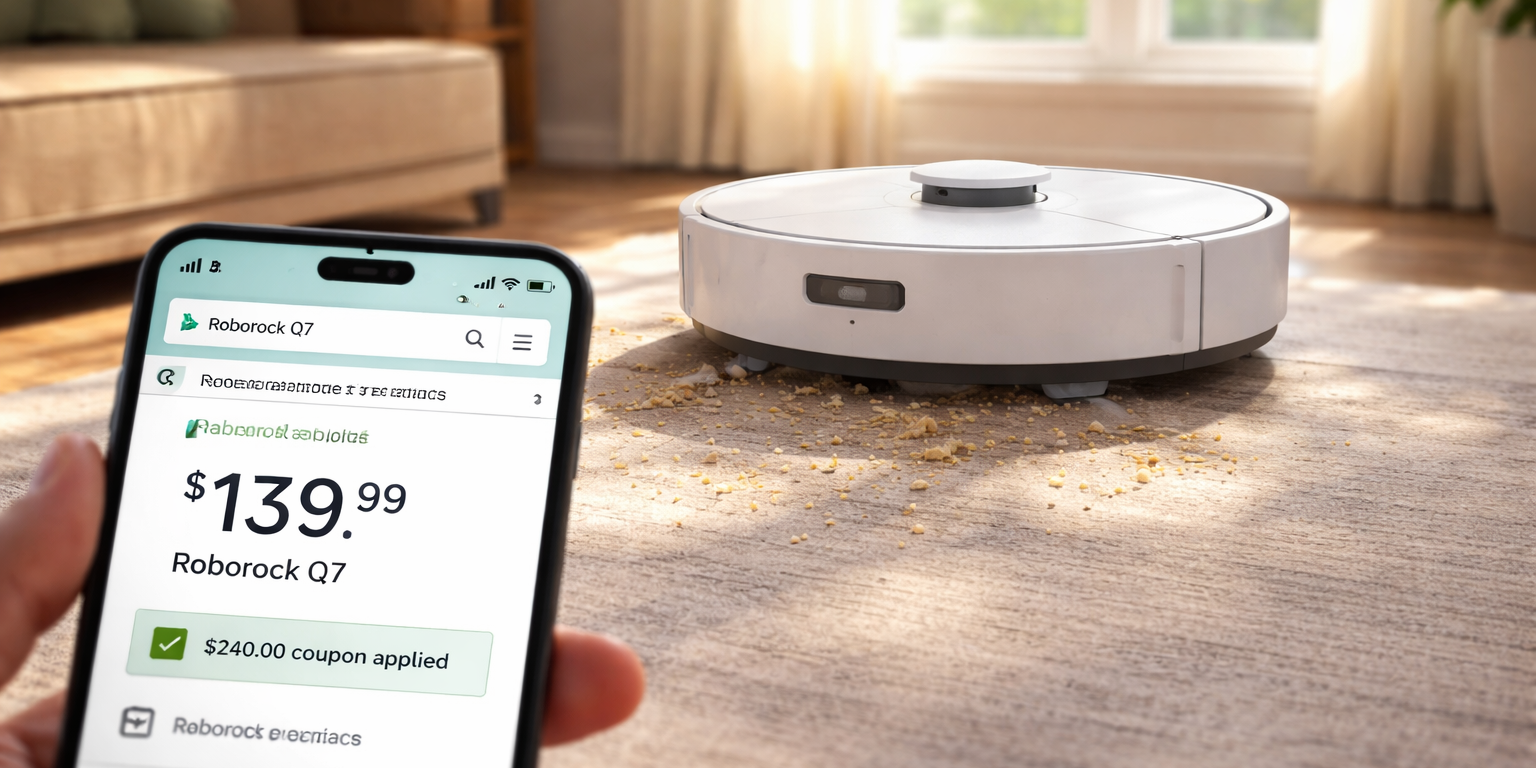
A vacuum-mop robot with LiDAR navigation and multi-floor mapping capability sold for $139.99 on Amazon on June 28, establishing what may be the lowest street price yet for hardware in this performance class. The Roborock Q7 L5, manufactured by Beijing-based Roborock Technology Co. Ltd, reached that price through a $60 coupon stacked on its $199.99 list price. Amazon's algorithm surfaced the deal prominently enough to generate discussion on deal-aggregation forums, where users noted the price represented a 30% markdown on hardware that shipped with specifications typically reserved for $300-plus models just eighteen months ago. The promotion ran with free shipping and no minimum order requirements, accessible to any Prime or non-Prime customer willing to click a digital coupon before checkout.
Roborock has manufactured ODM units for Xiaomi since 2014 and launched its own consumer brand in 2017, but the company's aggressive pricing through major retail channels represents a strategic shift that has drawn notice from competitors and supply chain analysts alike. The Q7 L5 carries a 470ml dustbin, 350ml water tank, and Qualcomm-based processing capable of storing up to four floor maps in onboard memory. Its 4200Pa suction rating and PreciSense LiDAR system position it above entry-level disc robots that rely on gyroscopic or random navigation, yet the $139.99 price undercuts models from iRobot, SharkNinja, and Ecovacs that occupy similar performance tiers. Roborock shipped 2.1 million units globally in Q1 2026 according to its April earnings disclosure, but the company's gross margin compressed to 42.3% from 48.7% a year earlier. The Amazon promotion suggests Roborock is prioritizing volume and market share over near-term profitability, a tactic that mirrors strategies employed by Chinese smartphone manufacturers during their international expansion campaigns between 2015 and 2020.
The sub-$150 vacuum robot category has become a focal point for venture-backed startups and established appliance conglomerates alike, with at least nine brands now offering app-connected models below that threshold. iRobot, acquired by Amazon for $1.7 billion in 2022 but still operating as a distinct brand, launched its Roomba Combo Essential at $249.99 in March 2026 but has yet to discount the model below $199.99 in any major retail channel. SharkNinja, which went public in 2023 and reported $5.8 billion in revenue for fiscal 2025, positions its Matrix line between $299 and $499 and has avoided direct price competition at the entry tier. Ecovacs, Roborock's most direct Chinese competitor, ships its Deebot N8 Pro at a $179.99 baseline but has used Amazon Lightning Deals to briefly match Roborock's promotional pricing at least twice since February. The pricing environment reflects broader commoditization pressures in consumer robotics, where core navigation and mapping technologies have matured to the point that differentiation increasingly hinges on battery management, obstacle recognition algorithms, and integration with voice assistants rather than fundamental autonomy capabilities.
Retail channel dynamics play an outsized role in consumer robotics margins, particularly for manufacturers who lack direct-to-consumer infrastructure at scale. Amazon accounted for an estimated 38% of U.S. vacuum robot sales in 2025 according to NPD Group data, giving the platform significant leverage over promotional calendars and pricing strategy. Brands that participate in Amazon's Vine review program, Subscribe & Save bundles, and coupon systems gain algorithmic visibility but surrender margin in exchange for velocity. Roborock operates its own e-commerce site and maintains partnerships with traditional big-box retailers including Best Buy and Target, but the company's Amazon storefront consistently ranks among the top five vacuum robot sellers by unit volume. The $60 coupon structure used in the Q7 promotion allows Roborock to absorb the discount as a marketing expense rather than a permanent price reduction, preserving nominal list pricing while capturing price-sensitive buyers who actively hunt for deals. This tactic has become standard practice for electronics brands navigating Amazon's marketplace, though the magnitude of the discount and the performance specifications of the discounted hardware represent an escalation in competitive intensity.
What to Watch: Roborock reports Q2 2026 earnings on August 12, where analysts will scrutinize gross margin trends and inventory turnover rates to assess whether aggressive promotions are driving sustainable unit growth or creating a margin death spiral. iRobot's Q3 product refresh, expected in September based on historical launch patterns, will reveal whether Amazon's house brand adopts a more aggressive pricing posture or doubles down on premium positioning. Ecovacs hosts its annual product showcase in Shenzhen on July 18, where the company is expected to preview new models targeting the $100-$150 segment with enhanced obstacle avoidance and self-emptying base stations.