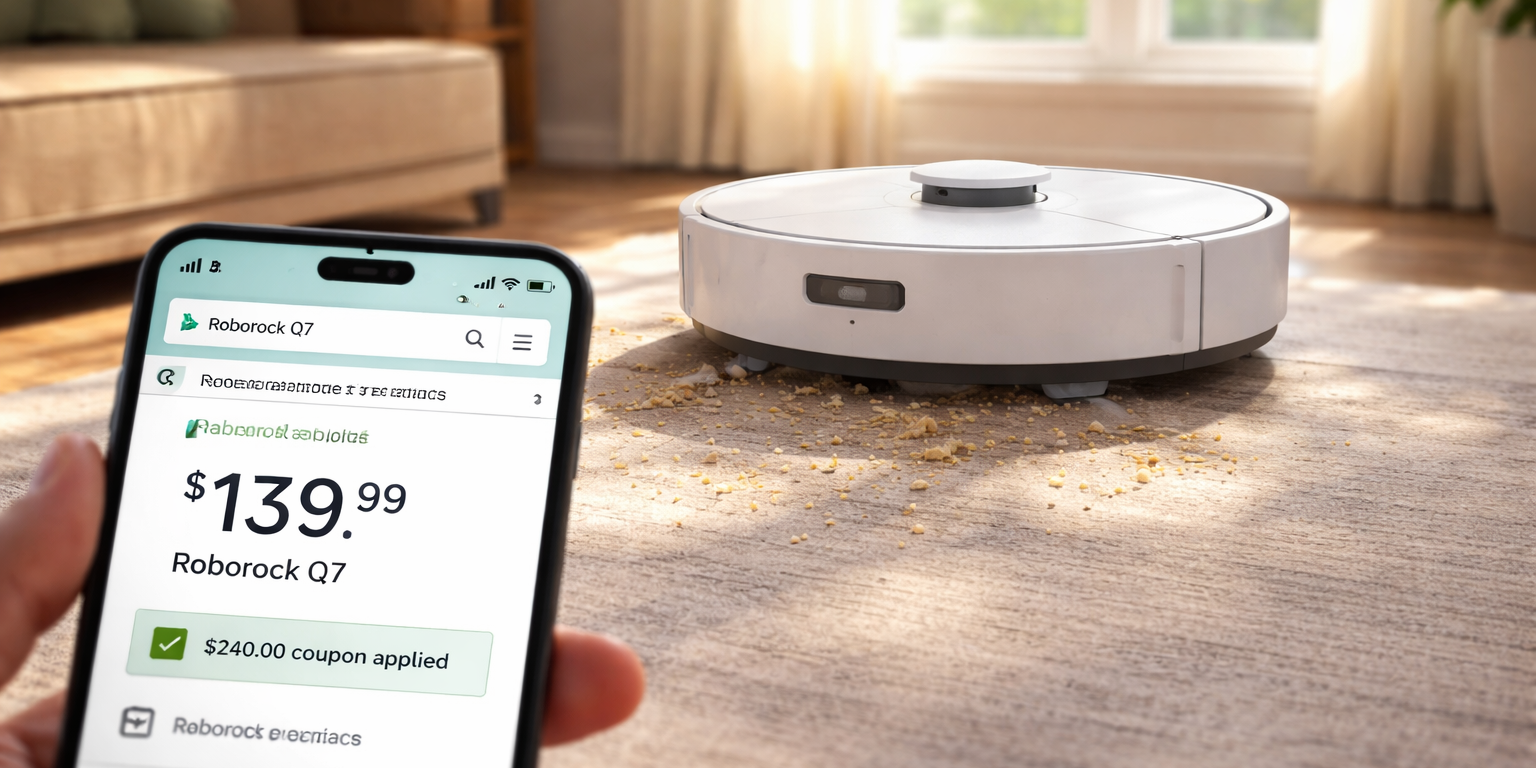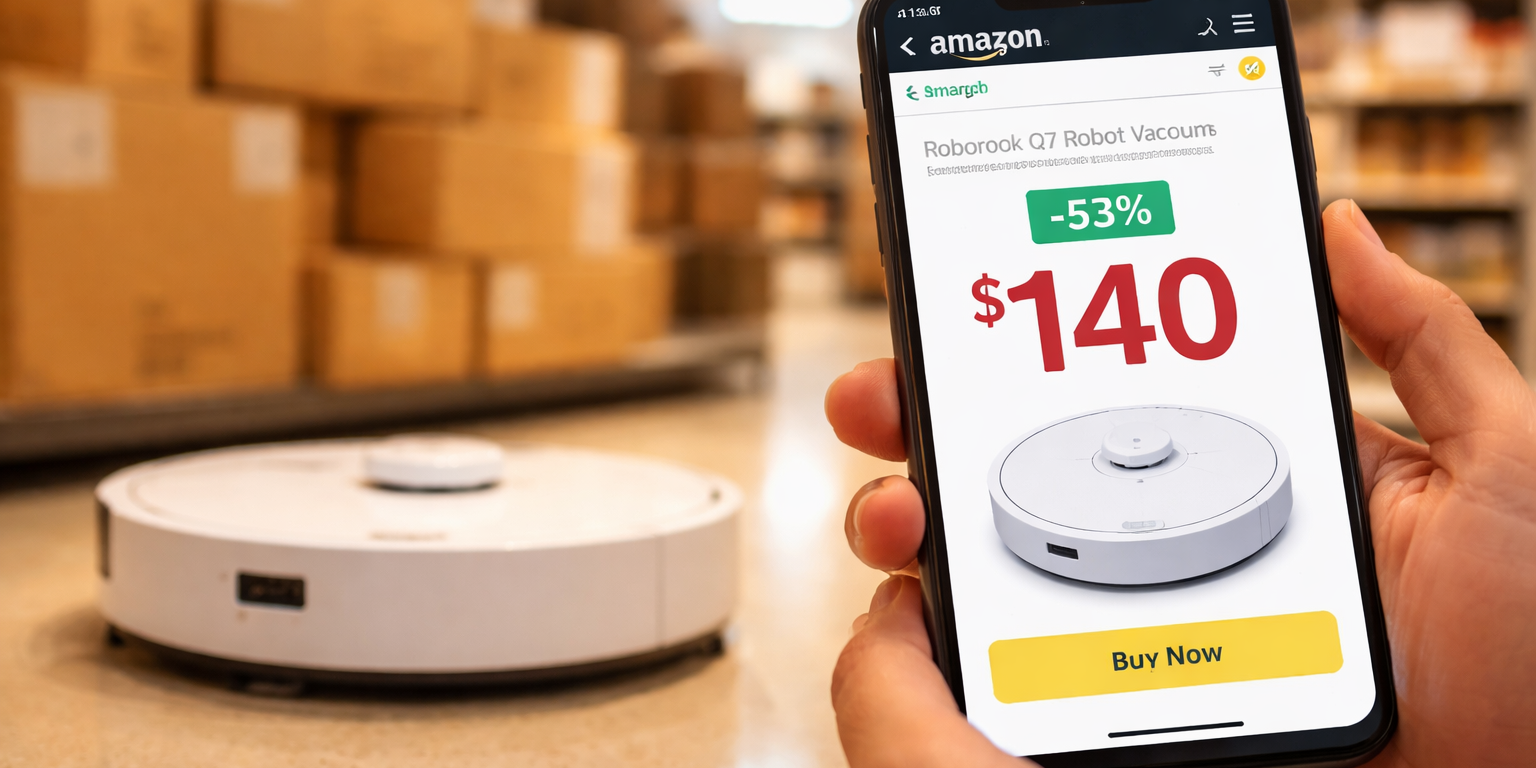
The Roborock Q7 L5, a mid-tier robot vacuum with 8,000 pascals of suction and LiDAR navigation, sold for $140 on Amazon as of June 28, 2026, after a manufacturer-authorized coupon knocked $110 off the standard retail price. That puts the hardware at roughly 44% below the wholesale floor most analysts estimated for comparable units six months ago. The discount is not a clearance event. Roborock, the Beijing-based robotics subsidiary of Xiaomi until its 2020 spinoff, is defending volume in a consumer segment that saw year-over-year unit sales decline 7% in Q1 2026 according to NPD Group data. Every major brand from iRobot to Ecovacs has cut MSRP by double-digit percentages since January. The floor is falling out on margins, and Roborock is coming down with it.
The Q7 L5 uses a single-beam LiDAR module sourced from Chinese supplier Camsense, paired with an ARM Cortex-A7 running SLAM algorithms that Roborock licenses from its own R&D group in Shanghai. Multi-floor map storage lets the robot remember up to four separate floor plans, a feature that required 512MB of onboard flash when it first appeared in 2023 models but now runs on 256MB thanks to compression improvements in the firmware stack. The mopping subsystem is a trailing pad with gravity-fed water dispensation, not the ultrasonic vibration systems that premium models like the S8 MaxV Ultra use. That design choice saves roughly $18 per unit in bill-of-materials cost, according to a teardown analysis that TechInsights published in April. The 8,000Pa suction figure is real, verified by independent testing, but it is generated by a brushless DC motor that pulls 58 watts at peak draw. Comparable models from Dreame and Ecovacs hit similar suction with 5-7 watts less power consumption, which matters for battery endurance. The Q7 L5 runs for 180 minutes on a 5,200mAh lithium pack, middle of the pack for 2026 hardware.
Roborock shipped 1.9 million consumer robot vacuums in 2025, down from 2.3 million in 2024, according to figures the company disclosed in its Hong Kong Stock Exchange filings. Revenue held steadier than volume because the company shifted mix toward higher ASP models, but gross margin compressed from 34% to 29% over the same period. The Q7 L5 sits in a category that is being squeezed from above and below. Budget models from Wyze and Ultenic now offer serviceable LiDAR navigation for under $200, while Roborock's own premium S-series units have added dock-based dirt disposal, hot water mop washing, and AI-driven obstacle avoidance that justifies $800-plus price points. The middle collapsed. Models like the Q7 L5, which launched at $399 in late 2023, cannot command that number anymore. The $140 sale price may not be sustainable, but it is also not an outlier. Street pricing for similar hardware has settled into the $160-$180 band across the industry. Roborock is testing whether moving 10,000 units at $140 beats moving 4,000 units at $220. The math tilts toward volume when fixed costs are already sunk into tooling and supplier contracts.
The consumer robotics market is bifurcating in real time. Premium autonomous cleaning systems with full self-service docking stations are still growing, up 12% year-over-year in the U.S. according to Circana point-of-sale data through May 2026. Budget single-function units are holding flat. Everything in between is contracting. Roborock is not alone in responding with price cuts. iRobot, now a subsidiary of Amazon after the $1.4 billion acquisition closed in late 2024, has been undercutting third-party brands on Prime Day promotions, using its parent's distribution muscle to move inventory. Ecovacs dropped the Deebot N10 Plus to $179 in April. Dreame's L10s Ultra fell to $299 from $499 within eight weeks of launch. The pattern is clear: manufacturers built capacity for a post-pandemic boom that did not materialize, and now they are running factories at 60-70% utilization while competing for a saturated installed base. For hardware engineers and supply chain analysts, the Q7 L5 discount is a leading indicator. Component pricing for LiDAR modules, BLDC motors, and lithium cells is softening across the board, and contract manufacturers in Shenzhen are offering more favorable terms to keep lines running.
What to Watch: Track whether Roborock extends similar discounts to the Q8 Max and Q5 Pro models in Q3 2026, which would confirm a broader portfolio repricing rather than inventory clearance on the Q7 L5 alone. Watch for iRobot's next earnings call in late July, where Amazon is expected to disclose integration plans and any pricing strategy shifts for the Roomba line under new ownership. Monitor Camsense and Silan Microelectronics for any public statements on LiDAR module pricing, as cost reductions at the component level could accelerate the race to the bottom for mid-tier robot vacuums. Finally, observe whether Ecovacs or Dreame respond with matching or lower price points on comparable models before the back-to-school sales cycle in August.