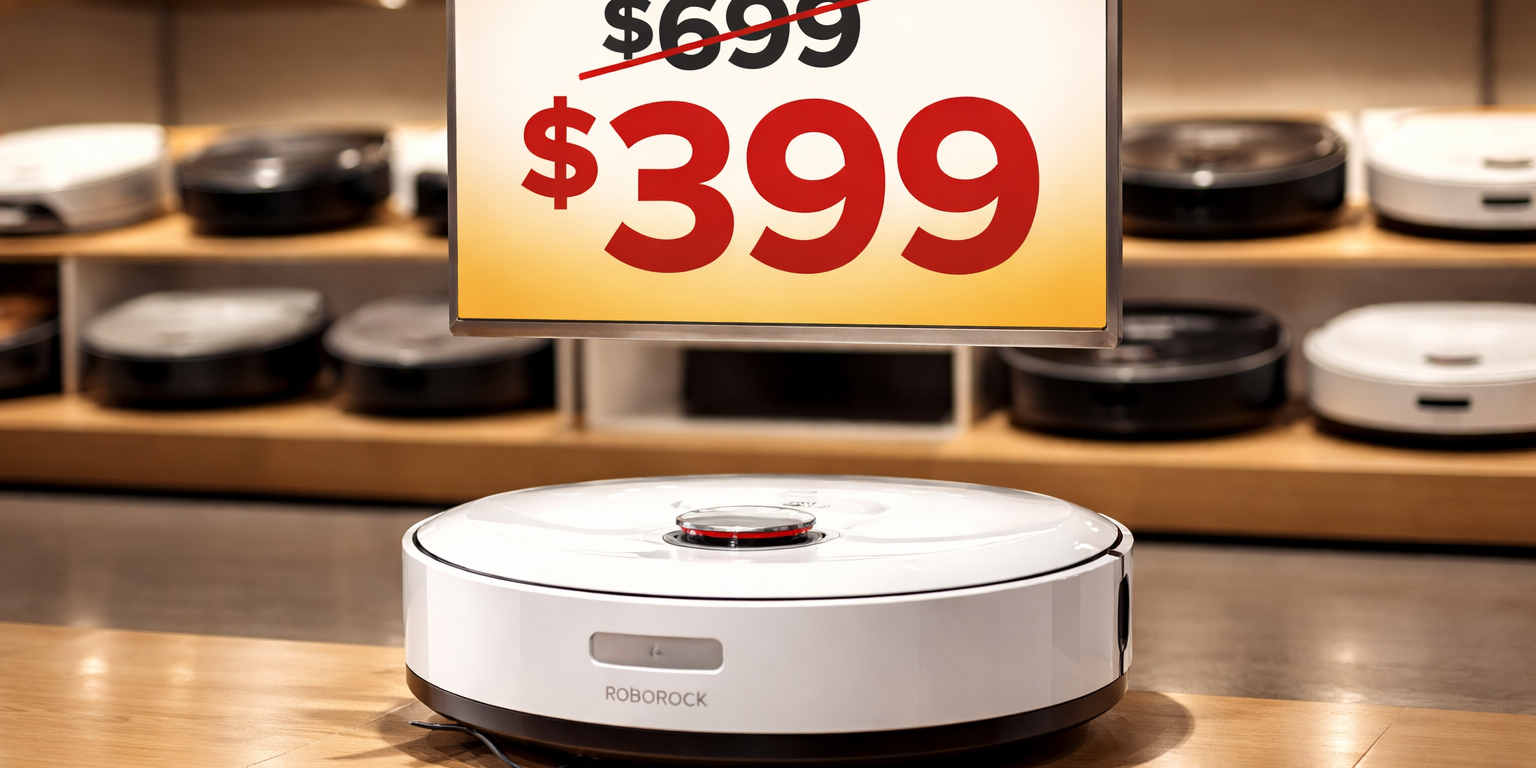
Roborock's Q10 S5 Plus robot vacuum and mop currently retails at 49% below its original list price, a discount level that reveals how dramatically consumer robotics pricing has shifted over the past eighteen months. The markdown represents more than a seasonal sale. It confirms what industry analysts have tracked across multiple SKUs from Chinese manufacturers: the premium tier of two years ago now competes at mid-market price points, pushed downward by commoditization of LiDAR navigation, multi-surface cleaning, and app-based mapping. For robotics engineers watching the consumer segment, the trend demonstrates how quickly advanced sensor packages and autonomous navigation algorithms lose their pricing power once manufacturing scale kicks in and competitors reverse-engineer core functionality.
Roborock launched the Q10 S5 Plus as a mid-to-upper tier model featuring simultaneous vacuuming and mopping, auto-emptying dustbin, and LiDAR-based SLAM navigation—capabilities that commanded significant premiums when the company entered the U.S. market in 2018. The current discount brings the unit closer to pricing traditionally reserved for single-function vacuums with basic bump-and-turn navigation. That compression reflects both Roborock's need to clear inventory ahead of next-generation product launches expected in Q4 2026 and the broader reality that competitors like Dreame, Ecovacs, and even legacy brands like iRobot now offer comparable feature sets. The Q10 S5 Plus includes a 5,200mAh battery, 4,000Pa suction power, and a self-empty dock rated for 60 days of debris storage. Those specifications landed in the premium category when the model debuted. Today they represent table stakes for any manufacturer aiming to compete above the $200 price threshold.
The promotional pricing carries implications beyond a single product line. Consumer robot vacuums generate approximately $4.2 billion in annual global revenue, with North America and Western Europe representing the largest markets by unit volume. Margin pressure at the product level cascades into R&D budget constraints, forcing manufacturers to justify continued investment in autonomous navigation improvements, battery chemistry upgrades, and sensor miniaturization. Roborock and its Chinese competitors pioneered aggressive pricing as a market-share strategy, leveraging Shenzhen-area supply chains and in-house motor production to undercut established players. That approach worked when premium features commanded 40-50% gross margins. At current pricing levels, margins have compressed to an estimated 18-22% on mid-tier models, according to teardown analyses published by industry researchers who reverse-engineer bill-of-materials costs. The result: manufacturers increasingly differentiate through software ecosystems, subscription services for advanced mapping features, and integration with smart home platforms rather than hardware innovation.
For robotics professionals tracking technology diffusion patterns, the consumer vacuum category offers a case study in what happens when core enabling technologies—in this case, affordable LiDAR sensors and ARM-based processors running SLAM algorithms—reach commodity status. Velodyne's LiDAR sensors once cost $75,000 per unit; today's solid-state equivalents in consumer robots retail for under $15 in volume. The Q10 S5 Plus uses a triangulation laser rangefinder that delivers room mapping accurate to within 2cm, technology that would have required industrial-grade equipment a decade ago. That same commoditization curve now threatens higher-margin robotic categories including lawn mowers, commercial floor scrubbers, and even collaborative arms as Chinese manufacturers apply identical playbooks: integrate proven sensor packages, optimize for mass manufacturing, and compete on price rather than proprietary technology. Roborock's discount reflects not just seasonal inventory management but a structural shift in how consumer robotics platforms reach the market and sustain profitability.
What to Watch: Monitor whether Roborock announces updated models with enhanced object recognition or improved mopping pressure control at IFA Berlin in early September 2026, as new SKUs would explain the aggressive Q10 S5 Plus clearance pricing. Track whether iRobot's parent company Amazon responds with comparable discounts on Roomba Combo models, which would confirm industry-wide margin pressure rather than isolated inventory management. Observe Dreame's U.S. market expansion plans following its recent distribution agreement with Best Buy, expected to be detailed in the company's Q3 2026 earnings call.