A $430 price point appeared on Amazon this week for Roborock's Qrevo S Pro, a vacuum-mopping hybrid that represents the Shenzhen-based manufacturer's latest attempt to dominate the lower end of the autonomous floor care market. The price marks a 30 percent reduction from the unit's launch tag earlier in 2026 and positions the device squarely in territory where consumer purchase behavior shifts from consideration to impulse, according to retail electronics tracking from NPD Group. Free shipping sweetens the margin further, eliminating a friction point that has historically added $25 to $40 to the effective price of floor robots in this weight class.
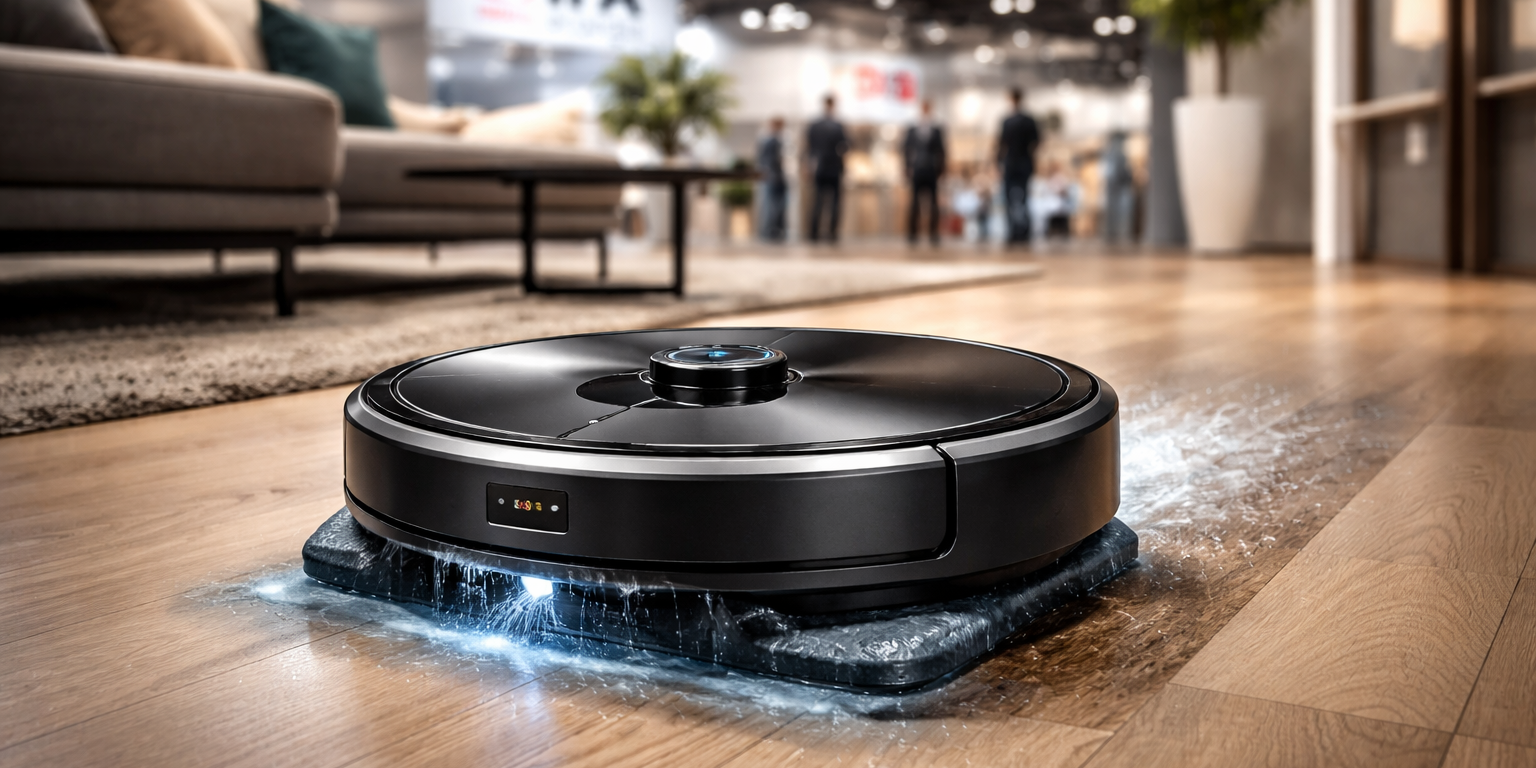
Roborock Technology Co. has spent the past eighteen months pushing its S-series models down-market, betting that scale manufacturing in Guangdong Province and simplified sensor suites can unlock volume without sacrificing the navigation accuracy that made the company's premium lines competitive against iRobot and Ecovacs. The Qrevo S Pro strips out some of the LIDAR complexity found in Roborock's flagship Q Revo MaxV, instead relying on a combination of infrared cliff sensors, gyroscopic positioning, and a single-array camera for room mapping. Engineers familiar with the design say the trade-off cuts component costs by roughly $85 per unit while maintaining sufficient accuracy for homes under 2,000 square feet. The dual-function mopping system uses a 200ml reservoir and rotating pads that lift automatically when the unit detects carpet, a mechanical solution that avoids the weight and complexity of dual tanks.
The timing coincides with a broader repricing across the consumer robotics sector. IRobot's Roomba Combo j7+ currently lists at $799, while Ecovacs' Deebot X2 Omni sells for $1,099. Roborock's strategic calculus appears straightforward: capture the 62 percent of U.S. households that own neither a robot vacuum nor a dedicated mopping device by undercutting established players on price while matching them on core functionality. Third-quarter earnings guidance from Roborock, released in July 2026, projected a 40 percent increase in unit shipments for models priced below $500, suggesting the strategy has internal momentum. The Qrevo S Pro uses a 5,200mAh lithium battery rated for 180 minutes of runtime, puts down 2,500 pascals of suction pressure, and includes compatibility with Amazon Alexa and Google Home voice control. The company manufactures approximately 45,000 units per week at its primary assembly facility in Dongguan, with component sourcing split between domestic suppliers for motors and injection-molded parts and Taiwanese firms for circuit boards and wireless modules.
This price compression has implications beyond Roborock's balance sheet. The $400-to-$450 window has historically separated aspirational floor care technology from appliances that move volume at big-box retailers. Dyson tested this range in 2024 with its 360 Vis Nav and found tepid adoption; the difference this cycle is that Chinese manufacturers now command enough supply chain leverage to hold margins at price points that would have bled cash three years ago. Shark, a SharkNinja brand that competes aggressively in corded vacuums, has watched robotic SKUs account for 18 percent of its floor care revenue in 2026, up from 9 percent in 2024. The category is consolidating around a handful of viable mopping architectures, with rotating pads and automatic lift mechanisms emerging as table stakes. Roborock's decision to include both in a sub-$450 unit forces competitors to match or cede shelf space. The Qrevo S Pro also supports multi-floor memory for up to four levels, a feature previously restricted to units priced above $600. Software differentiation is narrowing as well; most mid-tier robots now offer room-specific cleaning schedules, no-go zones, and integration with major smart home ecosystems. The question for investors is whether Roborock can defend its operating margins as average selling prices continue to fall. The company reported a 23 percent gross margin on its S-series products in Q2 2026, down from 29 percent a year earlier but still well above the 15 percent floor that analysts consider sustainable for high-volume consumer electronics.
What to Watch: Roborock's Q3 2026 earnings report, expected in late October, will show whether the Qrevo S Pro's pricing drives the unit volume needed to offset per-device margin compression. Monitor whether iRobot responds with price cuts on the Roomba Combo line before the November holiday shopping cycle begins. Ecovacs is scheduled to unveil its next-generation Deebot architecture at IFA Berlin in early September 2026, which may include cost-reduction measures that allow the company to field a competitive model under $500. Watch for commentary from component suppliers like Nidec and Suzhou Ilife on order volumes for brushless motors and battery packs, as shifts there signal broader production trends across the floor care robotics sector.