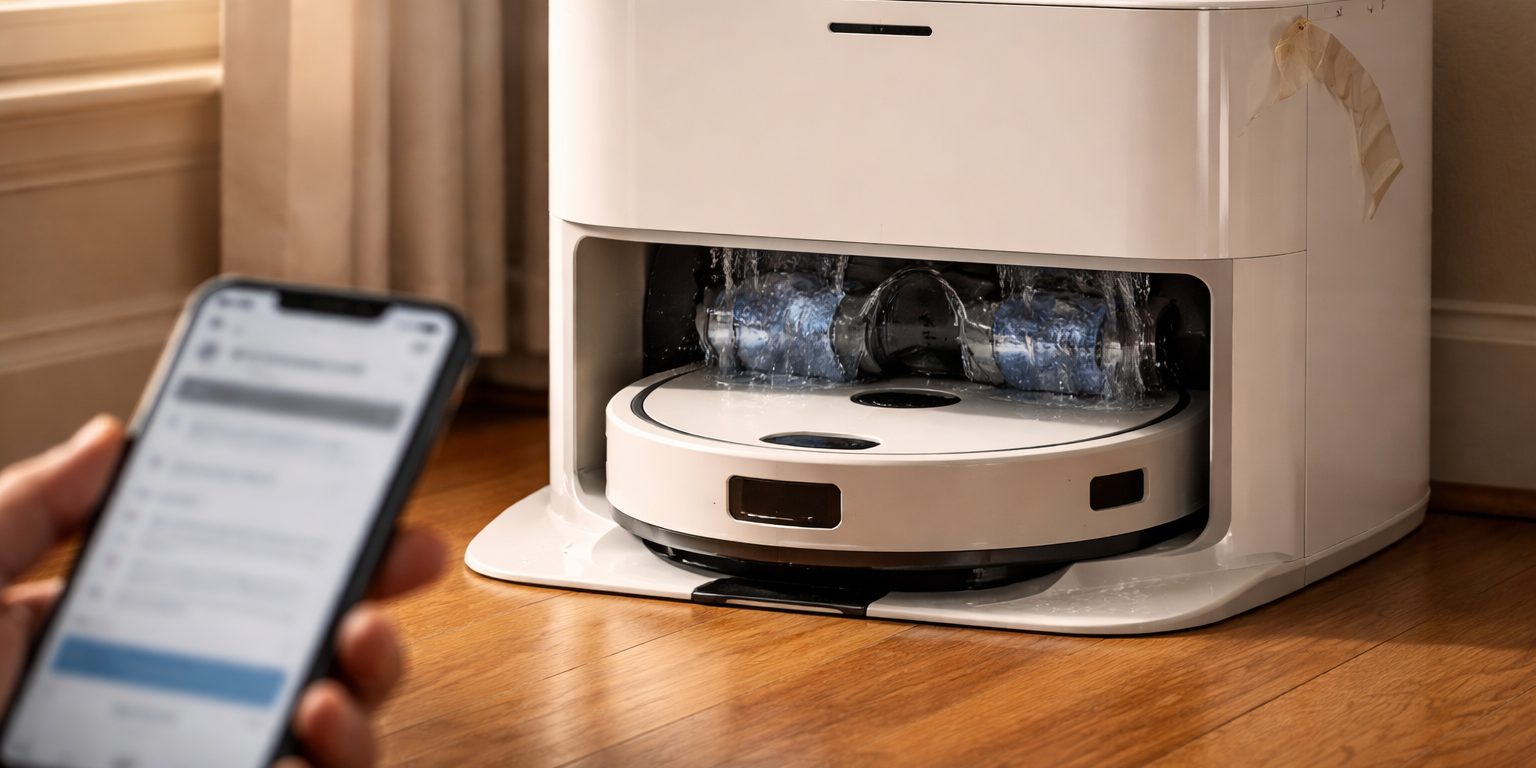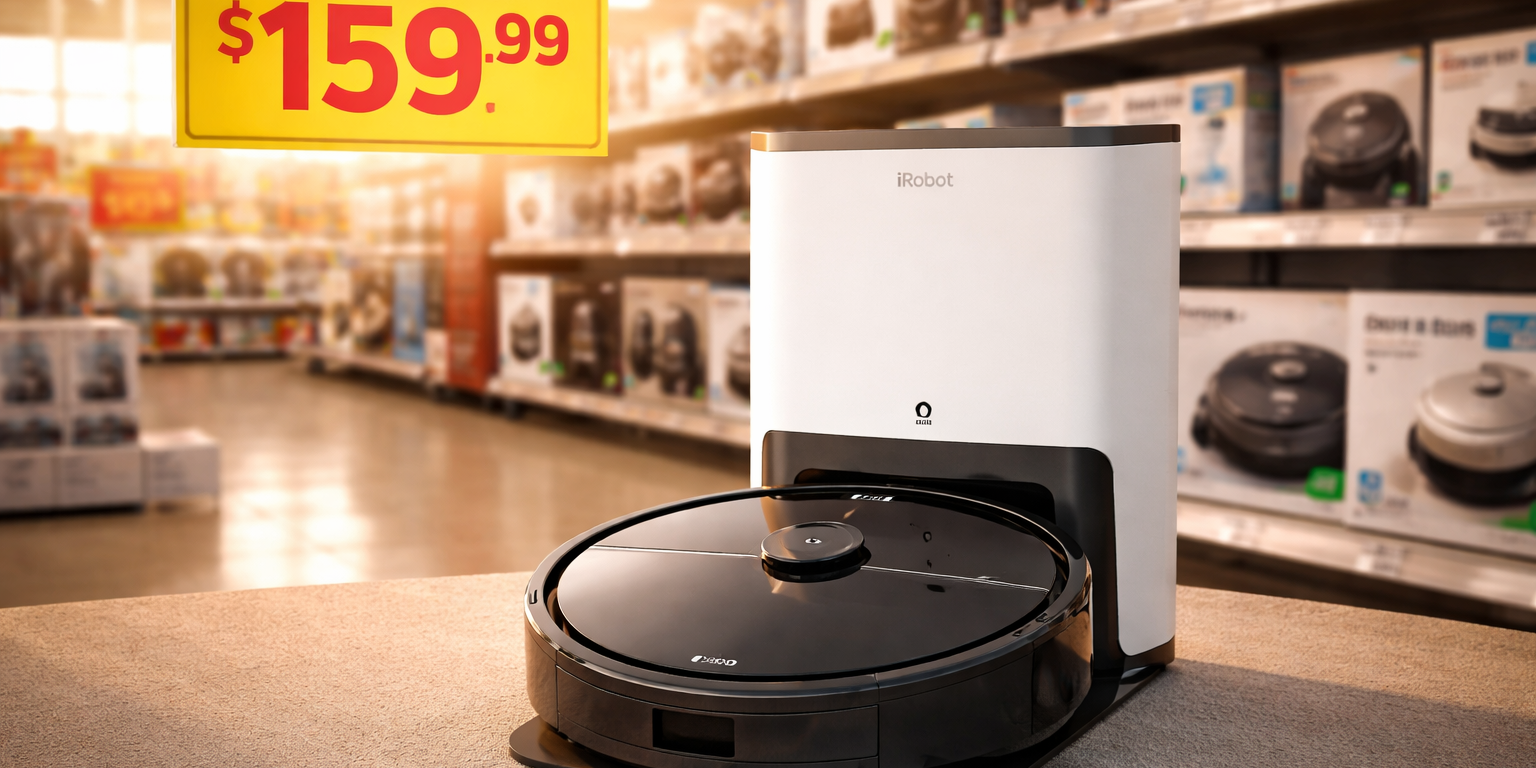
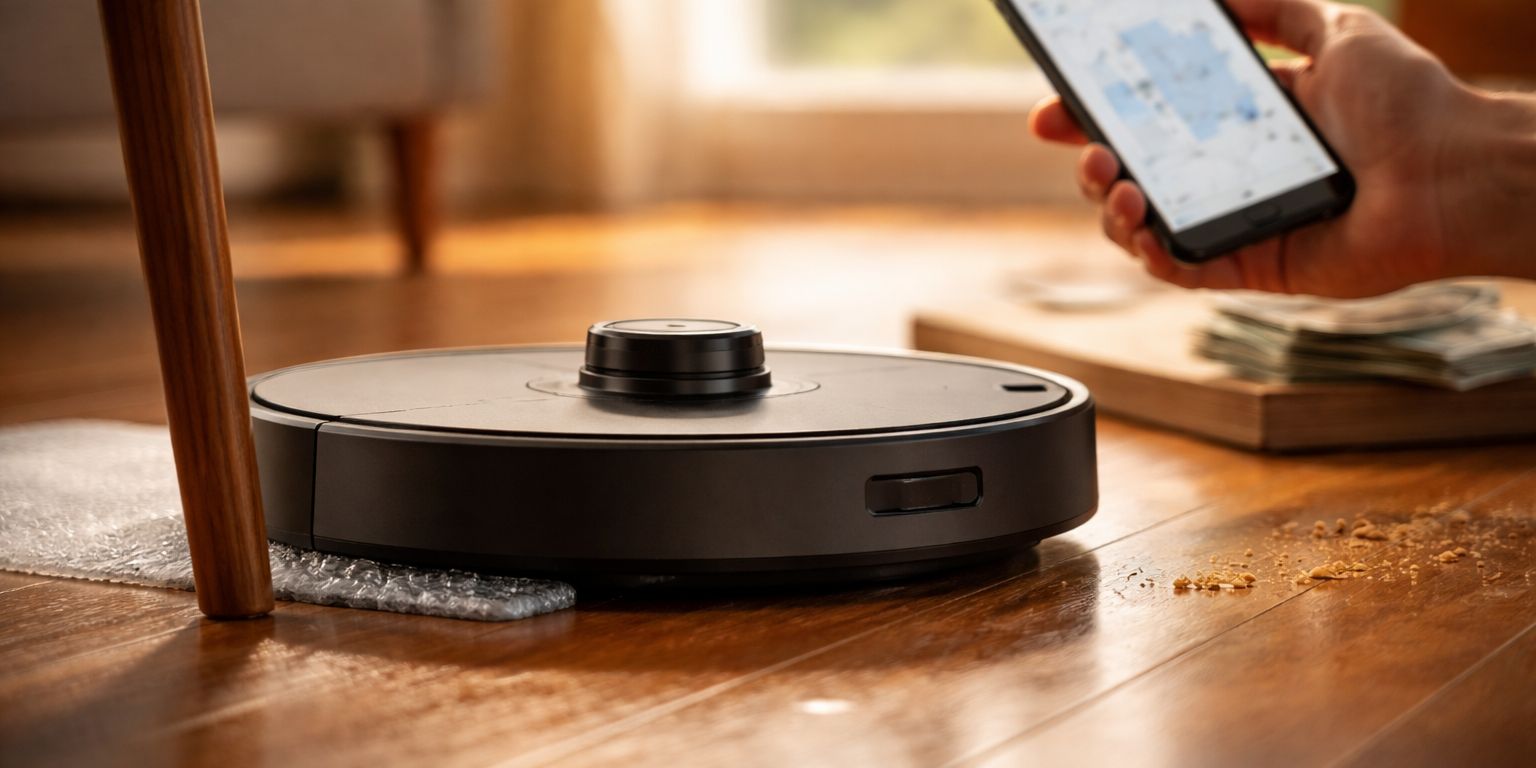
A robot vacuum that maps rooms with LiDAR, mops in the same pass, and claims 15,000 Pa of suction now costs $140 at Amazon. That is the sticker price on the iRobot Roomba 115X Combo, and Dealnews reports it beats every other retailer it could find by about $40. Prime members get free shipping. On paper, the spec sheet reads like a flagship from three or four years ago: laser-based mapping, obstacle avoidance, a washable mopping pad, and suction numbers that would have commanded $400 or more before the Chinese manufacturers started their price war.
The number worth dwelling on is not the discount but the sensor. LiDAR was the dividing line in this category for most of the last decade. Roborock, Ecovacs, and Xiaomi pushed spinning laser turrets into mid-priced machines years ago, while iRobot clung to camera-based visual navigation on its mainstream Roombas and reserved its higher-end sensing for models priced well north of $600. A LiDAR-equipped Roomba at $140 is the clearest sign yet that the company has conceded the point. Laser distance sensors that cost tens of dollars in bill-of-materials terms in 2019 now cost a few dollars at volume, and the navigation advantage that justified premium pricing has largely evaporated.
The context for that concession is hard to ignore. iRobot's planned acquisition by Amazon, announced in 2022 at roughly $1.7 billion, collapsed in January 2024 after European regulators signaled they would not approve it. What followed was grim. The company laid off about 31 percent of its workforce, saw its stock fall to pennies, and warned investors in 2025 that it had substantial doubt about its ability to continue as a going concern. A restructuring tied to its Chinese contract manufacturer, Picea, followed late in the year, and iRobot's long-held identity as a U.S.-designed, vertically controlled brand shifted toward a design-and-license posture. Against that backdrop, a $140 Roomba reads less like a promotion and more like a company clearing the shelves while it resets its cost base.
The retail picture adds another layer. Amazon is selling the 115X at a price that undercuts the field, and Amazon is also the former would-be owner, a major distribution channel, and the maker of competing smart-home hardware. For engineers, the interesting question is what the unit economics look like. A robot with LiDAR, a mopping assembly, a brushless motor rated to that suction figure, and a docking or charging system cannot be built for much under $70 to $90 in landed cost, which leaves thin room for retailer margin, marketing, and warranty reserves at $140. Peers in China have lived with those margins by trading volume for share and by monetizing accessories and consumables. iRobot, with its smaller scale and heavy fixed costs, has far less cushion. Note also that the 15,000 Pa figure is a peak marketing number measured under idealized conditions, and independent airflow and dust-pickup tests rarely track it linearly.
For the broader industry, the deal underscores that household floor-care robotics has become a mature, low-margin hardware business, and the differentiation has moved up the stack. Obstacle recognition for cables and pet waste, self-emptying and self-washing docks, and increasingly arm-equipped or stair-climbing prototypes are where the premium players are placing bets. Roborock's showcase of a vacuum with a retractable arm and Dreame's expansion into adjacent appliances point to where R&D dollars are headed. Meanwhile, a $140 LiDAR mopper sets a hard price anchor for every entry-level competitor, squeezing the sub-$200 tier and pushing buyers to ask why they would pay double for incremental features. Component suppliers in sensing, motors, and batteries benefit from the volume. Branded manufacturers without scale do not.
What to Watch
Track iRobot's next quarterly filing and any update on its going-concern language, since sustained discounting like this will show up in gross margin and inventory figures. Watch whether Roborock, Dreame, and Ecovacs respond with sub-$150 LiDAR models ahead of the holiday shopping stretch that kicks off in earnest in November 2026, particularly around Black Friday and Cyber Monday pricing. Keep an eye on Amazon's own pricing behavior across the Roomba line, which may reveal whether this is a clearance event or the new baseline. Finally, monitor how Picea's manufacturing role evolves, because who actually controls design and supply will shape whether the Roomba brand survives as an independent product line.