Rimnot demonstrated robots that adapt to new production environments in 30 minutes at the World Artificial Intelligence Conference, securing a deployment agreement with Yuantu for 10,000 units across server manufacturing facilities. The commitment from a startup that launched just four months ago represents a sharp acceleration in physical AI commercialization, bypassing the typical pilot-to-production crawl that has defined industrial robotics for decades. Yuantu operates multiple server assembly lines serving hyperscale data center clients, a sector where labor shortages and precision requirements have historically favored automation investments.
The 30-minute adaptation window addresses a longstanding friction point in factory automation. Traditional industrial robots require weeks of integration work, with engineers programming specific movements, testing failure modes, and validating quality outcomes before production use. Rimnot's approach relies on what the company calls a closed-loop physical AI system, though technical specifics remain undisclosed. The Tsinghua PhD alumni founding team brings academic credentials from robotics and machine learning programs, but the company has not published research detailing its adaptation architecture or training methodology. The speed claim matters because server manufacturing involves frequent line reconfigurations as product generations turn over, often every 18 to 24 months. If robots can redeploy that quickly, the total cost of ownership shifts dramatically.
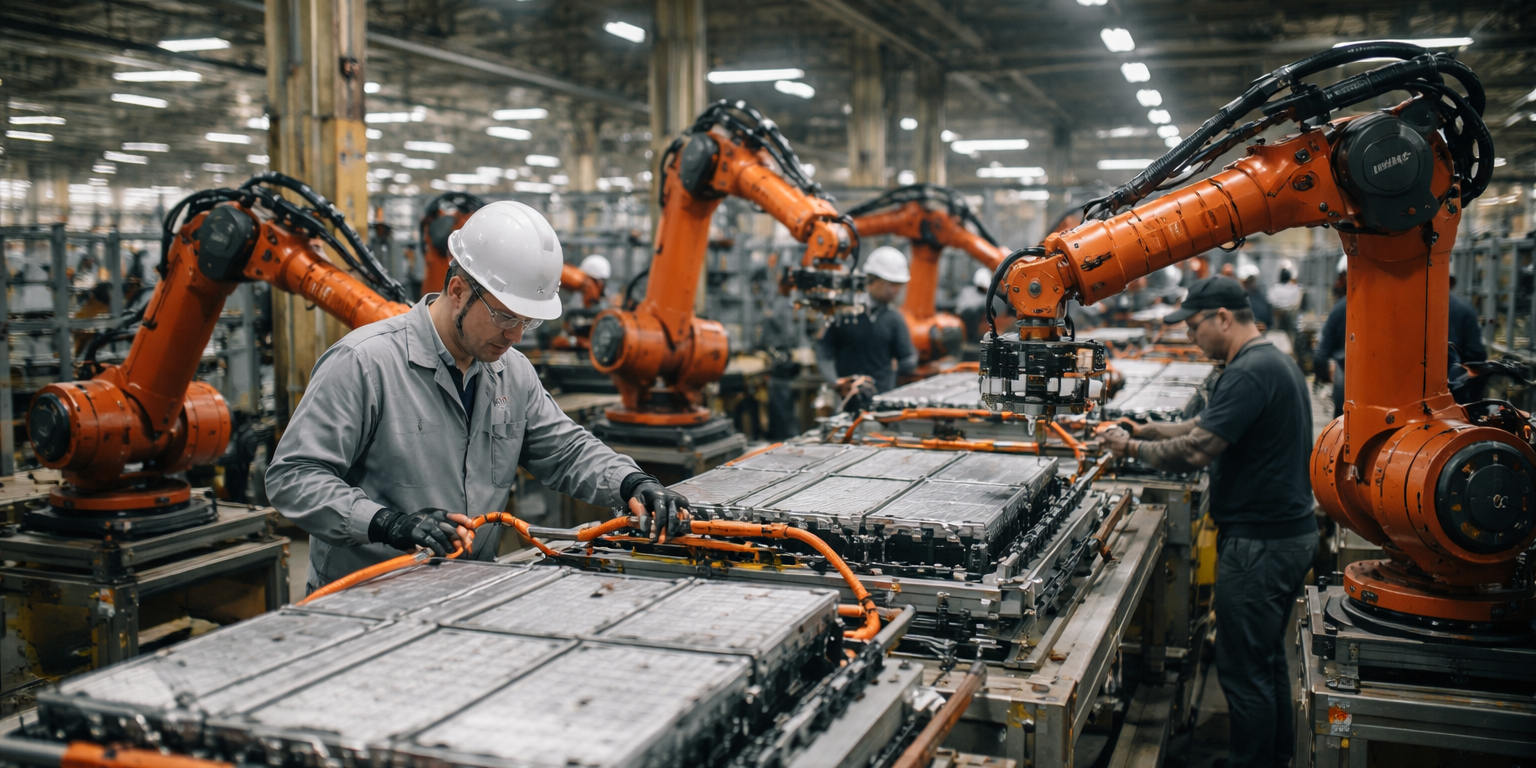
Yuantu's server production operates under tight margin pressure, with OEM contracts demanding both volume and flexibility. The company assembles rack-mounted servers, blade systems, and storage arrays for clients running large-scale compute infrastructure. Server assembly involves repetitive tasks like component insertion, cable routing, thermal paste application, and chassis fastening, all of which suit robotic manipulation if the vision and planning systems can handle part variability. The 10,000-unit figure suggests Yuantu intends to automate across multiple production lines rather than running a limited pilot. Deployment timelines and phasing details were not disclosed, but the scale implies multi-year rollout starting in late 2026 or early 2027. For context, major automotive manufacturers typically deploy industrial robots in the thousands per facility, but those installations happen over years with extensive customization.
Physical AI startups have raised billions in the past 18 months, but deployment announcements of this magnitude remain scarce. Most companies remain in research phases or small-scale pilots with logistics and warehouse partners. Rimnot's ability to move from founding to a five-figure deployment commitment in four months raises questions about prior stealth development or founding team resources. The company has not disclosed funding rounds, investor names, or revenue projections. Industry observers note that Chinese robotics startups often benefit from government subsidies and preferential procurement agreements with state-linked manufacturers, though no such arrangements have been confirmed in this case. The WAIC demonstration provided visibility, but independent verification of the 30-minute adaptation claim has not been published. Server manufacturing presents a controlled environment with consistent lighting, fixed workstations, and predictable part geometries, which simplifies perception and planning compared to unstructured settings like construction or agriculture.
What to Watch: Rimnot's first production deployments at Yuantu facilities, expected to begin before the end of 2026, will test whether the 30-minute adaptation holds under real manufacturing conditions. Watch for technical publications or patent filings that detail the closed-loop training architecture. Monitor whether other electronics manufacturers in the Pearl River Delta or Yangtze River Delta regions announce similar partnerships, which would signal broader market validation. Pay attention to any disclosed pricing or leasing terms, as unit economics will determine whether this model scales beyond subsidized early deployments.