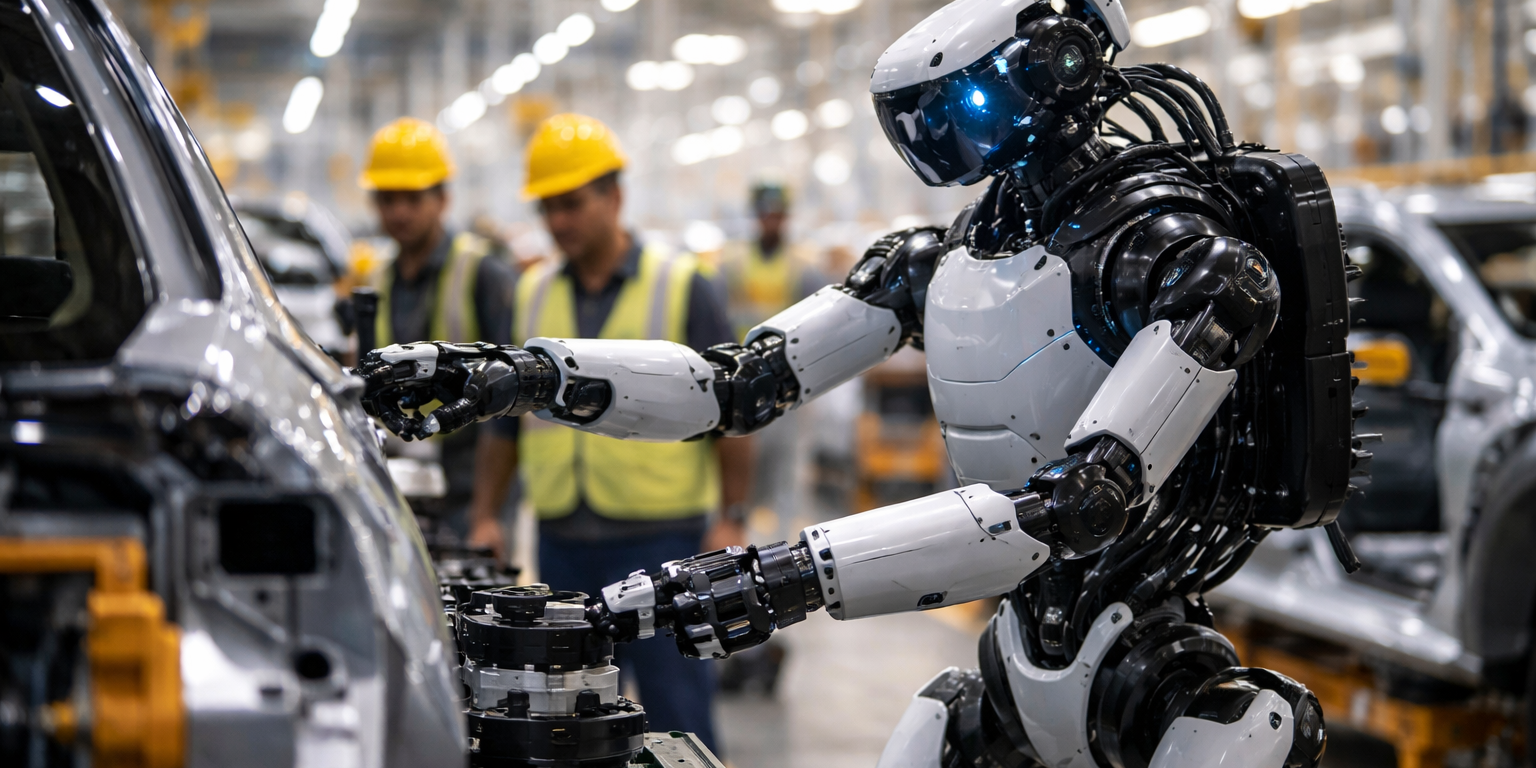
Richtech Robotics has opened a public livestream allowing internet users to watch and engage with ADAM, the company's AI-powered humanoid service robot built on NVIDIA hardware. The stream marks an unusual transparency play in an industry where most humanoid demonstrations remain tightly controlled marketing events. Visitors can observe ADAM performing tasks and responding to prompts in real time, rather than watching edited highlight reels. For a company with a market capitalization under $50 million and limited brand recognition outside hospitality circles, the livestream represents a low-cost distribution strategy that could generate engagement metrics traditional press releases cannot.
Richtech has positioned ADAM as a service robot designed specifically for restaurants, hotels, and retail environments rather than the warehouse or manufacturing floors where most commercial robotics deployments occur. The company, which trades on NASDAQ under ticker RR, previously focused on beverage-making robots before pivoting toward humanoid form factors. ADAM stands roughly five feet tall and features articulated arms capable of carrying trays, scanning QR codes, and navigating crowded dining rooms. The robot uses NVIDIA's Jetson platform for onboard processing, a choice that aligns Richtech with a growing ecosystem of robotics startups betting that NVIDIA's GPU architecture will become the de facto standard for edge AI in mobile robots. The specific Jetson model has not been disclosed, though the company has confirmed the system runs vision models and natural language processing locally rather than relying entirely on cloud connectivity.
The livestream strategy carries both technical and commercial risk. Continuous public access means viewers will witness failures, awkward interactions, and the inevitable moments when ADAM stands idle waiting for input. Richtech appears to be wagering that unfiltered access builds more credibility than curated demos, particularly among engineers and procurement managers who have grown skeptical of robotics marketing. The approach contrasts sharply with competitors like Figure AI and Agility Robotics, which release carefully produced videos showcasing specific capabilities but rarely allow unscripted public interaction. Whether this transparency converts to sales remains an open question. Richtech reported revenue of $6.2 million for the nine months ending September 2024, down from $8.1 million in the prior year period, according to its most recent SEC filings. The company has not disclosed how many ADAM units have been sold or deployed, though it announced partnerships with restaurant chains in Texas and Nevada earlier this year.
Broader industry context suggests Richtech faces steep competition not just from well-funded humanoid startups but from established service robot manufacturers that have avoided the humanoid form factor entirely. Bear Robotics, Pudu Robotics, and others have shipped thousands of wheeled delivery robots to restaurants worldwide, proving that hospitality venues will adopt automation when the economics work and the operational risk is low. Humanoids offer theoretical advantages in environments designed for human workers, but they also introduce mechanical complexity, higher unit costs, and maintenance requirements that wheeled platforms avoid. ADAM's success will likely hinge on whether restaurants see meaningful labor savings that justify what industry sources estimate to be a purchase price in the $30,000 to $50,000 range, though Richtech has not published official pricing. The NVIDIA integration gives Richtech access to software tools and developer ecosystems that could accelerate capability improvements, but it also ties the robot's performance to chip supply chains and licensing terms that remain outside the company's control.
What to Watch: Monitor whether Richtech publishes usage metrics from the livestream, including viewer counts, interaction volume, and any resulting sales leads. Track NVIDIA's GTC conference in March 2025 for potential announcements regarding Jetson roadmap updates or new reference designs for humanoid robotics. Watch for Richtech's Q4 2024 earnings release, expected in February, for updated unit economics and deployment figures. Pay attention to competing hospitality robot manufacturers, particularly whether Bear Robotics or Pudu introduce their own humanoid prototypes in response to market pressure.