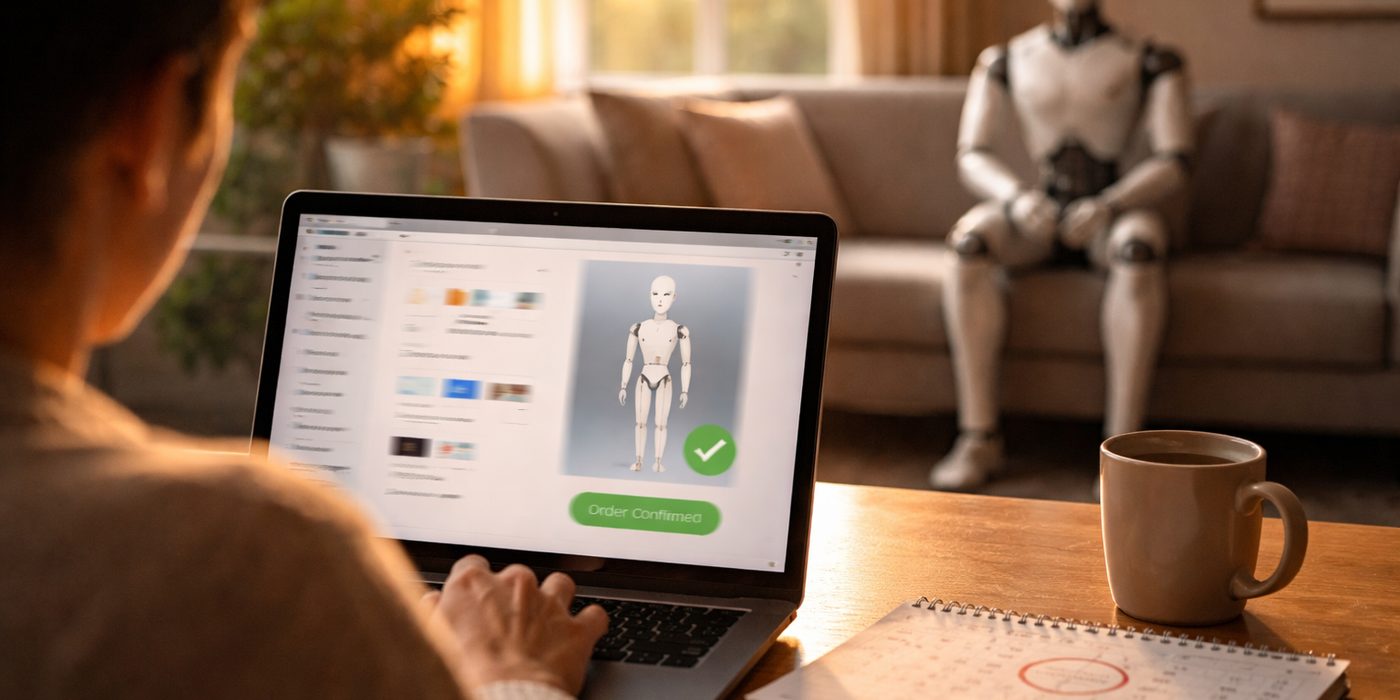
The order page is live, the delivery window is 2027, and the quantities are limited. That is the entire commercial structure of the Echo line, which Realbotix Corp. announced from Las Vegas as a direct-to-consumer storefront for humanoid robots aimed at companionship, education, and wellness applications. No distributor sits between the buyer and the manufacturer. No enterprise procurement cycle gates the sale. A consumer visits a website, places an order, and joins a queue that will not clear for months. In a sector where most humanoid makers are still courting automotive plants and logistics operators with pilot programs, the move is a deliberate break from the prevailing go-to-market script.
Realbotix is not a newcomer improvising a pivot. The company trades on the TSX Venture Exchange under XBOT, on the Frankfurt exchange under 76M0.F, and over the counter as XBOTF, and its lineage runs through the realistic-skinned companion robots that made its predecessor business recognizable. That heritage matters here. While much of the humanoid field optimizes for payload, battery runtime, and cycle time, Realbotix has spent years on faces, expressions, conversational interaction, and the uncanny-valley engineering that comes with them. Echo extends that focus into a structured product line with named applications, a published ordering path, and a fixed delivery horizon, which together make it easier to evaluate than the vague roadmaps that often accompany humanoid announcements.
The choice of applications deserves scrutiny from anyone tracking where humanoid revenue might actually come from. Companionship, education, and wellness share a common trait: they reward social presence over mechanical performance. A robot that holds eye contact, remembers a name, and carries a conversation can be commercially useful without lifting a tote or walking a loading dock. That lowers the hardware bar considerably. It also shifts the competitive moat toward expression hardware, interaction software, and brand trust rather than actuator torque density or locomotion stability. Engineers accustomed to benchmarking dexterity and gait will find few familiar metrics in this segment, and investors will need different yardsticks entirely, including order backlog, deposit conversion, and return rates.
There is a harder commercial question underneath the launch. Consumer humanoids have a long history of strong interest and weak follow-through, from early social robots that lost momentum after the novelty faded to home devices whose manufacturers folded when subscription revenue failed to materialize. The limited-quantity framing and 2027 delivery date serve a practical purpose: they cap Realbotix's manufacturing exposure and let the company gauge real demand before committing to scale. They also function as a pre-sale mechanism, converting interest into a measurable order book. Whether that book proves large enough to justify a production ramp will say more about the consumer humanoid market than any demonstration video, and competitors working on household robots will be watching the same signal.
What to Watch Track whether Realbotix publishes Echo pricing, deposit terms, and a quantified order count in its next TSX-V filings or investor updates, since those figures will show whether demand is real or promotional. Watch XBOT trading volume and any financing announcements over the next 60 to 90 days, because a limited 2027 production run still requires working capital. Compare the Echo launch against home-oriented humanoid efforts from 1X Technologies and other consumer-facing players for evidence of pricing convergence. Finally, monitor for any safety, privacy, or data-handling disclosures tied to the wellness and companionship use cases, which regulators and early buyers are likely to press on first.