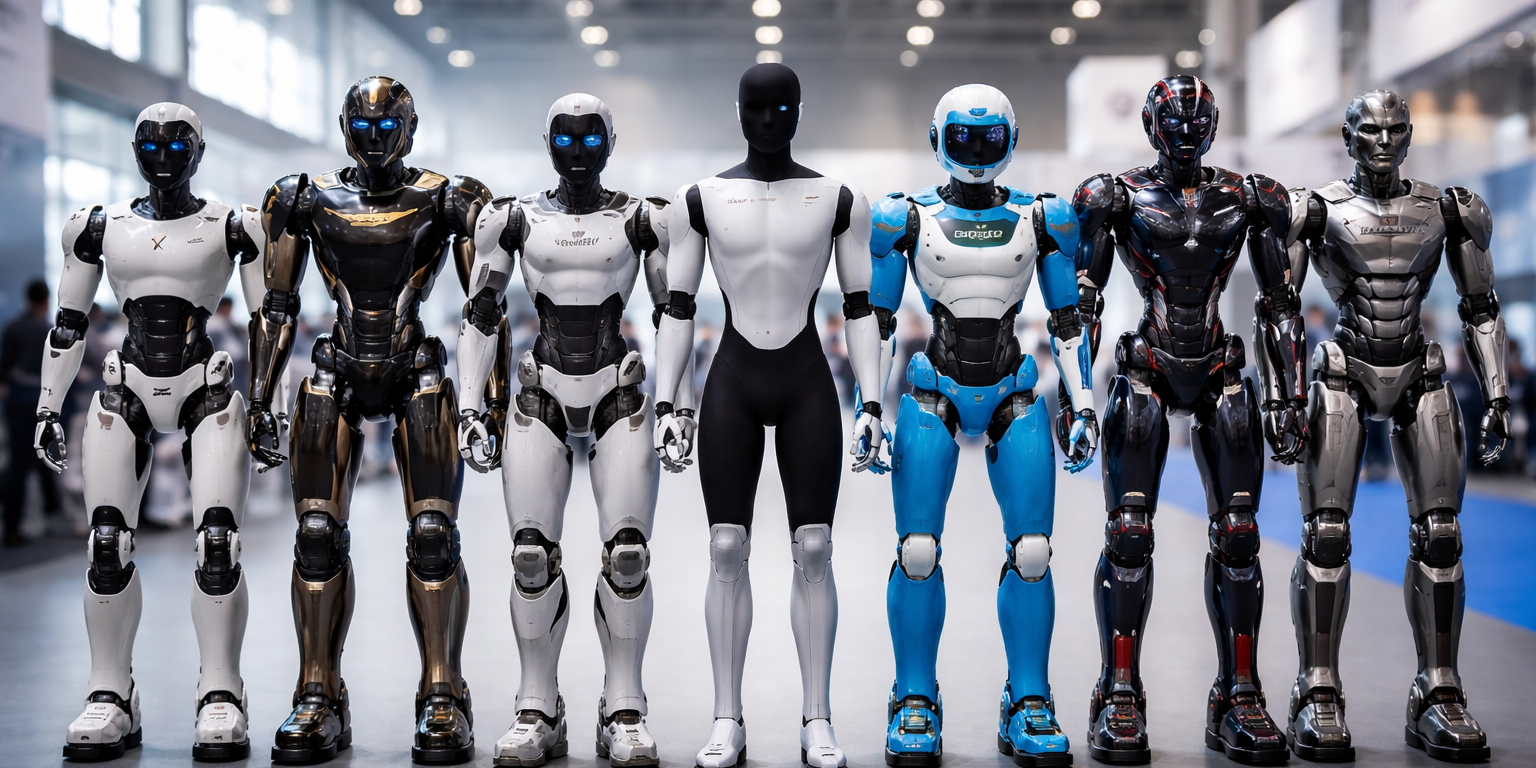

Qualcomm used its Computex presence to roll out hardware for machines at opposite ends of the complexity spectrum: a system-on-chip for Windows laptops priced around $300, and a robotics processor aimed at humanoid platforms that can cost upward of $100,000. The laptop chip targets the education and emerging market segments where Arm-based processors have struggled to gain traction against Intel and AMD. The robotics SoC, meanwhile, represents Qualcomm's most direct play yet for the control systems market in mobile manipulators and bipedal platforms, where companies like Boston Dynamics, Agility Robotics, and Figure have custom-built much of their computing infrastructure. The product strategy reveals how Qualcomm intends to amortize its mobile chip R&D across wildly different applications, betting that the same CPU cores and neural processing units that power smartphones can be repackaged for both budget laptops and multi-axis robots.
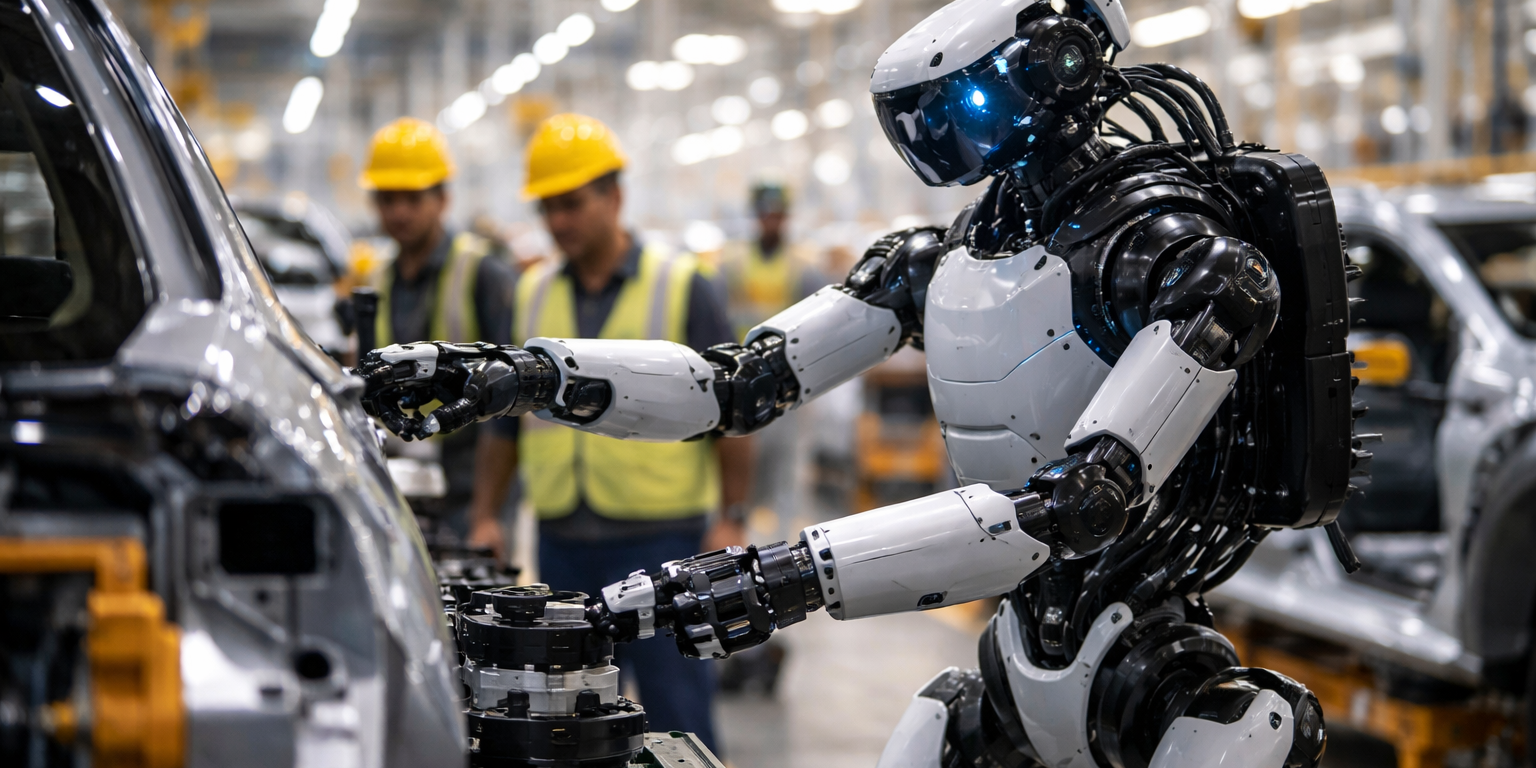
The robotics processor leverages Qualcomm's Hexagon digital signal processor and Adreno GPU architecture, technologies originally developed for the smartphone market and refined over a decade of mobile deployments. Robotics applications demand real-time sensor fusion, vision processing, and motor control with latency measured in single-digit milliseconds, requirements that overlap substantially with the camera processing and motion tracking features in flagship Android devices. What differs is thermal management and the sheer volume of simultaneous sensor streams. A humanoid robot might integrate eight or more cameras, dozens of joint encoders, force-torque sensors in each limb, and IMUs throughout its body, all feeding data into a central controller that must plan motion and execute commands without dropping frames. Qualcomm's pitch hinges on the claim that its mobile-derived architecture can handle those workloads without requiring robotics companies to design custom ASICs, a process that typically costs tens of millions and takes years.
The budget laptop chip, by contrast, focuses on cost reduction and acceptable performance rather than pushing technical boundaries. Qualcomm has been trying to crack the Windows laptop market since its first Snapdragon PC processors launched in 2017, with limited success outside premium ultraportables. The company argues that Arm's power efficiency advantages matter more at the low end, where every dollar of battery cost and every watt of heat dissipation affects the final price tag. Microsoft has supported Arm-based Windows for years, but software compatibility remains uneven, and most users in the $300 laptop segment prioritize compatibility over efficiency. Qualcomm's challenge is convincing ODMs in China and Taiwan that its silicon offers a better value proposition than Intel's Celeron and Pentium chips, which have dominated the education market and benefit from decades of software optimization. The robotics SoC faces no such legacy burden, since most contemporary robots run Linux variants and use ROS or custom middleware that compiles for Arm without friction.
Both announcements underscore Qualcomm's strategic pivot toward adjacencies beyond smartphones, where revenue has stagnated as the global handset market matured. Automotive has become the company's second-largest segment, and industrial IoT is growing. Robotics represents a smaller but higher-margin opportunity, particularly in humanoid platforms where startups are raising hundreds of millions to build general-purpose robots for logistics, manufacturing, and eventually consumer applications. Those companies need computing platforms that integrate vision, language models for task planning, and real-time control in a single package. Qualcomm's mobile expertise gives it an edge in the first two, but motor control and safety-critical determinism remain areas where traditional industrial automation vendors like Beckhoff and Kuka have deeper experience. The extent to which Qualcomm has addressed hard real-time requirements in its robotics SoC will determine whether it wins design-ins beyond proof-of-concept units. None of the humanoid robotics companies have publicly committed to using Qualcomm processors in production robots, and most are evaluating multiple silicon vendors including NVIDIA, whose Jetson platform has become a de facto standard in mobile robotics research despite higher power consumption.
What to Watch: Track whether any of the major humanoid robotics companies—Agility Robotics, Figure, Apptronik, or Sanctuary AI—announce partnerships or design wins with Qualcomm over the next quarter, particularly around upcoming hardware refreshes. Monitor adoption metrics for the budget laptop chip in education RFPs and emerging market tenders, where procurement decisions typically occur in the June-to-September window ahead of the academic year. Watch for technical disclosures about the robotics SoC's real-time processing capabilities and whether Qualcomm publishes benchmarks comparing its latency and sensor throughput to competing platforms from NVIDIA and Intel.