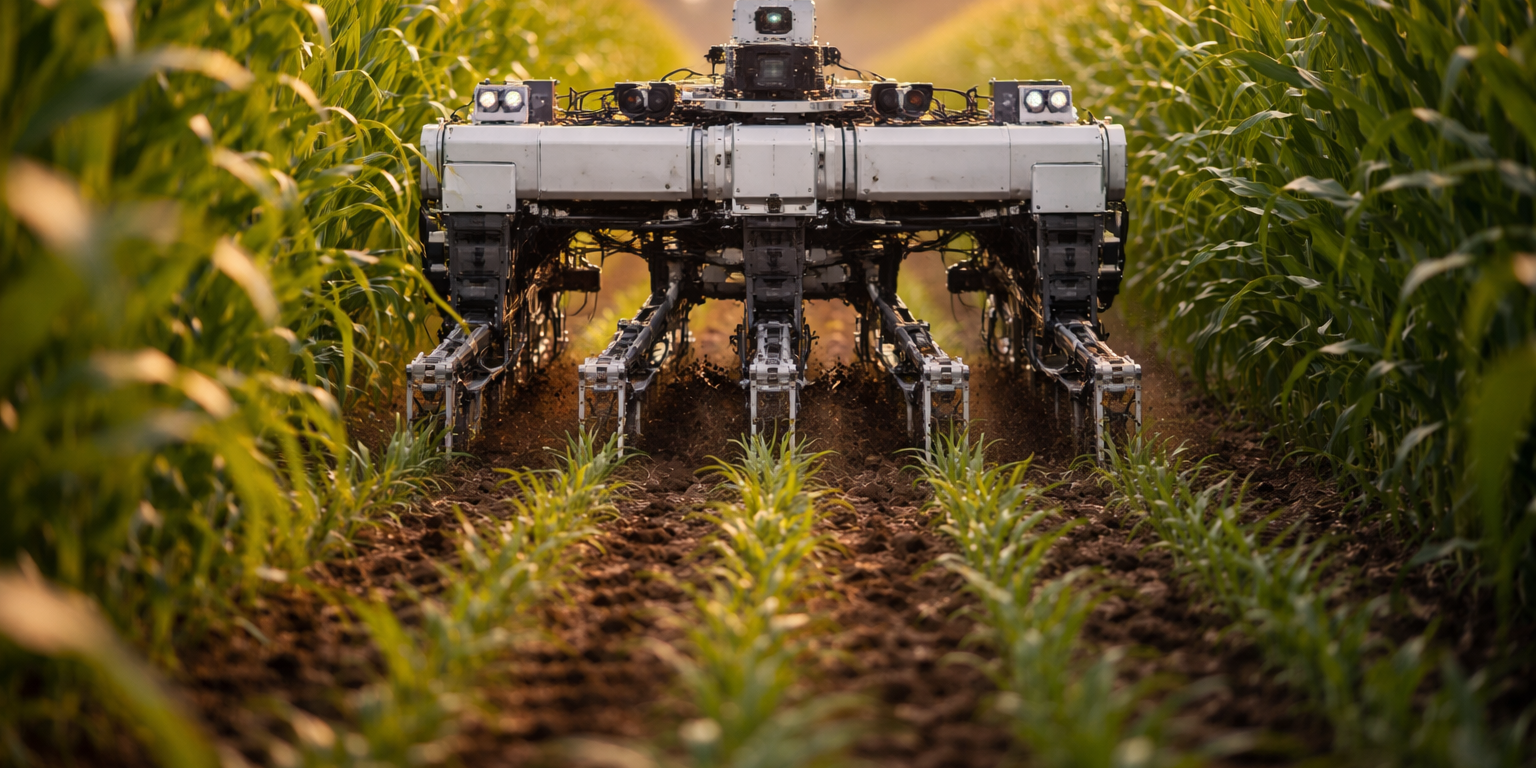
A corn farmer in Story County, Iowa, cut glyphosate application by 62% last season using a four-row autonomous weeder that distinguishes crop from weed at three miles per hour. That single data point, buried in a technical report from the Global Ag Tech Initiative, captures what precision agriculture companies have spent the last eighteen months proving: robots can do the tedious work of crop protection more cheaply and with far less chemistry than broadcast spraying. The equipment exists. The business case closes. What remains is getting enough machines into enough fields to shift industry behavior, and that process is now underway at commercial scale.
The convergence arrives after years of parallel development in computer vision, electric propulsion, and edge AI inference. Carbon Robotics sells a laser weeder that incinerates broadleaf plants between rows at 15 plants per second. FarmWise builds cultivators with hydraulic implements that undercut weed roots while leaving crop roots untouched. Agerris, Blue River Technology, and EarthSense each field competing visions of the autonomous crop protection platform, but all share a common architecture: stereo cameras, onboard neural networks trained on millions of labeled plant images, and selective actuation replacing broadcast application. The technical maturity is no longer theoretical. A 2,400-acre operation near Woodland, California, ran three Carbon units through tomato fields this past summer and recorded herbicide savings worth $47 per acre after factoring in machine rental and diesel. At that margin, adoption becomes a procurement decision, not a research question.
Drone platforms add a surveillance layer that conventional scouting cannot match. Sentera, DroneDeploy, and Taranis offer multispectral imaging subscriptions that flag nutrient deficiency, disease pressure, and pest emergence days before symptoms become visible to ground crews. A soybean grower near Chatham-Kent, Ontario, used thermal imaging to identify sudden death syndrome infection in a 12-acre section of a 200-acre field, then applied fungicide only where the pathogen showed up in the data. The targeted intervention cost one-eighth what a blanket application would have run and kept yield loss below 4% in the affected zone. The economic logic is straightforward: find problems early, treat them narrowly, avoid waste. What makes the approach viable in 2026 is processing power cheap enough to run inference on a drone battery and wireless data throughput high enough to move 14-band imagery from field to cloud between morning and afternoon flights.
The regulatory environment is beginning to align with the technology. The Environmental Protection Agency published draft guidance in April that allows certified precision application systems to operate under modified labeling rules for restricted-use pesticides, effectively treating a laser weeder or robotic micro-sprayer as a different category of equipment than a conventional boom sprayer. Meanwhile, subsidy programs in 11 states now include precision ag robotics in cost-share eligibility, a recognition that reducing chemical load has measurable environmental value beyond the farm gate. Insurance carriers are watching closely. One Midwest crop insurer told the Global Ag Tech Initiative that farms using documented precision application methods saw 9% fewer claims related to drift damage or applicator error over the past two years, a gap large enough to justify premium adjustments. The financial incentives are stacking in favor of automation, and the equipment manufacturers are scaling production to meet the shift. Carbon Robotics announced in June that it would triple manufacturing capacity at its Seattle facility to build 120 units per quarter starting in the fourth quarter of this year. FarmWise disclosed $45 million in Series C funding in May, with most of the capital earmarked for expanding its fleet operations model in California and Arizona.
What to Watch: Carbon Robotics plans to release a six-row model in the first quarter of 2027, designed specifically for corn and soybean operations in the Midwest. John Deere's See & Spray platform, acquired through the Blue River purchase, is expected to integrate with Deere's autonomous tractor line by mid-2027. The USDA's Agricultural Research Service will publish a multi-year study on weed resistance patterns in fields managed with robotic versus chemical-only methods in late 2026, data that could influence EPA labeling standards. Finally, watch for consolidation among drone imaging providers as the market matures beyond early adopters and shifts toward service contracts bundled with precision equipment leases.