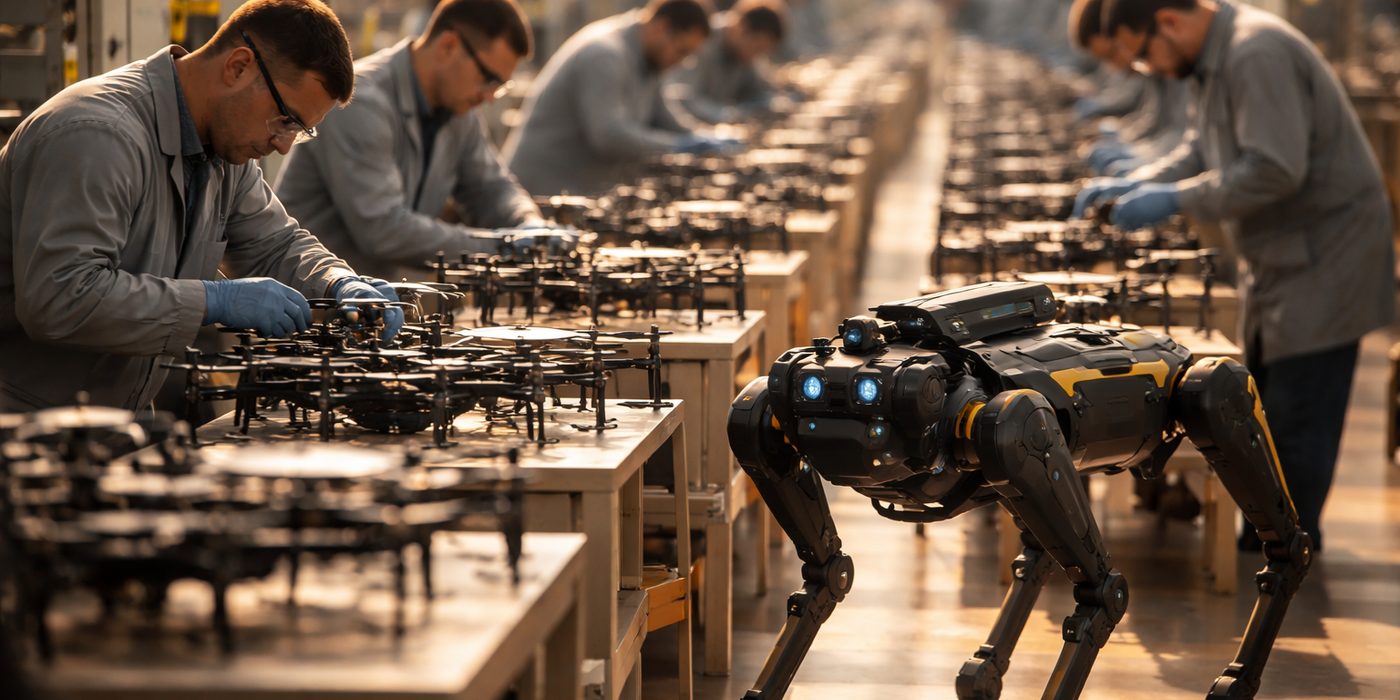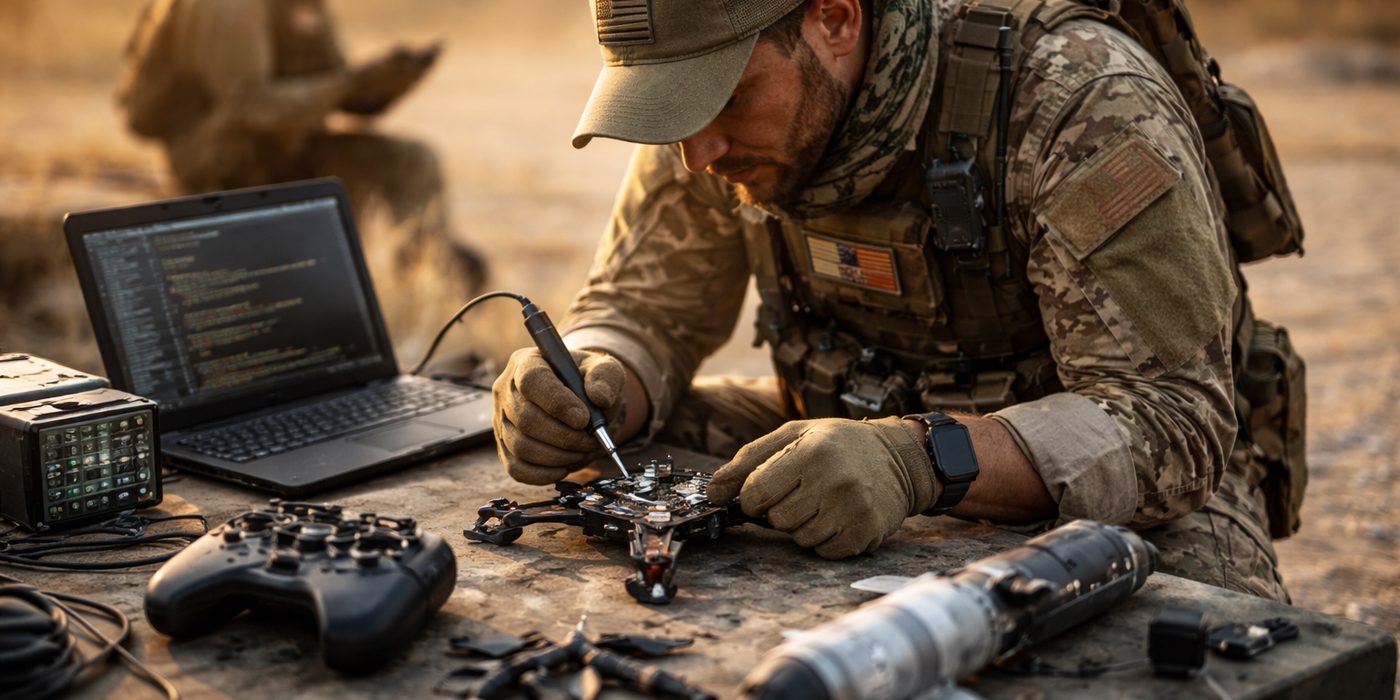

Fifty billion dollars is more than the annual defense budgets of most U.S. allies, and Defense Secretary Pete Hegseth wants it routed through reconciliation to build drones at scale. The request, reported by C4ISRNet, frames autonomous and robotic systems as a production problem rather than a research one. That distinction matters. For two decades, unmanned programs have lived on prototype budgets, small lots, and multi-year certification cycles. A $50 billion figure implies something different: assembly lines, standardized parts, and unit counts measured in the tens or hundreds of thousands. Whether Congress agrees to the number, the ask itself reveals how the department now thinks about the technology.
The choice of reconciliation is the detail engineers and investors should read closely. Reconciliation lets the majority move spending through the Senate on a simple majority, sidestepping the 60-vote threshold that governs regular appropriations. It also arrives as a lump of mandatory-style money rather than an annual line item that can be trimmed in each cycle. For a manufacturer deciding whether to build a new factory, that predictability is worth almost as much as the dollars themselves. Capital expenditure on tooling and automation only pencils out when a customer commits to volume over several years. Annual appropriations rarely offer that. A reconciliation package, if it passes, might.
The push builds on a shift already visible across the Defense Department and its industrial base. Ukraine's war has demonstrated, at brutal scale, that cheap one-way attack drones and first-person-view systems can be produced by the hundreds of thousands and consumed within weeks. Pentagon planners watched Kyiv's drone output climb while U.S. inventories of exquisite, expensive platforms stayed small and slow to replace. The lesson drawn in Washington is that mass, not perfection, wins attritional fights. That reasoning favors a different class of vendor: firms that design for manufacturability, accept commercial-grade parts, and iterate software weekly instead of hardware every few years.
That shift creates winners and exposes weak points. Established primes such as Anduril, AeroVironment, and General Atomics compete for the same dollars as a growing field of venture-backed drone makers, while autonomy-software companies and battery suppliers sit one tier down the stack. The chokepoints are not glamorous. Brushless motors, flight controllers, lithium cells, and small thermal cameras depend heavily on Asian supply chains, and the Pentagon has already restricted components tied to certain Chinese manufacturers. Standing up a domestic source for motors and batteries at drone volumes is arguably harder than writing the flight code. A $50 billion program that ignores that layer risks buying airframes it cannot fill with parts.
For the broader robotics industry, the more consequential effect may be spillover. Defense demand for autonomy stacks, swarming logic, and ruggedized perception tends to mature technology that later migrates into logistics, agriculture, and inspection robots. A funded, high-volume customer also pulls component prices down for everyone, as consumer electronics once did for smartphones and, indirectly, for early service robots. Yet there is a counterweight. Procurement at this scale brings export controls, security reviews, and compliance overhead that can slow commercial firms trying to straddle both markets. Companies will have to decide whether to build for the Pentagon's requirements or protect their civilian roadmaps.
What to Watch
Track how the reconciliation text moves through the Senate Armed Services and Budget committees over the next 30 to 90 days, and whether the $50 billion survives intact or is cut into tranches. Watch for contract announcements from the Defense Innovation Unit and the Replicator-successor efforts that would show where the first dollars land. Follow Anduril, AeroVironment, and Shield AI for factory-expansion news or hiring surges that signal confidence in the funding. Finally, monitor domestic motor and battery makers for new Defense Production Act awards, since those supply-chain announcements will reveal whether the money is aimed at the real bottleneck.