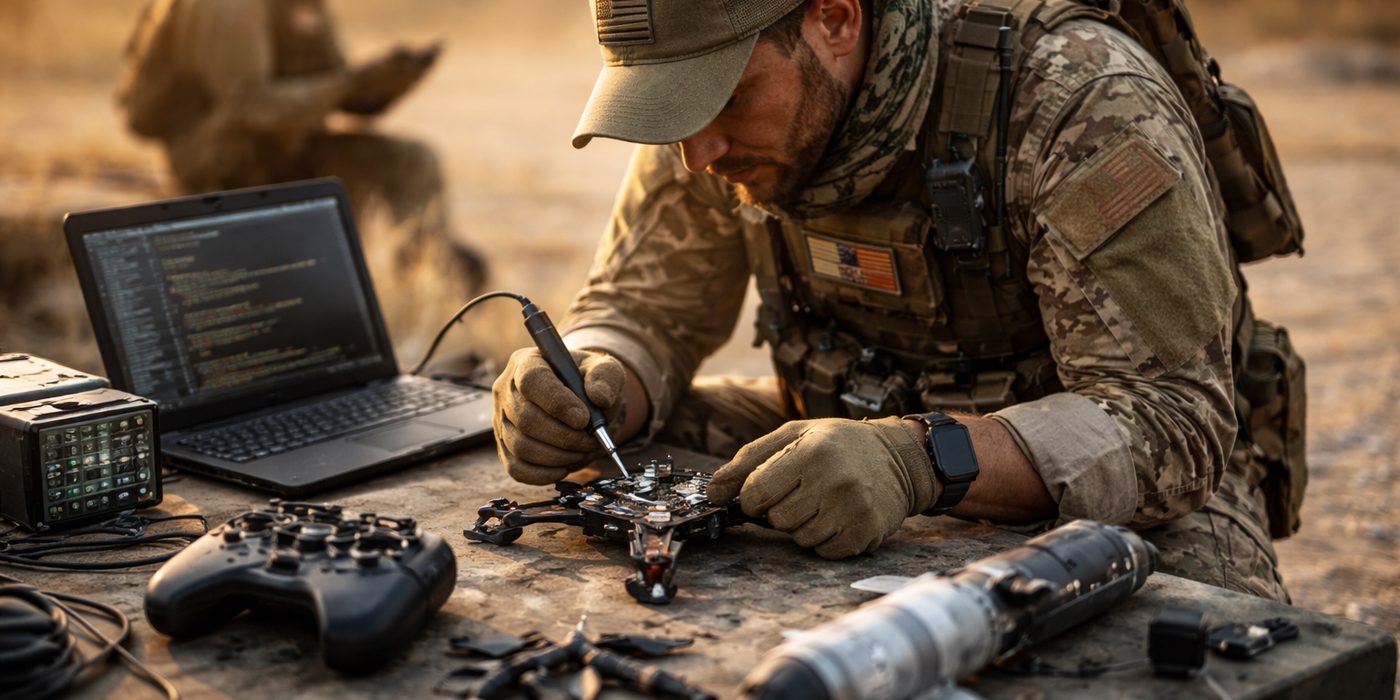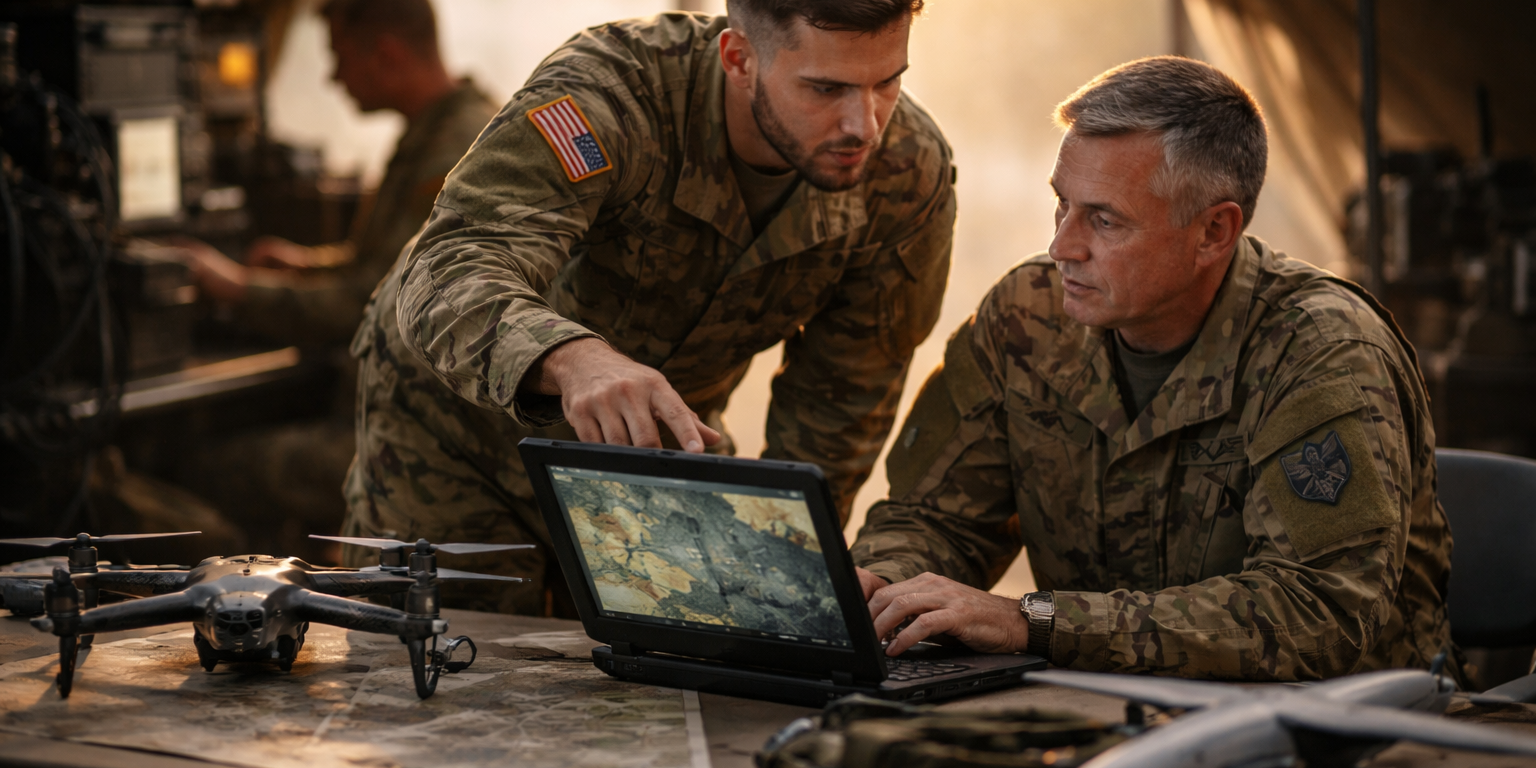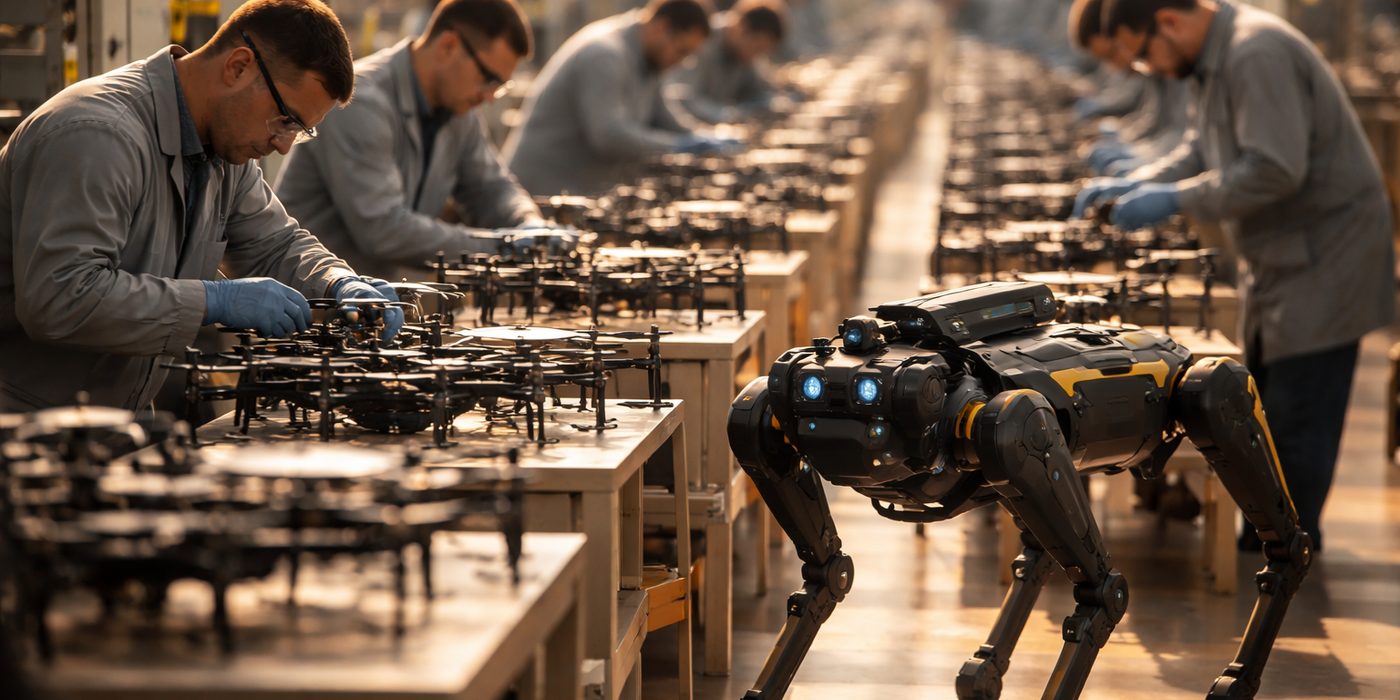
Eric Brock has a message for the defense technology industry, and it has little to do with artificial intelligence. The chief executive of Ondas Holdings told Fox News that building an autonomous drone, a counter-drone weapon, or a quadruped robot that walks point for infantry is no longer the central difficulty. Making thousands of them, quickly and cheaply, is. The remark came in a feature on a robot dog designed to keep soldiers out of harm's way, one of several unmanned systems the U.S. military is evaluating as it reorients around autonomy. For a company whose business spans aerial platforms, ground robots, and counter-UAS tools, the framing is as much strategy as observation.
The argument lands because of what the past several years of conflict have demonstrated. In Ukraine, both sides have consumed first-person-view drones by the hundreds of thousands, treating them less like aircraft and more like munitions. That consumption rate has exposed a mismatch in Western procurement. The Pentagon has historically bought small numbers of exquisite platforms through multi-year programs, while the battlefield rewards cheap systems iterated on monthly cycles. Brock's point is that engineering talent exists to close the capability gap, but production lines, supply chains, and component sourcing do not yet exist at the scale the Defense Department now says it wants. That is a manufacturing problem, and manufacturing problems are solved with capital, tooling, and time.
Ondas has spent recent years positioning itself around that thesis. The company, listed on Nasdaq, built its early identity on private wireless networking for industrial customers before pivoting hard toward drones and defense through its American Robotics and Airobotics subsidiaries and a series of acquisitions. That lineage matters. Ondas sells autonomous drone-in-a-box systems that launch, land, recharge, and relaunch without human operators, a design philosophy that translates directly to perimeter security, infrastructure inspection, and military base defense. The robot dog in the Fox segment fits the same pattern: a machine meant to take on the dull, dangerous tasks of reconnaissance and clearing so that human soldiers do not have to. Quadruped platforms from Boston Dynamics, Ghost Robotics, and others have already been trialed by U.S. forces, which makes differentiation on price and volume increasingly relevant.
For engineers and investors, the implication is uncomfortable but clear. Software autonomy is commoditizing faster than hardware throughput. A competent team can now assemble a capable perception and navigation stack from open-source components and commercial chips, but turning that stack into a reliable, repeatable product at ten thousand units a year demands supplier relationships that few startups possess. Batteries, motors, cameras, and radios all carry supply-chain exposure, particularly to Chinese manufacturers whose components dominate the global drone market and whom U.S. policy increasingly seeks to exclude. Companies that can secure domestic or allied sourcing and automate their own assembly will hold leverage that no demo reel can replicate. The firms that win the next generation of defense contracts may be remembered less for clever robots than for dull, disciplined production engineering.
What to Watch
Track Ondas' next earnings release for backlog figures, production capacity targets, and any disclosed Defense Department or Department of Homeland Security orders, since those numbers will test whether Brock's scale argument is translating into revenue. Watch the Pentagon's continuing moves on drone procurement, including any new rounds of funding tied to mass-produced small unmanned systems and counter-UAS programs through late 2026 and into 2027. Keep an eye on component policy, particularly federal restrictions on foreign-made drone parts, which could reshape supplier choices and costs for every U.S. builder. Finally, monitor competing quadruped programs from Ghost Robotics and Boston Dynamics for fielding decisions that reveal how much the military values legged ground robots against cheaper aerial alternatives.