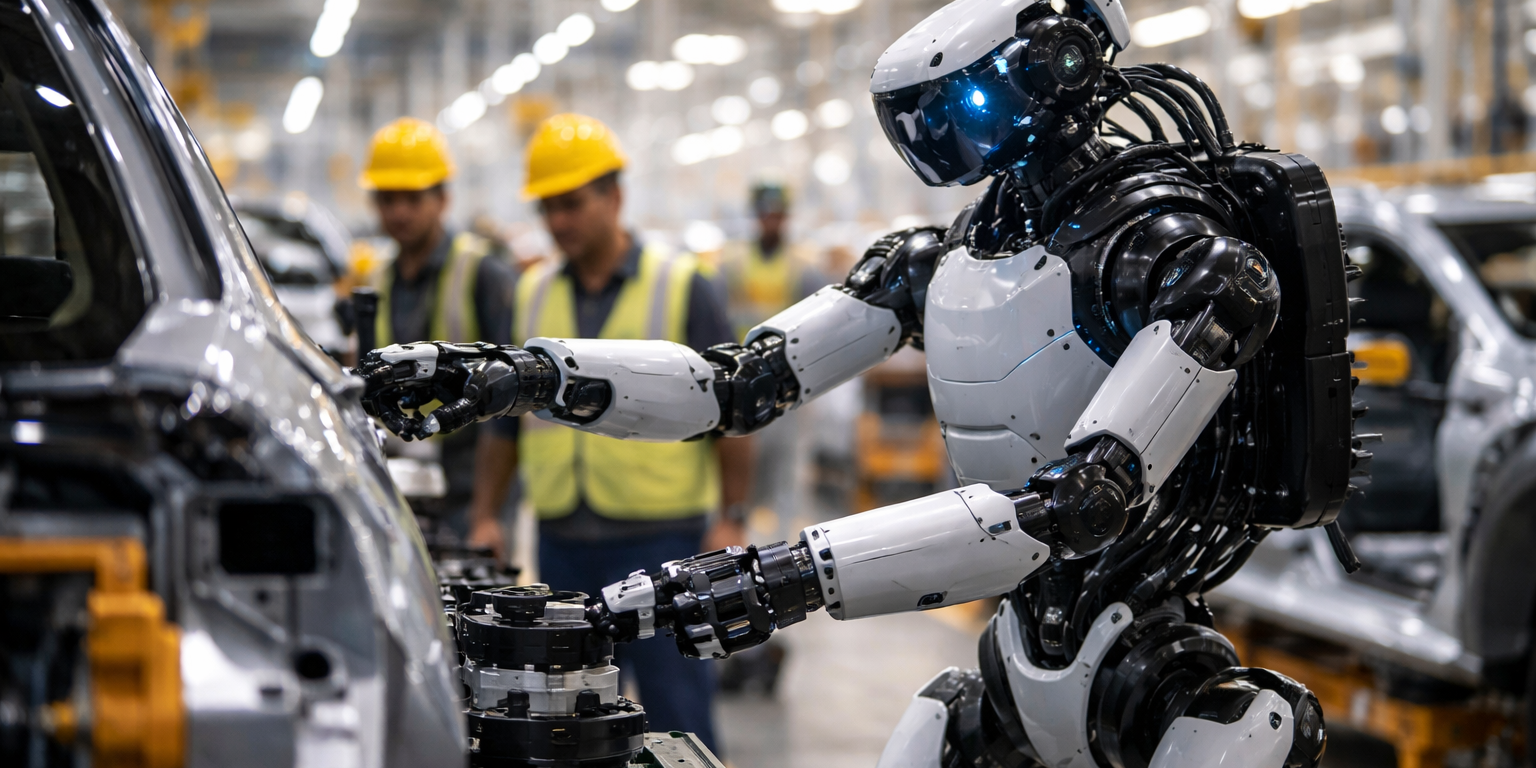
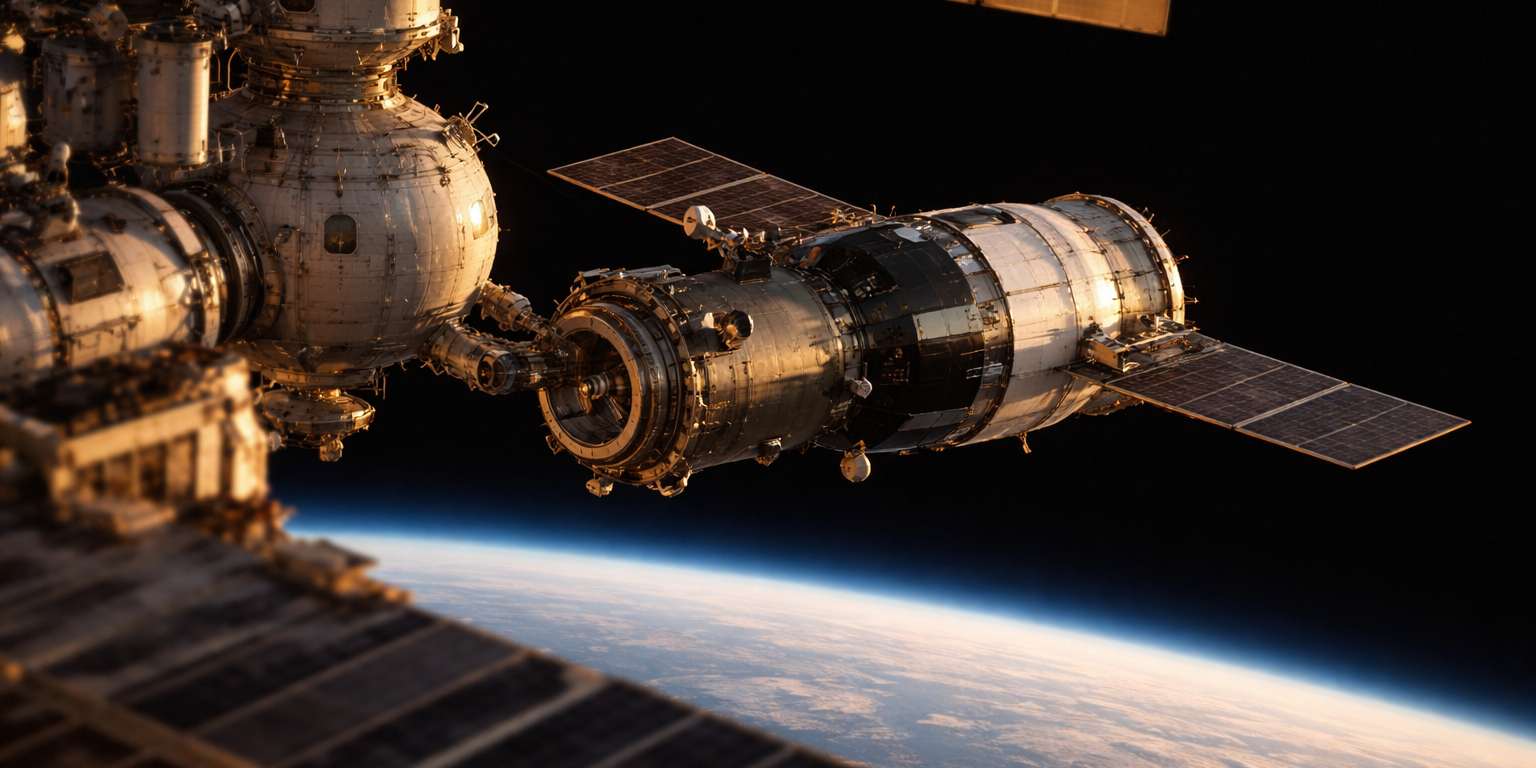
Orbit Robotics shipped its first Helios units in April 2024, marking one of the few purpose-built humanoid platforms designed exclusively for zero-gravity operations. The four-armed system dispenses with legs entirely, a configuration that challenges decades of robotics convention but reflects the physics of orbital work. In microgravity, bipedal locomotion provides no benefit—movement happens by grasping handrails, structural elements, and equipment surfaces. Helios treats all four limbs as manipulators, each capable of anchoring or performing tasks depending on operational needs. The company has not disclosed unit pricing or production volume, but initial deployments target commercial space station operators conducting external maintenance.
The design emerged from field observations of astronaut workflow during extravehicular activity. NASA data shows that positioning consumes roughly 40 percent of EVA time during International Space Station repairs, with crew members using one hand to maintain body orientation while working single-handed. Helios addresses this by dedicating two arms to anchoring while leaving two free for tools and manipulation. Each arm spans approximately 0.9 meters and terminates in a five-fingered gripper compatible with standard orbital tooling. The torso houses a stereoscopic vision system with 180-degree coverage, and the entire assembly masses 68 kilograms—light enough for a single crew member to maneuver when necessary. Orbit Robotics claims the platform can operate continuously for 72 hours on battery power, though tethered operation extends that indefinitely for long-duration assembly tasks.
The approach diverges sharply from terrestrial humanoid programs, where bipedal design remains sacrosanct despite high complexity and limited practical advantage in structured environments. Figure AI, Boston Dynamics, Tesla, Apptronik, and Sanctuary AI all preserve two-legged configurations even though their target applications—warehouses, factories, retail spaces—feature flat floors and predictable surfaces. Those companies justify the design by citing human environment compatibility and the ability to navigate stairs, though critics note that wheeled or tracked systems often prove more efficient in industrial settings. Orbit Robotics bypassed that debate entirely, concluding that space applications require no legacy compatibility with terrestrial infrastructure. The four-arm configuration also eliminates balance control systems and gait planning algorithms, simplifying software architecture and reducing failure modes.
Space robotics remains a narrow market compared to Earth-based automation, but funding has accelerated alongside commercial station development. Axiom Space, Sierra Space, and Blue Origin are all building orbital facilities that will require routine maintenance, inspection, and assembly work—tasks NASA has historically performed with astronaut EVAs and the ISS Canadarm2 system. Robotic systems promise to offload repetitive and hazardous work, freeing crew time for research and reducing reliance on EVA suits that cost approximately $250,000 per unit and require extensive maintenance. NASA awarded $73.7 million in Tipping Point contracts for space robotics in fiscal 2023, focusing on autonomous manipulation and satellite servicing. Orbit Robotics operates outside that program but has reportedly secured contracts with two unnamed commercial station operators, suggesting private demand exists independent of government funding. The broader question is whether specialized platforms like Helios will dominate orbital work or if adapted terrestrial designs will prove more versatile as space infrastructure matures.
What to Watch: Orbit Robotics plans to demonstrate Helios on an unspecified commercial platform during the third quarter of 2024, with live-streamed footage expected in September. Axiom Space will begin ISS-attached operations for its first commercial module in late 2024, creating immediate demand for external robotics. NASA's updated EVA schedule for 2024-2025 will indicate whether the agency continues expanding robotic task delegation or reverts to crewed operations for complex maintenance.