
Nvidia revealed Tuesday that Unitree's G1 humanoid will serve as the physical robot in its first publicly available development platform for bipedal machines, a selection that puts a Hangzhou-based startup at the center of what could become the industry's dominant software ecosystem. The G1, priced at $16,000 for the base configuration, stands roughly five feet tall and ships with 23 to 43 degrees of freedom depending on configuration. Nvidia will bundle access to the robot with its Cosmos world foundation models and Isaac simulation environment, creating an integrated path from virtual training to real-world deployment.
The decision favors economics over geography. Unitree undercuts Boston Dynamics' Atlas research platform by an order of magnitude and sells for less than half the cost of Figure's commercially oriented Figure 02, which carries a reported build cost above $30,000. Apptronik and Agility Robotics have not disclosed per-unit pricing for Apollo and Digit respectively, but industry estimates place both systems north of $50,000 in current low-volume production. Unitree's manufacturing scale gives it an edge: the company operates 30 physical retail locations in Chinese cities and claims several thousand units shipped since launching its first quadruped in 2017. Founder Wang Xingxing previously led robotics development at Tencent's Robotics X lab before spinning out Unitree in 2016.
Nvidia's platform addresses a coordination problem that has slowed humanoid development. Teams building manipulation algorithms, navigation stacks, or end-to-end learning systems need consistent hardware to benchmark against, but most advanced humanoids remain locked inside corporate labs or available only through restricted research partnerships. The G1 changes that calculation. Developers can order the hardware directly, train policies in Nvidia's Isaac Gym simulator using Cosmos-generated synthetic data, then deploy to physical robots without adapting to different kinematics or sensor configurations. Nvidia demonstrated the workflow at its GTC conference in March, showing a G1 learning to fold laundry entirely in simulation before executing the task on real fabric without additional tuning.
Unitree's trajectory mirrors the broader story of Chinese robotics manufacturers moving upmarket. The company built its reputation on low-cost quadrupeds—its Go2 model sells for $1,600 and found a market among universities and hobbyists priced out by Boston Dynamics' Spot. Revenue from those sales funded development of the H1 humanoid in 2023, a research-focused platform that demonstrated a running gait of 3.3 meters per second in controlled tests. The G1 followed in 2024 as a more compact, production-oriented design. According to sources familiar with the matter, Unitree filed confidential IPO paperwork with Hong Kong exchanges in late 2024, though the company has not confirmed timing or valuation targets. The Nvidia partnership provides both technical validation and a revenue stream less dependent on direct hardware sales, since developers building on the platform may license Unitree's control software even if they eventually move to custom hardware.
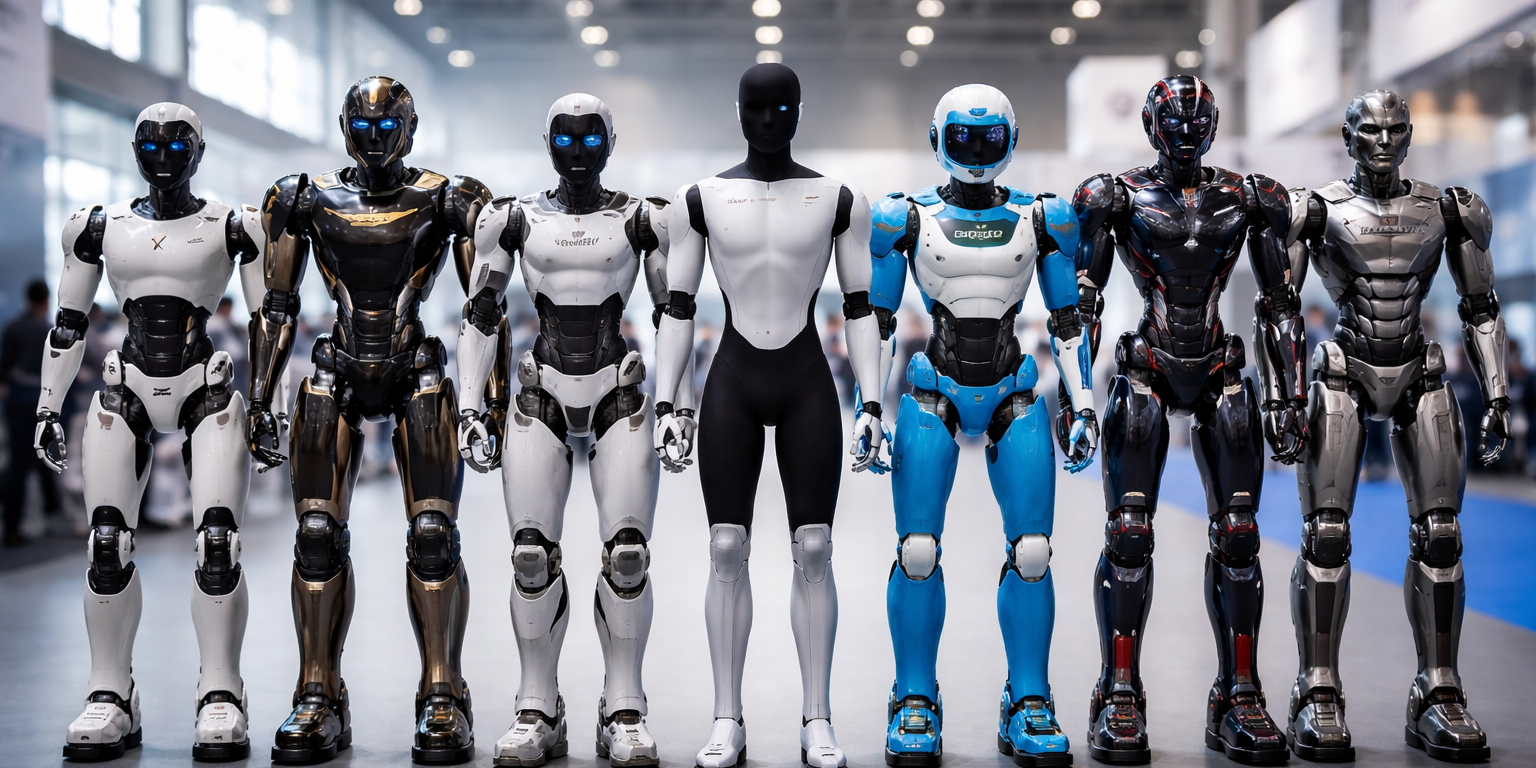
Broader implications extend beyond one startup's fortunes. Nvidia's choice establishes the G1 as a de facto reference platform at a moment when the industry has yet to converge on standard form factors, actuation approaches, or even basic questions like optimal height and weight. Tesla's Optimus stands 5'8" and targets automotive assembly lines. Figure's design prioritizes warehouse logistics. Apptronik built Apollo forCase New Holland's agricultural equipment. Unitree's platform makes no such bets, instead offering a general-purpose morphology that Nvidia can position as neutral ground. Whether that neutrality survives contact with real deployment requirements remains an open question, but the simulation-to-reality pipeline Nvidia is building assumes researchers will iterate on tasks, not mechanisms. If that assumption holds, the cheapest capable hardware wins the development cycle, and manufacturing cost curves favor Shenzhen and Hangzhou over Boston and the Bay Area.
What to Watch: Unitree's IPO filing will clarify whether the business model relies on hardware margins or software licensing, a distinction that matters as Nvidia potentially steers customers toward the platform. Figure AI's response also merits attention—the company raised $675 million in February 2024 at a $2.6 billion valuation and has positioned itself as the U.S. alternative in humanoid development. Track whether other hardware makers, particularly Agility Robotics and Apptronik, pursue similar partnerships with Nvidia or rival platforms from Google DeepMind or OpenAI. Finally, monitor export control developments: if the G1 becomes the standard development platform for foundation models in robotics, U.S. policymakers may scrutinize data flows between American AI labs and Chinese hardware manufacturers.