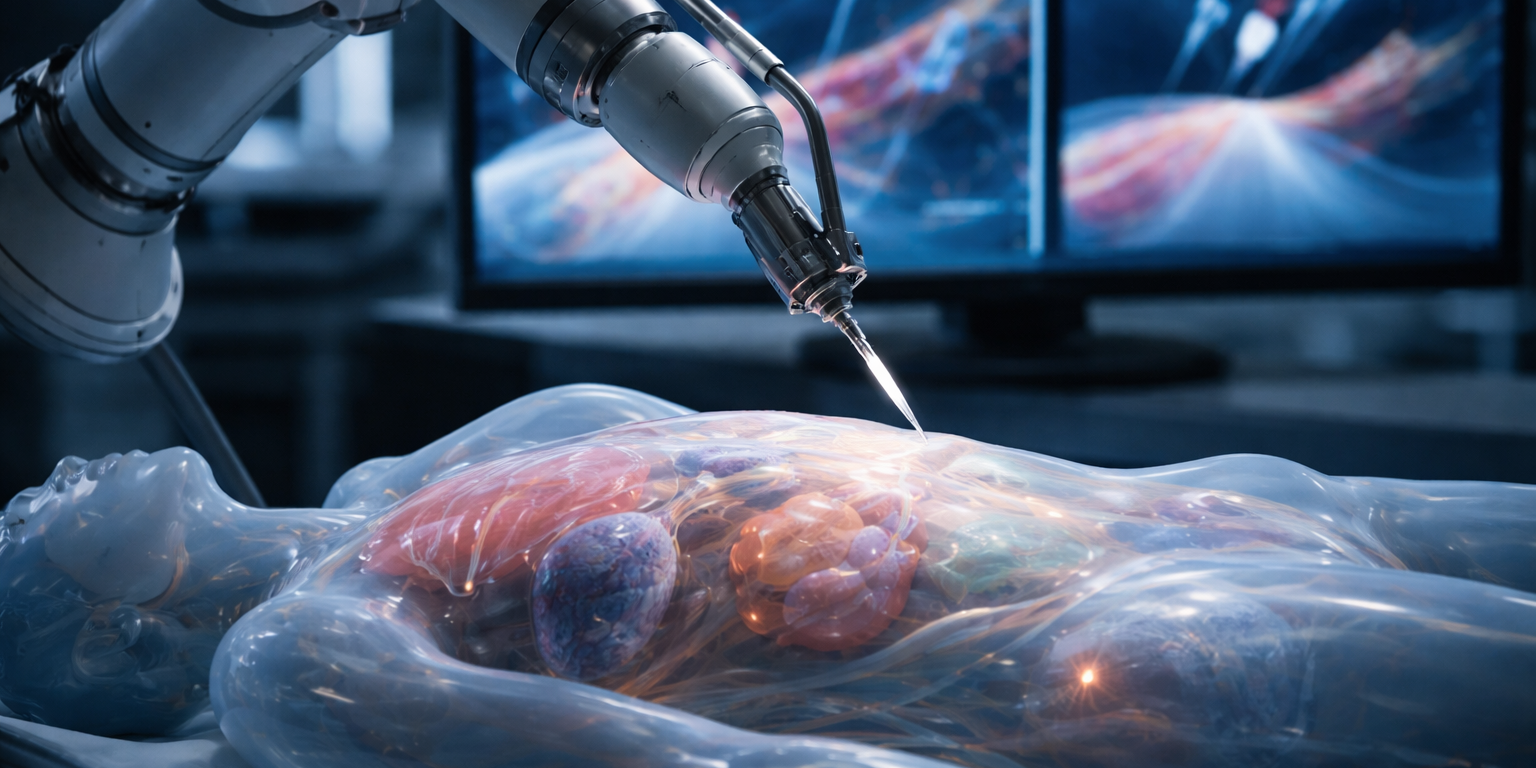
NVIDIA has released a medical physics simulation environment designed to run entirely on its GPUs, a response to the fact that healthcare robotics companies cannot generate training data the way autonomous vehicle developers do. The simulator models anatomical structures, soft tissue mechanics, and surgical instrument contact at what the company describes as real-time rates, addressing a constraint that has limited machine learning applications in surgical and rehabilitation robotics for more than a decade.
The core challenge is regulatory and practical. Surgical robot developers cannot deploy thousands of units into operating rooms to collect edge cases, nor can they scrape the internet for training data on how human tissue responds to robotic manipulation. Unlike factories or warehouses, hospitals do not permit open-ended experimentation with unproven systems. This has left companies like Intuitive Surgical, CMR Surgical, and a cohort of venture-backed startups reliant on cadaver studies, animal models, and limited clinical trials to validate their systems before seeking FDA 510(k) clearance or De Novo authorization. Each pathway is measured in years and millions of dollars. NVIDIA's simulation framework attempts to create a third option: generate synthetic data that approximates real surgical scenarios closely enough to train perception and control algorithms without requiring human or animal subjects at every iteration.
The platform integrates what NVIDIA calls GPU-accelerated finite element analysis for soft tissue, collision detection for rigid surgical tools, and fluid dynamics for blood and irrigation. The company has not disclosed benchmarks against existing surgical simulators from companies like 3D Systems or Surgical Science, but claims its architecture reduces compute time for a single simulated procedure from hours on CPU clusters to minutes on a workstation equipped with RTX or data center GPUs. That speed matters because training a neural network for tasks like suture placement or tumor resection requires thousands of simulated repetitions with variation in anatomy, pathology, and instrument positioning. If a single training run that previously took a week can now complete overnight, the economics of developing a new surgical robot or adding autonomous capabilities to an existing platform shift meaningfully. Several medical device companies have already integrated the simulator into their workflows, though NVIDIA declined to name them pending their own product announcements later in 2026.
The release arrives as the surgical robotics market faces pricing pressure and demands for expanded capabilities. Intuitive Surgical's da Vinci systems still dominate installed base, but competitors have entered with lower-cost alternatives and the promise of autonomous suturing, tissue recognition, or instrument tracking. Many of those promises have been slow to materialize because the training data required to make them reliable does not exist in sufficient volume. Rehabilitation robotics faces a parallel problem: every patient's neuromuscular response to a therapy robot differs, and collecting enough real-world data to personalize treatment algorithms has required multi-year clinical studies. Synthetic data generation does not eliminate the need for clinical validation, but it allows developers to arrive at those trials with algorithms pre-trained on a far wider distribution of scenarios than any single hospital or research center could provide. That has implications for how quickly new devices can move from concept to clearance, and how much capital is required to get there.
What to Watch: Monitor FDA submissions in the surgical robotics category through the first half of 2027 for any mention of simulation-based training data in 510(k) filings, which would indicate regulators are beginning to accept synthetic datasets as part of the validation pathway. Watch for announcements from CMR Surgical, Medicaroid, or Moon Surgical regarding updates to their control software, as these companies are known to be exploring machine learning for instrument guidance. NVIDIA has scheduled a session on medical simulation at its GTC conference in March 2027, where it is expected to demonstrate the platform with a named surgical robotics partner.